

Plain phosphatidylserine powder is a demanding ingredient. It carries a characteristic phospholipid taste that consumers notice at meaningful doses, it is hygroscopic and static-prone, and its unsaturated fatty acid chains oxidise faster than most actives in a fortified food matrix. Microencapsulation — locking PS particles inside a protective wall material — addresses all three problems at once, which is why it has become the default format for functional foods, beverage mixes, and taste-sensitive supplement applications.
But encapsulation is not a binary attribute. Two powders both labelled "microencapsulated PS" can behave very differently in a bar, a beverage, or a sachet, because the wall system, the loading ratio, and the process discipline behind them differ. This article explains what the technology actually delivers, which specification parameters to demand, and how to evaluate suppliers before committing a formulation.
What Microencapsulation Does for Phosphatidylserine
Three functions justify the format, and they should be tested separately.
Taste masking is the first. Encapsulated PS particles keep the phospholipid matrix behind a wall layer, so the mouth perceives the carrier rather than the active. In beverage powders, sachets, and bars — formats where a 100–300 mg dose sits in a small serving — this is often the difference between a viable product and a sensory complaint. Oxidation protection is the second: the wall physically separates PS from oxygen and from pro-oxidant food components such as iron-fortified premixes, extending the induction period measurable by peroxide value tracking. Handling improvement is the third: a well-designed encapsulated powder is free-flowing and non-static, which matters for high-speed blending and sachet dosing lines.
Wall Materials and Process Choices
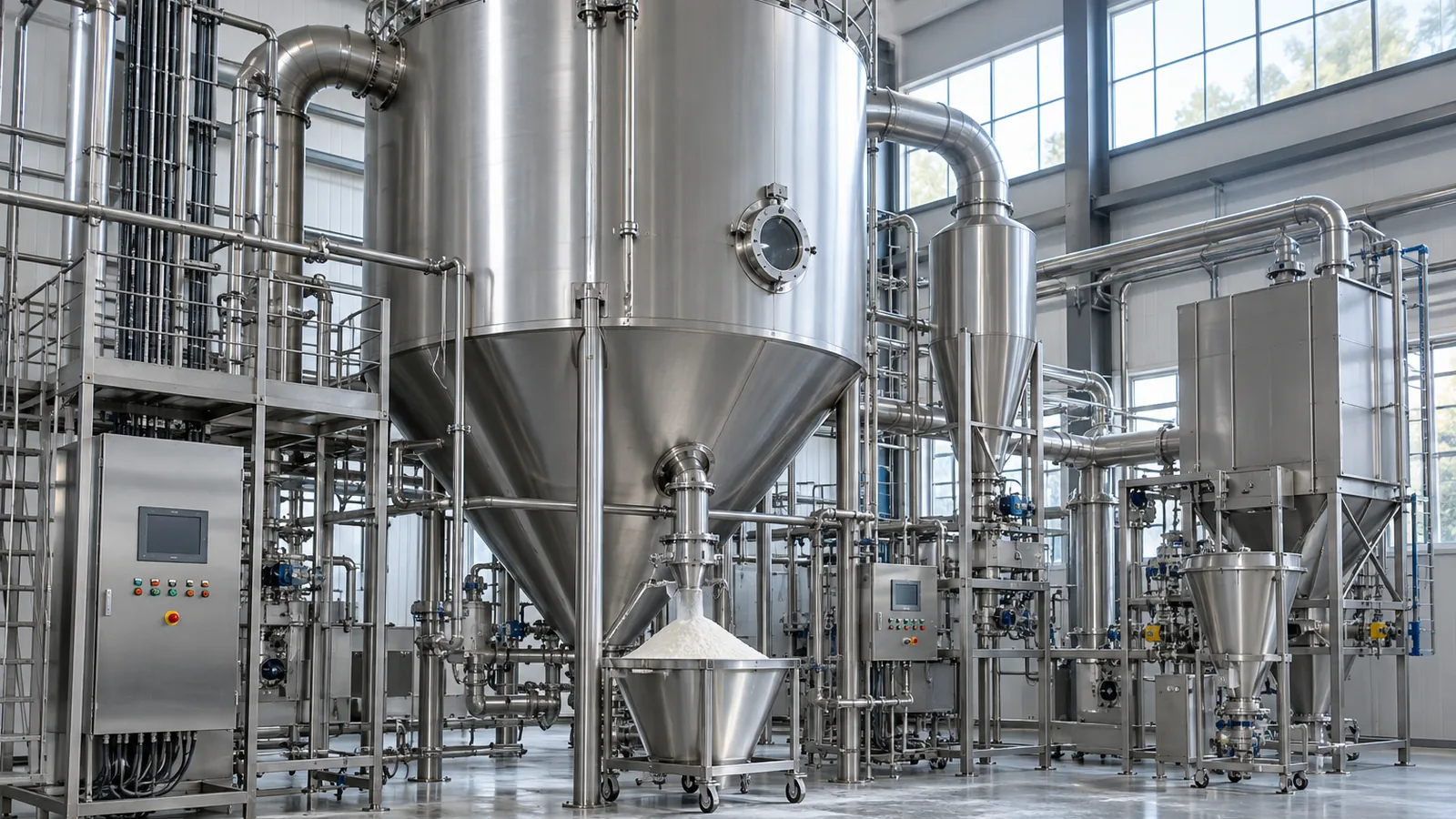
Common wall systems for PS are gum arabic and modified starches, maltodextrin blends, and cyclodextrin complexes, frequently combined with a small antioxidant charge inside the wall. The dominant industrial process is spray-drying of an emulsion; some suppliers use fluid-bed coating or cyclodextrin inclusion for specific formats.
Each choice has consequences a buyer should understand. Gum arabic gives good emulsion stability and clean labels but costs more; modified starches scale economically and load well but may constrain label claims in some EU markets; maltodextrin is cheap and neutral but less protective against oxygen, so antioxidant strategy matters more. Loading ratio is the hidden variable: higher PS loading lowers cost per active gram but increases surface oil, which worsens both taste bleed and oxidation. A serious supplier can state the loading percentage, the surface-oil figure, and the trade-off between them.
The Specification Parameters That Matter
A microencapsulated PS specification has two layers, and buyers who only check the first get surprised by the second.
The first layer is the active: PS assay with the basis stated (as phosphatidylserine, on dry basis), source declaration (soy or sunflower), and heavy metals, micro, and residual solvent limits. The second layer is the encapsulation itself: particle size distribution (relevant to mouthfeel and to suspension in beverages), surface or free PS and surface oil (a direct indicator of how well the wall covers the active), moisture and water activity, and oxidative markers — peroxide value and, where offered, anisidine or TOTOX-type indices — so incoming oxidation can be tracked lot to lot.
The COA should report method-referenced values for the encapsulation-layer parameters, not only the assay. If a supplier's COA lists only total PS content, the wall quality is unauditable, and that is a disqualifying gap for food applications where sensory and shelf-life risk sit with the buyer.
Application Behaviour in Functional Foods and Supplements
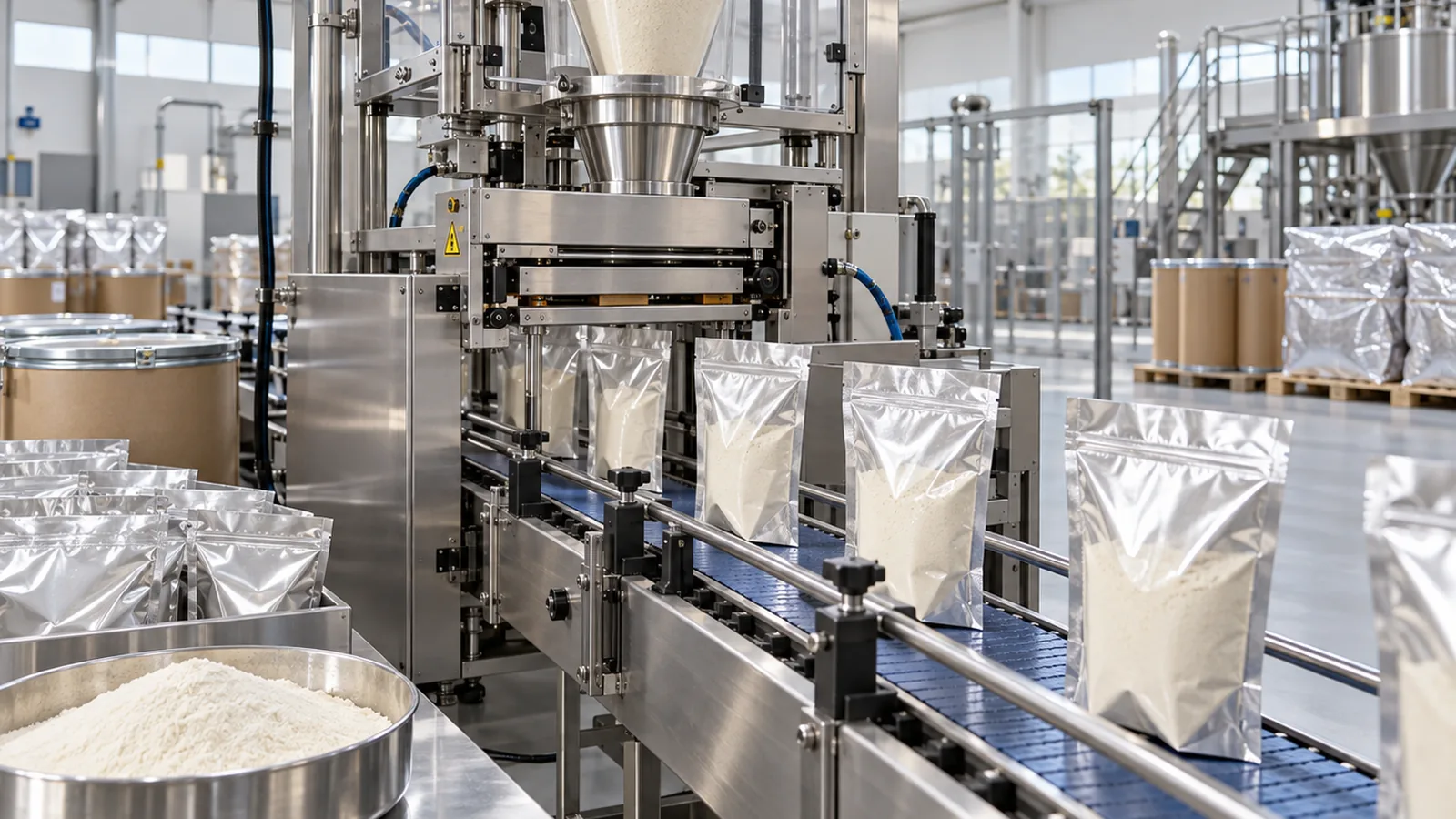
Where the format fits best is predictable once the functions are understood. Beverage powders and stick packs benefit most: taste masking is visible to the consumer and dispersion behaviour can be tuned through particle size. Bars and bakery-style formats use encapsulation to keep PS out of direct contact with pro-oxidant inclusions and heat-exposed surfaces. Tablets and capsules can run on plain powder, but encapsulated grades still help where the blend contains minerals that accelerate oxidation.
Application testing belongs in the supplier conversation. Ask for particle-size data against your blending equipment, recommended processing temperatures (spray-dried walls can soften under heat), and any available stability data in a comparable matrix. A supplier who can hand over a real application note for a similar format has done the development work a formulator would otherwise pay for.
Buyer Evaluation Criteria for Microencapsulated PS
Evaluate microencapsulated PS suppliers on five points. First, specification depth: both layers stated, methods cited, assay basis explicit. Second, process transparency: wall material identity, loading ratio, and surface-oil control disclosed — these are process properties a reseller cannot invent. Third, oxidation evidence: peroxide-value data across real lots, not a single fresh-batch figure, plus the packaging system (barrier bags, nitrogen flush, desiccant) that protects the powder in transit. Fourth, regulatory fit: source and allergen declarations for the wall materials, and novel-food positioning for the EU where the finished product category requires it. Fifth, scale consistency: pilot data should come from the same spray-dryer train that will run production, with change-control terms covering any wall-material or process change.
Run a comparative trial with at least two suppliers in your actual matrix, sampling at beginning and end of a simulated shelf life, and score sensory, dispersion, and oxidative markers side by side. The cheapest per-kilogram quote rarely survives that comparison.
FAQ
Q: Does microencapsulation change the PS assay I should order?
A: Yes. Encapsulated powders are delivered at a loading ratio — for example 20–50% PS — so order quantities and label-claim calculations must convert on the stated assay basis. Always confirm whether the assay is total PS or encapsulated-available PS.
Q: Which wall material is best for a beverage-mix application?
A: Gum arabic and modified starch systems both work; the decision usually balances sensory performance, loading ratio, and label positioning. Request particle-size and dispersion data for each candidate and run them in your matrix rather than deciding on datasheets.
Q: What single parameter best predicts encapsulation quality?
A: Surface oil or free/surface PS. High surface oil means wall coverage is incomplete, which shows up as taste bleed and faster peroxide-value growth. It is the parameter most often missing from thin COAs.
Q: How should we store and ship microencapsulated PS?
A: Cool, dry conditions in barrier packaging with nitrogen flush and desiccant, same discipline as plain PS. Encapsulation slows oxidation; it does not remove the requirement, and storage conditions should be stated in the specification and respected in your warehouse.
Conclusion
Microencapsulation turns phosphatidylserine from a difficult phospholipid into a workable food ingredient — but only when the wall system, loading ratio, and oxidation controls are specified and verified, not just claimed. Buyers who ask for the second layer of the specification, test candidates in the real matrix, and score suppliers on process transparency end up with formats that survive sensory panels and shelf-life studies alike. Nutranexa supplies microencapsulated PS powder with both specification layers documented, method-referenced COAs, and application support for functional food and supplement formats.
Sources
- U.S. FDA — Current Good Manufacturing Practice for Dietary Supplements (21 CFR Part 111): https://www.fda.gov/food/current-good-manufacturing-practice-cgmp-dietary-supplements
- European Commission — Food Safety, Novel Food: https://food.ec.europa.eu/food-safety/novel-food_en
- EFSA — European Food Safety Authority: https://www.efsa.europa.eu
- U.S. FDA — Food Ingredients and Packaging: https://www.fda.gov/food/food-ingredients-packaging
- PubMed — National Library of Medicine: https://pubmed.ncbi.nlm.nih.gov
Étapes suivantes recommandées
- Passez en revue le Phosphatidylserine page produit.
- Comparer Soy PS et Sunflower PS.
- Vérifier preuve de fabrication et Qualité & R&D.
Contacter le service commercial pour obtenir les documents produits
Partagez la préférence de source, l'application, le pays et la quantité annuelle.
Contacter le service commercial