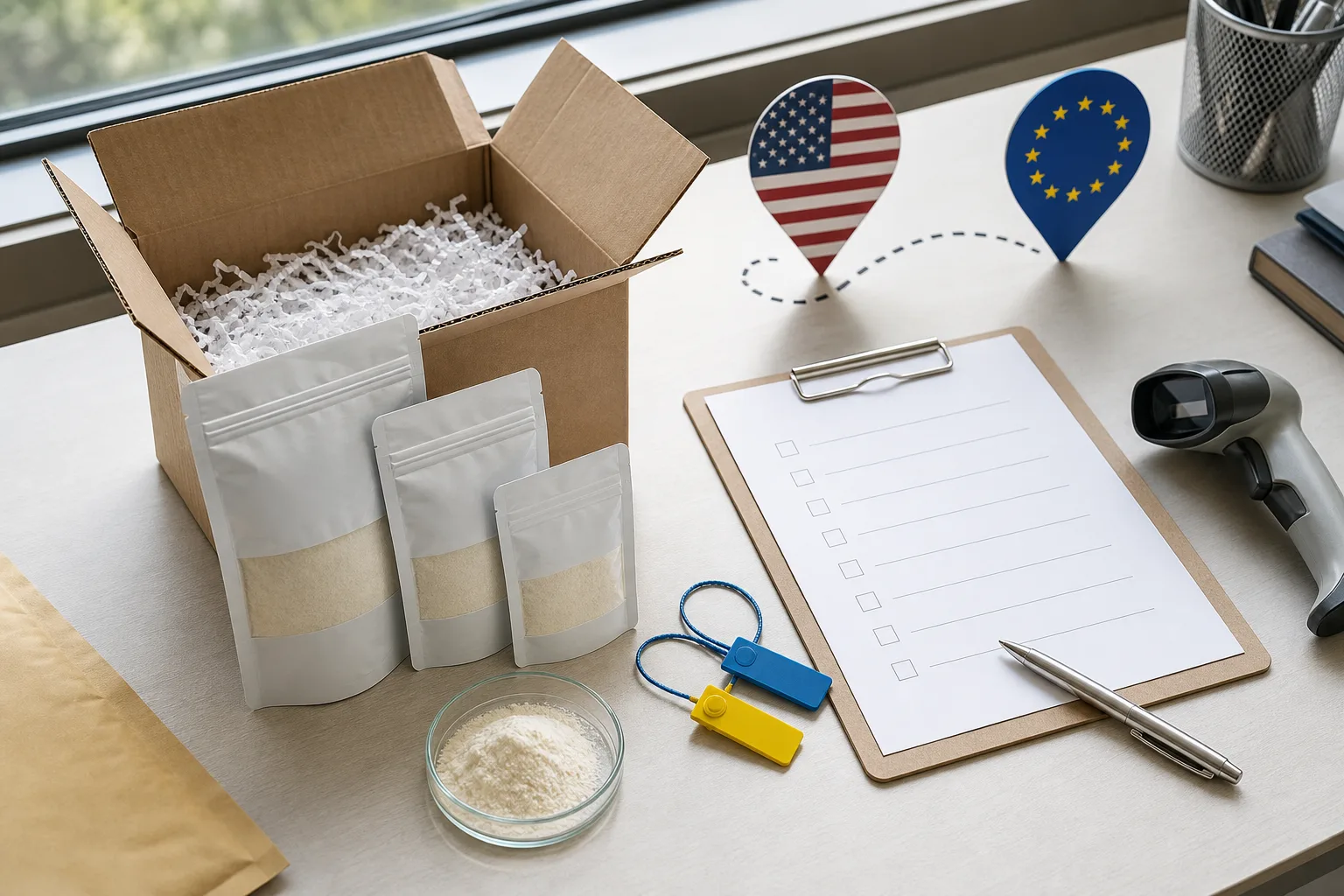
غالبا ما تبدو عينة الفوسفاتيديلسيرين الأولى صغيرة بما يكفي لتبدو غير رسمية. في الواقع، يمكن أن يخلق ذلك الطرد الأول نفس الالتباس الذي يعطل لاحقا الطلب التجاري الكامل: تسمية المنتج غير متطابقة، بيانات فاتورة غير مكتملة، تعليمات جمركية ضعيفة، غرض عينة غامض، وعدم وجود تسليم متحكم به من العينة المستوردة إلى ملف العرض اللاحق.
الإجابة المباشرة هي: عامل أول شحنة عينة فوسفاتيديلسيرين كملف استيراد خاضع للرقابة، وليس كحزمة توصيل عابرة. إذا كانت العينة تدخل الولايات المتحدة كطعام، تقول إدارة الغذاء والدواء إنه يجب تقديم إشعار مسبق للطعام المستورد أو التعرض للاستيراد إلى الولايات المتحدة، ويجب على وثائق الاستيراد تحديد البضائع بوضوح. في الاتحاد الأوروبي، ينطبق نفس التخصص العملي: السلع المستوردة التي تطلق للتداول الحر تحتاج إلى مسار إقرار جمركي، ومنطق تصنيف، ودعم أصل يمكن للمذلن أن يقف خلفه. قد تكون العينة أصغر من الطلب التجاري، لكنها لا يجب أن تكون أقل تحكما.
عندما يذكر نوترانيكسا، يستخدم فقط الحقائق العامة المؤكدة. تعرف نوترانيكسا نفسها باسم شركة شاندونغ نوترانيكسا للصناعات الحيوية المحدودة، تأسست في عام 2013، وتدير حرما جامعيا بمساحة 110,000+ متر مربع، وتركز الصادرات على أوروبا وأمريكا الشمالية. يوفر الموقع مسارات مشترين منفصلة ل فوسفاتيديلسيرين, فوسفاتيديلسيرين الصويا، و فوسفاتيديلسيرين عباد الشمس، بالإضافة إلى مسارات طلب المواصفات وCOA الجودة والبحث والتطوير, التصنيع، و تواصل معنا. يجب أن تعتمد الموافقة النهائية على العينة على الملف الخاص بالمسار الذي يتم شحنه واستلامه.
الإجابة المختصرة التي يحتاجها المشترون أولا
إذا كان فريقك يحضر أول عينة فوسفاتيديلسيرين للولايات المتحدة أو الاتحاد الأوروبي، استخدم هذه البوابة المكونة من سبعة أجزاء قبل الإرسال:
- قم بقفل مسار PS الدقيق، واتجاه المصدر، والغرض العينة قبل أن يحجز أي شخص الطرد.
- قم بإنشاء ورقة بيانات نموذجية تغطي الوصف، الكمية، القيمة، المستلم، المصدر، والمالك الداخلي.
- بالنسبة للواردات الأمريكية، تأكد ما إذا كانت العينة غذاء لأغراض الاستيراد وقم بتحضير إشعار مسبق، وبيانات الفواتير، وتفاصيل المنشأة حسب الاقتضاء.
- بالنسبة لاستيراد المصادر الأوروبية، أكد مسار المعلن، مراجعة CN أو TARIC، منطق الأصل، ومسار الإطلاق.
- اجعل ملصقات العينة الفعلية تطابق الفاتورة، وملف التغليف، ولاحقا ملف المراجعة التقنية.
- حدد من يستلم ويخزن ويختبر ويوقع العينة بعد الوصول.
- حافظ على الاستمرارية حتى يتمكن ملف العينة من دعم عرض الأسعار والموافقة الجماعية لاحقا.
| سؤال مشتري | الإجابة العملية في الولايات المتحدة | الإجابة العملية للاتحاد الأوروبي |
|---|---|---|
| هل العينة الصغيرة لا تزال ملف استيراد؟ | نعم. الكمية الصغيرة لا تزيل الانضباط في استيراد المستندات. | نعم. العينة الأولى الصغيرة لا تزال تحتاج إلى مسار استخدام ومسار استلام. |
| ما الذي يسبب عادة التأخيرات؟ | إشعار مسبق مفقود، وصف فاتورة ضعيف، غير واضح للمستلم، أو عدم تطابق الملصق. | تصنيف ضعيف، وصف منتج غامض، تعليمات إعلان غير واضحة، أو بيانات المصدر والفاتورة غير متطابقة. |
| هل ملف العينة منفصل عن الموافقة الجماعية؟ | يبدأ بشكل منفصل، لكنه يجب أن يبنى بحيث يمكن للهوية المختبرة أن تنقل إلى الملف الضخم الأخير. | وينطبق نفس المبدأ. غالبا ما تخلق اختصارات مرحلة العينات تكرارا في المرحلة الأولى. |
| ما الذي يجب أن يتحكم فيه المشترون أولا؟ | مسار المنتج الدقيق والبيانات التي تواجه المستورد. | مسار المنتج الدقيق والبيانات التي تواجه المعلن. |
الدرس الأساسي بسيط: يجب أن تخلق شحنة عينة واحدة هوية منتج مستقرة ومسار مستند مستقر واحد.
لماذا تستحق أول شحنة عينة سير عمل خاص بها
غالبا ما تكون العينة أول حدث استيراد حقيقي، وليس فقط اختبارا تقنيا
تعامل العديد من الفرق العينة الأولى كعملية تركيب أو عمل حسي فقط. في الواقع، غالبا ما يكون هذا هو المرة الأولى التي يكتشف فيها المشتري ما إذا كان المورد قادرا على الحفاظ على توافق هوية المنتج والأوراق والتواصل بين الوظائف.
لهذا السبب يجب أن يجيب الطرد النموذجي على أكثر من سؤال في نفس الوقت: هل شحن المورد المسار الدقيق المطلوب، هل تشير الملصقات والفاتورة إلى نفس المنتج، وهل يمكن للنتيجة دعم عرض السعر اللاحق أو الموافقة الأولى على البروك؟ إذا كانت تلك الإجابات غير واضحة في مرحلة العينة، فعادة ما تبقى غير واضحة في المرحلة الكبيرة.
الولايات المتحدة والاتحاد الأوروبي يطلبان ضوابط استيراد مختلفة، لكن انضباط المشتري مشابه
الروابط القانونية ليست متطابقة. يركز إطار الغذاء والدواء الأمريكي للمواد الغذائية المستوردة على الإشعار المسبق ومتطلبات استيراد المواد الغذائية الأخرى، بينما لا تزال الجمارك الأمريكية بحاجة إلى معلومات الفواتير والتعامل مع المصدر. يركز الجانب الأوروبي على التصريح الجمركي، والتصنيف، ومنطق المصدر للإفراج إلى التداول الحر. لكن انضباط المشتري مشابه في كلا السوقين: تحديد البضائع بدقة، تحديد الطرف المستورد بوضوح، تحديد مسار الجمارك قبل الإرسال، وتحديد كيف ستستمر هوية العينة في التقييم اللاحق.
سير العمل المكون من سبع خطوات لشحنة أول عينة من PS
1. تحديد مسار المنتج الدقيق وغرض العينة قبل الإرسال
لا تبدأ ب "يرجى إرسال عينة من ال PS." ابدأ بتعريف مسار محكم. هي العينة ل عامة فوسفاتيديلسيرين, فوسفاتيديلسيرين الصويا، أو فوسفاتيديلسيرين عباد الشمس? هل الاستخدام المقصود هو تجربة كبسولة، اختبار عميل، مراجعة مستندات، أم مؤهل أساسي قادم؟
وهذا مهم لأن الأوراق الجمركية، والمراجعة الفنية، والتقييم الداخلي كلها تسير أسرع عندما يتم تحديد هدف العينة مبكرا. قد يصل طرد البريد الموسوم فقط باسم "عينة مسحوق PS"، لكنه يخلق غموضا لاحقا لضمان الجودة والمشتريات.
على الأقل، اكتب مسار المنتج بدقة، سوق الوجهة، كمية العينة، الاستخدام المقصود، الكيان المستلم، والمالك الداخلي بعد الوصول. تلك النغمة تصبح عمود الملف كله.
2. قم بإنشاء ورقة بيانات نموذجية محكمة قبل أن يطبع المورد الفاتورة
قبل تعبئة الطرد، أنشئ ورقة بيانات نموذجية من صفحة واحدة واجعلها مرجعا مشتركا لفرق المبيعات واللوجستيات والجمارك والتقنية.
| الميدان | لماذا يهم ذلك |
|---|---|
| اسم المنتج الدقيق | يمنع الانتقال إلى أوصاف "عينة PS" العامة بين الفاتورة والملصق |
| مسار المصدر | يمنع تقاطع مشاريع الصويا وعباد الشمس |
| الغرض العينة | يشرح ما إذا كانت الحزمة مخصصة للتقييم الفني، أو مراجعة العملاء، أو لتأهيل الموردين |
| الكمية وعدد العبوات | يتيح للمستلم التأكد من اكتمال الشحنة |
| أساس القيمة المعلن | يقلل من الأسئلة الجمركية اللاحقة والارتباك الداخلي |
| بلد المنشأ | يدعم ملف الجمارك وسجل الاستقبال |
| مسار المستلم والمستورد أو المعلن | يمنع توجيه الطرد إلى الكيان الخطأ |
| معرف العينة الداخلي | يساعد في ربط العينة بالعمل اللاحق على الطاولة وملاحظات الموافقة |
وهنا أيضا يجب على المشترين أن يقرروا ما إذا كان المسار الدقيق للعينة سيحتاج إلى دعم الخيار الأخير تقييم العينات وسير عمل الموافقة الجماعية. إذا كان الجواب نعم، ابن الملف للاستمرارية وليس لراحة لمرة واحدة.
3. جهز ملف العينة الأمريكي كما لو أن الطرد سيتم استجوابه، وليس التلويح به
تنص الإرشادات العامة لإدارة الغذاء والدواء على ضرورة تقديم إشعار مسبق لجميع الأطعمة المستوردة أو المعروضة للاستيراد إلى الولايات المتحدة. لذلك، فإن عينة مكونات فوسفاتيديلسيرين المستوردة كطعام تعامل عادة كطعام لهذا الغرض ما لم ينطبق استثناء محدد. تذكر إدارة الغذاء والدواء أيضا أن الأطعمة البشرية المستوردة تفحص للتأكد من المتطلبات المعمول بها عند الاستيراد.
لذا يجب على المشتري تأكيد المسار الأمريكي قبل الإرسال:
- من يعمل كمستورد ومن يملك الملف المستقبل
- ما إذا كان سيتم تقديم إشعار مسبق ومن قبل من
- ما إذا كانت معلومات المرافق الأجنبية المطلوبة لملف استيراد الغذاء متاحة
- ما إذا كان وصف الفاتورة محددا بما فيه الكفاية
- ما إذا كان منطق علامة بلد المنشأ وخارج المجموعة متوافقة
بموجب قواعد الجمارك الأمريكية، يجب أن تحتوي فواتير البضائع المستوردة على المعلومات المطلوبة، وحتى وثائق الدخول المبسطة لا تزال تتطلب وصفا كافيا وكميات وقيم أو قيم تقريبية. الدلالة العملية واضحة: "العينة للاختبار" ليست كافية بحد ذاتها إذا كانت تخفي ما هي عليه المادة فعليا.
بالنسبة للعينات الأولى، يجب على المشترين إبقاء ملف الطرد الأمريكي محاذارا مع المقالات ذات الصلة دون الخلط بينها. إشعار مسبق, مراجعة تسجيل منشأة الغذاء من إدارة الغذاء والدواء الأمريكية، و تعيين مستورد FSVP كلها مهمة، لكنها تجيب على أسئلة مختلفة.
4. إعداد ملف تجريبي للاتحاد الأوروبي حول منطق الإعلان والتصنيف والإفراج
الجانب الأوروبي يحتاج إلى نفس الجدية حتى لو كانت القطعة مجرد عينة أولى. توضح إرشادات الجمارك للمفوضية الأوروبية أن الإفراج للتداول الحر هو الإجراء الذي ينفذ إجراءات الاستيراد حتى يمكن بيع السلع في سوق الاتحاد. تنص إرشادات التصنيف المفوضية أيضا على أن التسمية المجمعة تستخدم لتصنيف معظم السلع عند إعلانها للجمارك في الاتحاد الأوروبي، ويدمج TARIC الرسوم الجمركية وتدابير الاستيراد ذات الصلة.
الاستنتاج العملي لمشتري PS هو أن العينة الأولى لا يجب أن تتحرك فقط من خلال التخمين. قبل الإرسال، يجب أن يعرف المشتري أو الوسيط:
- إجراء الاستيراد المقصود
- مسار المعلن أو الوسيط
- نهج مراجعة CN أو TARIC المؤقت
- منطق الأصل غير التفضيلي
- عنوان المستلم والوجهة
- ما إذا كانت هناك فحوصات استيراد غذائية إضافية تحتاج إلى مراجعة للأصل والمنتج
إذا لم تدخل العينة عبر الإطلاق العادي للتداول الحر، على سبيل المثال بموجب إجراءات جمركية أخرى، فقد تختلف المتطلبات الدقيقة. لهذا السبب يجب على المشتري تحديد الإجراءات قبل الشحن بدلا من الاعتماد على افتراض الساعي بعد ذلك.
هل تحتاج إلى نموذج ملف PS مطابق المصدر؟
إذا كان الهدف هو اختبار مسار واحد دقيق والحفاظ على النتيجة قابلة للاستخدام للعرض لاحقا، اطلب العينة مع مسار المواصفات الخاص بالمسار المحدد، وأدلة COA المتاحة، وملاحظة التعبئة، وتفاصيل الدولة المستلمة. يجب أن تصل العينة بهيكل كاف بحيث يمكن للضمان الجودة، والتركيب، والمشتريات أن تشير جميعها إلى نفس الهوية لاحقا.
5. اجعل العينة المادية، الفاتورة، والملف الفني متطابقين تماما
العديد من العينات الأولى تفشل داخليا حتى بعد الإفراج الجمركي لأن الطرد والأوراق تصف المادة بشكل مختلف. الحزمة الخارجية تقول شيئا واحدا. الفاتورة تقول شيئا آخر. الجدول الداخلي يختصر الاسم مرة أخرى.
استخدم هذا الفحص قبل الإرسال ومرة أخرى بعد الوصول:
| نقطة تفتيش | ما الذي يجب أن يتطابق |
|---|---|
| اسم المنتج | الملصق، الفاتورة، ملف التغليف، ومعرف العينة الداخلي |
| مسار المصدر | الملف الفني، الملاحظة التجارية، وسجل الاستقبال |
| الكمية | محتويات الطرود، كمية الفاتورة، وعدد الاستقبال |
| الأصل | بيانات الفواتير، تعليمات الجمارك، ووضع العلامات الخارجية عند الحاجة |
| مسار المستند | طلب المواصفة، مسار طلب COA، ومجلد العينات الداخلي |
هنا يأتي دور المورد الذي يحصل فيه على الملف الظاهر التصنيع, الجودة، و دليل الإرسال يمكنه دعم المراجعة، لكن المشتري لا يزال بحاجة لتشغيل الملف بطريقة مضبوطة.
6. حدد عملية تسليم الاستقبال والتقييم قبل وصول العينة
أفضل ملف جمركي لا يزال يسبب هدر إذا كان التسليم الداخلي غير محدد. يجب أن يعرف شخص ما من يستلم الطرد، ومن يسجل حالة الطرد، ومن يخزن العينة، من يسجل المراجعة الفنية، ومن يغلق النتيجة.
بالنسبة لفرق B2B، يشمل تسليم العينة الأولى القوي استلام التأكيد، وسجل حالة الملصق والحزمة، وموقع التخزين، وملكية التقييم الفني، وملكية المشتريات للقرار التالي، وقاعدة لتصعيد أي عدم توافق. هذا هو الجسر بين جاهزية الاستيراد ومؤهل المورد.
7. الحفاظ على استمرارية العينة إلى الكتلة بدلا من إعادة تشغيل الملف لاحقا
يجب أن تقلل العينة الأولى من الأعمال اللاحقة، وليس أن تخلق جولة ثانية من أسئلة الهوية. إذا بدت العينة واعدة، يجب أن يعرف المشتري بالفعل كيف سينتقل الملف إلى عرض الأسعار أو الموافقة الأولى على الجملة.
عادة ما تعني هذه الاستمرارية:
- مع الحفاظ على نفس تعريف المسار في طلب الاقتباس
- تخزين الفاتورة وإشعار الاستقبال مع النتيجة التقنية
- وطلب المواصفات الحالية والأدلة المتاحة من COA لنفس المسار
- تسجيل أي ثغرات يتم اكتشافها أثناء الاستيراد أو الاستلام
- تأكيد ما إذا كان المسار الإجمالي اللاحق سيستخدم نفس السوق والجهة الوجهية والكيان
هذه الخطوة هي حيث ينفصل موضوع اليوم بوضوح عن تخطيط الشروط غير المعتمدة و مراجعة شهادة المنشأ. هذه أسئلة تتعلق بملفات الشحن، لكنها لا تخبر المشتري بكيفية الحفاظ على هوية العينة المستوردة الأولى من خلال الموافقة التجارية اللاحقة.
الأخطاء الشائعة في تحضير أول عينة شحنة
- أرسل عينة فوسفاتيديلسيرين مع وصف فاتورة غامض وبدون معرف عينة داخلي مستقر.
- التعامل مع طرد صغير على أنه صغير جدا ليحتاج إلى ملف استيراد مسيطر عليه من الولايات المتحدة أو الاتحاد الأوروبي.
- تسمح للفاتورة والملصق والوثائق الفنية باستخدام صياغة منتج مختلفة.
- الشحن قبل تحديد من يقدم إشعارا مسبقا، أو يدير الجمارك، أو يستلم العينة.
- اختبار العينة بنجاح لكن فشل في الحفاظ على مسار قابل للاستخدام نحو عرض الأسعار والموافقة الجماعية الأولى.
كيف تتناسب حقائق نوترانيكسا المؤكدة مع هذا السير
بالنسبة للمشترين الذين يقومون بتقييم نوترانيكسا، هناك عدة حقائق مؤكدة تدعم عملية أخذ عينة أولى منضبطة. الموقع العام يفصل الفوسفاتيديلسيرين العام, فوسفاتيديلسيرين الصويا، و فوسفاتيديلسيرين عباد الشمس مسارات المنتجات بدلا من إخفاء جميع المسارات تحت ملصق PS عام واحد. تذكر نوترانيكسا أيضا أنها تأسست في عام 2013، وتدير حرما جامعيا بمساحة 110,000+ متر مربع، وتركز الصادرات على أوروبا وأمريكا الشمالية، وتدعم طلبات الوثائق من خلال مجالات التصنيع، الجودة والبحث والتطوير، ومسارات الاتصال، وتنشر وزن 25 كجم MOQ مع 25 كجم صافي لكل برميل كخط أساس لل PS. تساعد هذه الحقائق المشترين على بناء نموذج أنظف قبل الإرسال، لكنها لا تحل محل ضوابط الجمارك أو الاستلام.
المصادر
- إدارة الغذاء والدواء: إشعار مسبق بالأغذية المستوردة
- إدارة الغذاء والدواء: تقديم إشعار مسبق بالأغذية المستوردة
- إدارة الغذاء والدواء: تسجيل مرافق الغذاء وغيرها من التقديمات
- إدارة الغذاء والدواء: استيراد الأغذية البشرية
- eCFR: 21 CFR الجزء 1 الجزء الأول - إشعار مسبق بالأغذية المستوردة
- eCFR: 19 CFR 141.86 - محتويات الفواتير والمتطلبات العامة
- eCFR: 19 CFR 142.6 - متطلبات الفاتورة
- Access2Markets التابعة للمفوضية الأوروبية: وثائق وإجراءات التخليص الجمركي
- المفوضية الأوروبية: قواعد الأصل غير التفضيلية
- المفوضية الأوروبية: التسمية المدمجة
- المفوضية الأوروبية: تعريفة الاتحاد الأوروبي الجمركية (TARIC)
الأسئلة الشائعة
هل عادة ما تحتاج شحنة عينة فوسفاتيديلسيرين إلى الولايات المتحدة إلى إشعار مسبق؟
إذا كانت العينة تستورد كطعام، تقول إدارة الغذاء والدواء إنه يجب تقديم إشعار مسبق للطعام المستورد أو التعرض للاستيراد إلى الولايات المتحدة ما لم يكن هناك استثناء. يجب على المشترين تأكيد مسار التقديم الدقيق قبل الإرسال بدلا من افتراض أن الساعي سيحل المشكلة تلقائيا.
ما الذي يجب أن يتطابق في فاتورة عينة فوسفاتيديلسيرين؟
يجب أن تتوافق الفاتورة مع مسار المنتج الدقيق، والكمية، وأساس القيمة، والطرف المستلم، ومنطق المصدر. يجب أن يبقى نفس الوصف متسقا أيضا مع تسمية العينة المادية وملف المراجعة الفنية الداخلي.
هل العينة الأولى الصغيرة تختلف عن الشحنة التجارية في الاتحاد الأوروبي؟
قد يختلف في الحجم وأحيانا في إجراءات الجمارك، لكن يجب على المشتري تحديد التصنيف، ومسار التصريح، ومنطق الأصل قبل الإرسال. الطرد الأصغر لا يبرر وجود ملف جمركي غامض.
هل يجب الاحتفاظ بأول نموذج للملف بعد الانتهاء من التقييم الفني؟
نعم. المشترون الأكثر كفاءة يحتفظون بسجل الشحنة النموذجي، وملاحظة الاستلام، والنتيجة الفنية معا حتى يتمكن المسار المختبر من الانتقال إلى عرض الأسعار والموافقة الجماعية دون إعادة بدء مراجعة الهوية.
ماذا يجب أن يطلبه المشترون مع أول عينة من فوسفاتيديلسيرين؟
اطلب مسار المواصفات الدقيق للمسار، وأدلة COA المتاحة، ووصف حزمة العيدة، وتفاصيل الشحنة، وملاحظات بلد الوجهة المطلوبة للملف المستلم. إذا كان المشروع قد يتقدم بسرعة، حدد أيضا ما إذا كان يجب أن يحافظ عرض السعر الجماعي اللاحق على نفس صياغة المسار ومنطق المستند.
الخاتمة
غالبا ما تكون أول شحنة عينة فوسفاتيديلسيرين هي الدليل الأول على ما إذا كان بإمكان المورد، والمشتري، ومسار الجمارك، وفرق المراجعة الداخلية العمل جميعا بناء على تعريف منتج واحد مستقر.
لذلك يعامل أقوى المشترين الطرد كملف متحكم فيه منذ البداية: يقومون بقفل المسار، ويبنون ورقة بيانات عينة قابلة للاستخدام، ويجهزون مسار الاستيراد الأمريكي أو الأوروبي مسبقا، ويطابقون الملصقات والفواتير بعناية، ويحددون تسليم الطلب، ويحافظون على الاستمرارية حتى الموافقة اللاحقة على العروض والموافقة الجماعية.
اتصل بالمبيعات
هل تخطط لأخذ عينة أولى من فوسفاتيديلسيرين للولايات المتحدة أو الاتحاد الأوروبي أو كليهما؟ تواصل مع نوترانيكسا للمبيعات مع المسار المستهدف، سوق الوجهة، كمية العينة، الاستخدام المقصود، والوثائق المطلوبة. اطلب مسار المواصفات الحالي الخاص بالمسار المحدد، وأدلة COA المتاحة، وتفاصيل دعم الشحنة حتى يبقى ملف العينة قابلا للاستخدام حتى موافقة المورد لاحقا.
الخطوات التالية الموصى بها
- قم بمراجعة Phosphatidylserine صفحة المنتج.
- قارن Soy PS و Sunflower PS.
- يفحص إثبات التصنيع و الجودة والبحث والتطوير.
اتصل بالمبيعات للحصول على مستندات المنتج
مشاركة تفضيلات المصدر والتطبيق والبلد والكمية السنوية.
اتصل بالمبيعات