

Duty rates are not weather. Importers sometimes treat tariffs as an external force that simply arrives on the freight invoice, but in reality most tariff exposure is determined by decisions the importer controls: the HS classification submitted, the origin claimed, the valuation structure used, and the contract clauses governing who absorbs rate changes. For phosphatidylserine — a specialty phospholipid whose supply chain is concentrated in a handful of producing countries — a few percentage points of duty can swing landed cost enough to reorder a supplier ranking or pause a product launch.
This guide is written for US importers of PS ingredients who want a disciplined, repeatable way to assess tariff risk. It covers classification hygiene, the Section 301 baseline that applies to many Chinese-origin ingredients, how to monitor for antidumping and countervailing duty actions before they surprise you, which mitigation options are realistic, and the contract clauses that allocate tariff risk fairly between buyer and supplier.
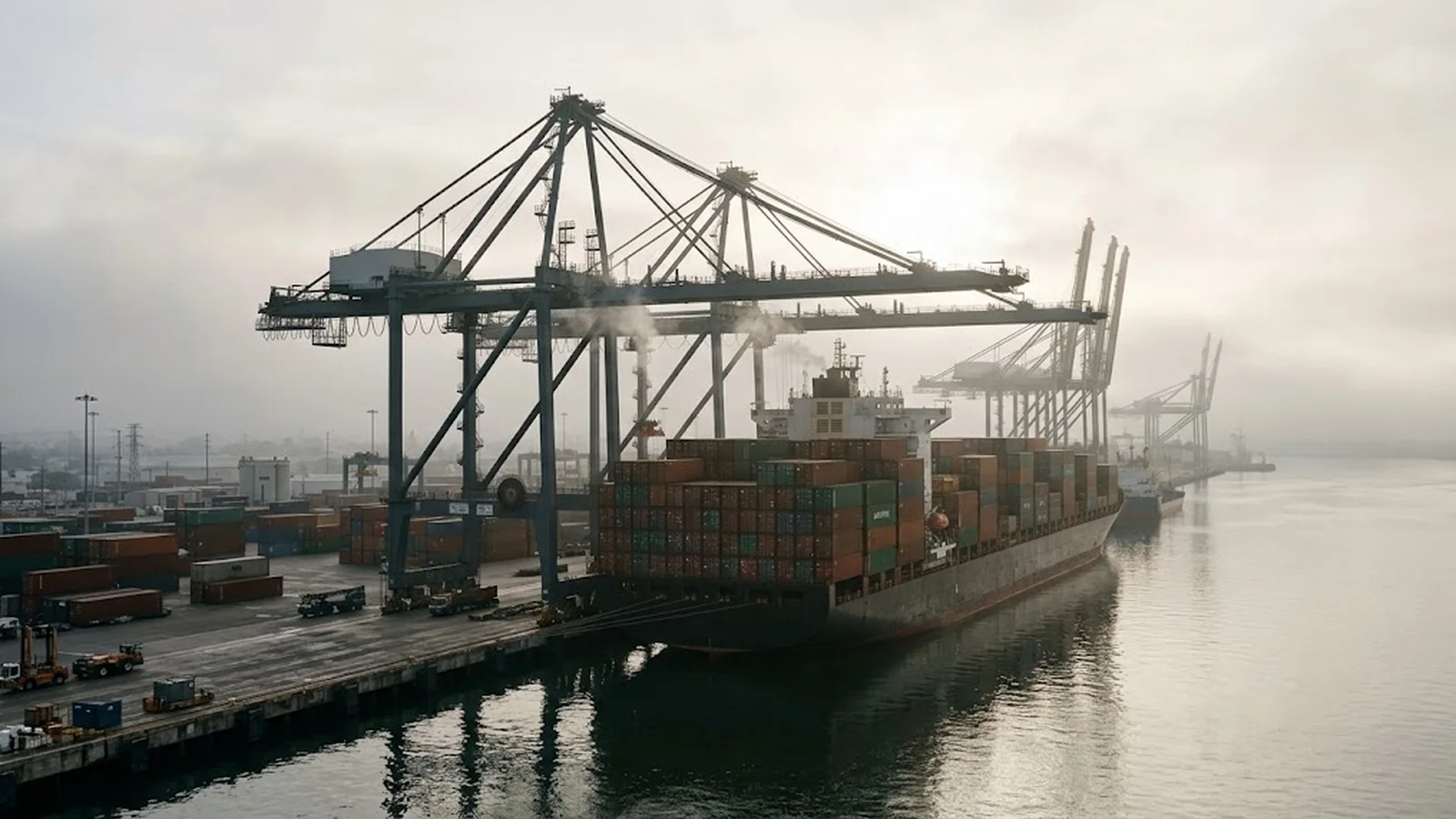
!Panoramic view of container gantry cranes and a tariff assessment yard at a commercial seaport under morning haze Buyers preparing this documentation can review our phosphatidylserine programme alongside the grade, source and market detail above.
Why tariff exposure starts at classification
Every duty question begins with the Harmonized Tariff Schedule. Phosphatidylserine as an ingredient typically enters under a phospholipid or chemical heading rather than a finished-supplement heading, and the duty rate, PGA profile, and even eligibility for special programs all flow from that ten-digit code. Misclassification cuts both ways: an overly generic code can overstate duty for years, while an aggressive code that minimizes duty invites retroactive assessment plus penalties when CBP reviews the file. The practical discipline is simple: document the classification reasoning in writing, tie it to the product specification, have your broker confirm it, and revisit it whenever the manufacturing process or product form changes — a shift from powder to liquid concentrate, or from food-grade to supplement-grade, can legitimately change the analysis. Importers who maintain a classification memo per SKU clear audits faster and negotiate freight quotes with cleaner inputs. The same memo then becomes the shared reference for broker onboarding, customer questionnaires, and any future trade remedy review — one document doing the work of three.
Section 301 and the baseline duty picture for Chinese-origin ingredients
A large share of the world's phosphatidylserine and phospholipid intermediates is produced in China, which places many US-bound shipments inside the Section 301 tariff framework on top of the ordinary duty rate. The applicable percentage depends on the tariff action list covering the specific code and has changed multiple times through exclusions and reviews, so the number that matters is the current rate for your exact code at entry time — not a rate quoted in a two-year-old supplier deck. Three habits keep the baseline under control: verify origin documentation supports the country claimed, including whether substantial transformation of intermediates genuinely occurs where the certificate says; keep exclusion and review tracking on a calendar, because Section 301 exclusions expire; and model landed cost across origin alternatives, since sunflower-derived PS from a non-Chinese origin may carry a higher ingredient price but a materially different duty profile. Tariff-adjusted comparison, not invoice comparison, is the only fair way to rank suppliers. It also changes negotiation dynamics: when both sides can see the duty layer transparently, conversations move from quoted price to true landed cost, and suppliers with better origin or classification positions can defend a higher invoice price on objective grounds rather than relationship goodwill.
Trade remedy signals importers should monitor
Antidumping and countervailing duty cases rarely arrive without warning. Petitions are preceded by industry organizing, Federal Register notices open investigation windows, and preliminary determinations create the retroactive liability dates that catch unprepared importers. For a specialty ingredient category, the practical monitoring stack is light: watch the Federal Register and CBP trade remedies pages for headings related to your classification, ask your broker to flag new ADD/CVD cases in your product space, and review CBP's e-Allegations-guided industry news indirectly through trade counsel newsletters. The most important date discipline concerns new investigations: once a petition is accepted, entries made after the preliminary determination can face retroactive duties, so importers with concentrated single-origin supply should know in advance what they would do — reroute origin, draw down safety stock, or price pass-through — rather than deciding mid-crisis.

Valuation, planning options, and realistic mitigation
Because duty scales with declared value, valuation structure is a legitimate planning surface — as long as it is honest. Related-party pricing must reflect arm's-length standards; first-sale valuation can lawfully declare the manufacturer's price rather than the middleman's when the conditions are met, which is why some multi-tier supply chains use it; and assist values, royalties, and certain tooling must be included where required. Beyond valuation, realistic mitigations include checking whether your code and origin qualify for any preferential program, requesting exclusions when windows open, and adjusting incoterms and delivery duty arrangements so the party best positioned to manage customs handles it. What does not work is transshipment — declaring a false origin to dodge a tariff action is a fraud with personal liability for the importer of record. Suppliers offering "creative origin solutions" should be removed from the vendor list, not rewarded with orders.
Building tariff risk into supplier contracts
Tariff risk allocation should be written, not improvised. Useful clauses in PS purchase agreements include a price-adjustment mechanism tied to specific official tariff changes, with a threshold below which the supplier absorbs routine movement; an obligation for the supplier to provide origin certificates and process documentation that substantiate the claimed origin; a change-of-origin notification duty covering shifts in the supplier's own feedstock or production location; and a cooperation clause requiring documentation support if an importer pursues an exclusion, refund, or classification protest. Importers running annual volume commitments should especially protect the middle of the term — a twelve-month fixed price without tariff language effectively asks the buyer to underwrite all trade policy risk. Pair the contract work with a quarterly review of the duty lines in your landed cost model so margin erosion is visible long before it reaches the P&L.
FAQ
Q: How do I find the current duty rate for my specific PS ingredient?
A: Start from your ten-digit HTS code, check the general duty rate in the Harmonized Tariff Schedule, then layer on any applicable trade action rates for the country of origin. CBP rulings and your licensed broker are the practical checks. Keep a dated screenshot or memo of the rate basis used in each landed cost model.
Q: Are antidumping duties a realistic risk for phosphatidylserine?
A: No importer should assume any ingredient category is permanently out of scope — petitions follow industry economics, not ingredient lists. The point of monitoring is not prediction but preparation: knowing your classification, your origin concentration, and your response options means a new investigation is a planning exercise rather than a margin emergency.
Q: Can I avoid Section 301 tariffs by shipping through a third country?
A: Only if substantial transformation genuinely occurs in that country. Rerouting a Chinese-origin product through another port while keeping its origin unchanged is transshipment, which CBP treats as fraud with penalties and potential personal liability. Legitimate origin changes require real processing steps and documentation that supports them.
Q: Who should absorb a new tariff — buyer or supplier?
A: Whatever the contract says. Without written language, the importer of record usually bears the duty because duty follows the entry. A price-adjustment clause with a defined trigger, threshold, and documentation standard converts an argument into an accounting exercise, which is why it belongs in every multi-quarter PS supply agreement.
Conclusion
Tariff and trade remedy risk is manageable for importers who treat it as a standing process rather than a shock event. Classification memos, current-rate verification, a light but regular monitoring routine, honest valuation planning, and explicit contract clauses together cover most of the exposure a phosphatidylserine buyer will realistically face. None of it is complicated; all of it requires calendar discipline. Importers who build this into procurement reviews compete on formulation and service while competitors absorb surprise duty invoices — and suppliers with clean origin documentation become measurably more valuable partners. When you are ready to move from checklist to quotation, contact our team with the grade, source and document set described above.
Sources
- USITC — Harmonized Tariff Schedule — https://hts.usitc.gov
- U.S. Customs and Border Protection — Trade Remedies — https://www.cbp.gov/trade/remedies
- Federal Register — https://www.federalregister.gov
- U.S. Customs and Border Protection — Carrying Out Trade Duties (Valuation) — https://www.cbp.gov/trade/basic-import-export
- World Trade Organization — Tariff Analysis Online — https://www.wto.org
Buyer fit
Who this guide is for
This guide is written for the buyer profiles below. Open your profile for the matching grades, documents and next steps, or tell us your requirements directly.
Recommended next steps
- Review the Phosphatidylserine product page.
- Compare Soy PS and Sunflower PS.
- Check manufacturing proof and Quality & R&D.
Contact sales for product documents
Share source preference, application, country, and annual quantity.
Contact Sales