

Once phosphatidylserine (PS) clears the port, most buyers stop worrying about it. That is a mistake. The weeks and months a bulk lot spends in a third-party warehouse — waiting for your contract manufacturer's call-off, staged ahead of a retail launch, or distributed direct to customers — are exactly where temperature excursions, lost traceability, and documentation chaos quietly accumulate. A 3PL is not a commodity service for an ingredient like PS: it is an extension of your quality system, and it will be examined as one during customer audits, retail audits, and any recall exercise. This article provides a practical selection framework for US and EU buyers, covering the certifications, temperature controls, traceability, audit rights, and commercial terms that separate a compliant logistics partner from a cheap one.
Why 3PL Choice Is a Quality Decision, Not Just a Freight Decision
Under 21 CFR Part 111, US dietary supplement manufacturers must ensure ingredients are held under conditions that preserve identity, strength, and quality — and that duty extends to materials sitting in a warehouse you do not own. In the EU, food business operators carry comparable obligations for traceability and food-safety conditions along the supply chain, and importers of record retain responsibilities for goods they place on the market regardless of who physically stores them.
The practical consequence: if your 3PL stores PS at 35°C next to a loading door in August, or cannot reconstruct which lot went to which customer, the regulatory exposure is yours. Buyers should therefore evaluate 3PLs with the same seriousness as a contract manufacturer — certification review, audit, documented procedures — rather than choosing on rate cards alone.

Certification and Regulatory Baseline for PS Storage
Start with the paper, because it is cheap to check and quickly disqualifies weak candidates. A credible 3PL for PS in the US or EU should hold, at minimum:
- A GFSI-recognized food-safety certification (BRCGS Storage & Distribution, SQF, or IFS Logistics) covering the specific site
- FDA food facility registration for US sites, and relevant EU national registrations
- A documented HACCP plan and a quality manual with change control
- Security and compliance programs (CTPAT for US cross-border flows; AEO status in the EU) where customs-linked services are involved
- Liability insurance appropriate to the declared value of phospholipid inventory
Ask for certificates scoped to the exact warehouse and handling site, not a corporate group certificate — multi-site 3PL groups routinely differ between facilities. Also ask how long they have held the certification at that site; a recently certified site with no audit history is a different risk than a facility that has passed three surveillance audits.
Temperature, Warehouse Zones, and Handling Requirements
PS is an oxidation-sensitive phospholipid. Heat and light accelerate peroxide-value growth, so the warehouse environment matters as much as the truck that delivered the goods. In the selection process, require:
- Temperature-controlled, temperature-mapped storage zones, with mapping studies available on request and re-mapping after any major layout change
- Continuous monitoring with calibrated sensors, alarms, and automated records you can access — not a daily manual thermometer reading
- Defined handling rules: no floor storage, no dock dwell, protective light-avoiding storage for bulk PS packaging
- Documented receiving and put-away procedures that include a visual and packaging check before inventory is accepted into your account
- Capacity for climate-appropriate short-term staging at the outbound dock during peak season
Ask candidate 3PLs how they handle excursion events: who is notified, within what timeframe, whether data is shared automatically, and whether quarantined stock is segregated physically in the system as well as on the floor. Their answer is a better predictor of behavior than any certificate.
Traceability, Documentation, and Recall Ready-ness
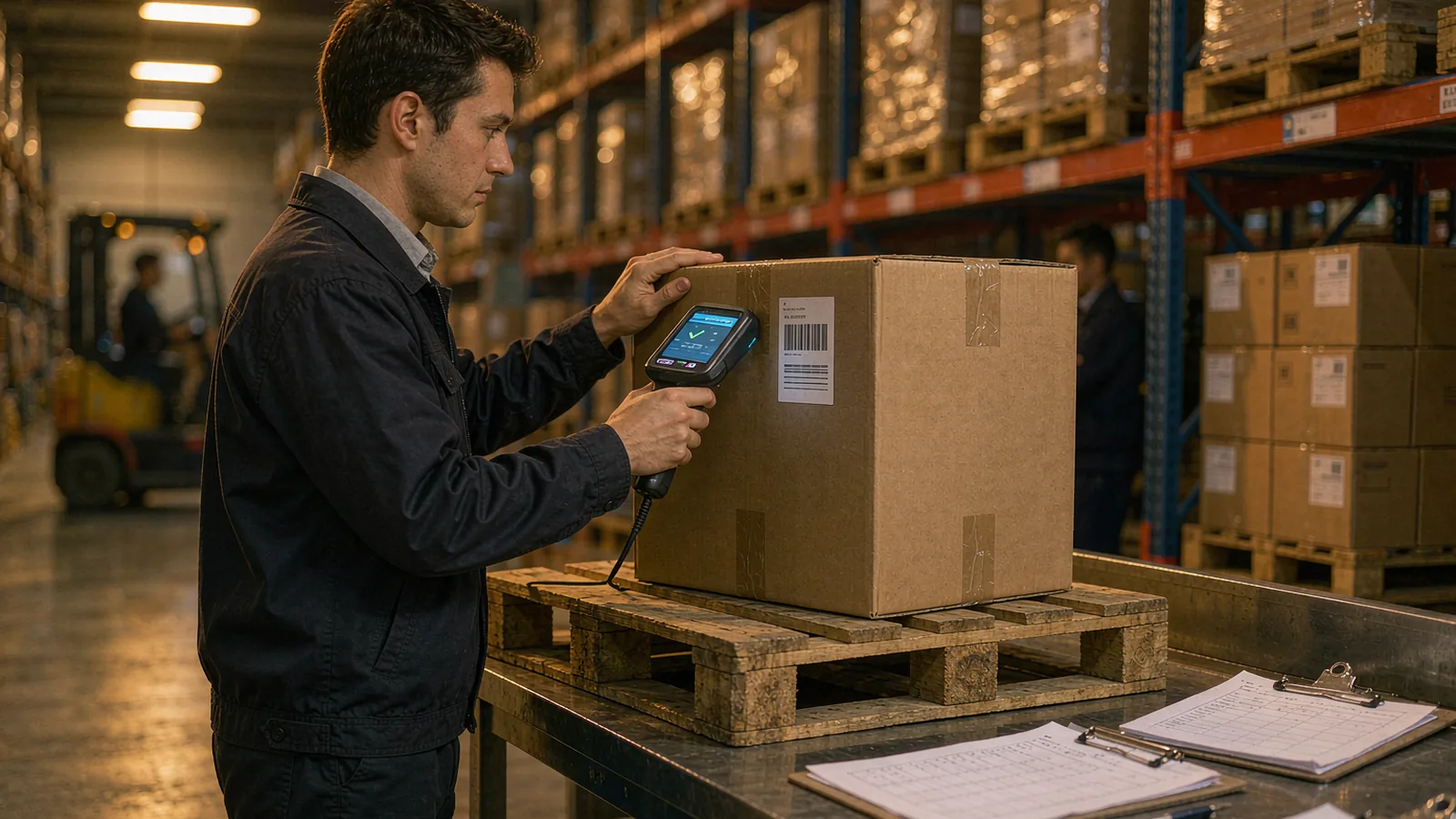
A capable 3PL should give you lot-level visibility at all times: receipts, holds, picks, and shipments traceable to the PS lot number, with FIFO/FEFO enforced by the warehouse management system rather than by operator memory. Test this in the sales demo — ask them to run a mock trace from a purchase order to a customer shipment and back to the supplier lot, and time how long it takes.
Recall readiness deserves its own line in the evaluation. The 3PL should support a defined mock-recall exercise annually, produce complete distribution records within hours, and hold your documentation (COAs, spec sheets, SDS) retrievable against the inventory they store. Under FSMA 204 in the US, traceability record duties flow to the entity holding the food for many events, so a 3PL that cannot produce electronic traceability records becomes a direct compliance liability for importers and manufacturers.
Auditing the 3PL Before and After Signing
Qualify the 3PL with a document review plus a site audit — remote or in person — before the first pallet arrives. Focus the audit on receiving, storage zones, deviation management, pest control, sanitation, training records, and the WMS change-control process. Score the audit the way you would score an ingredient supplier, and record findings in a corrective action log with deadlines.
After go-live, keep the relationship under quality governance: an annual audit or surveillance review, incident and excursion reports routed to your QA inbox automatically, and the 3PL's own certifications tracked in your approved-supplier file so renewals never lapse unnoticed. Buyers who treat 3PLs as quality-system extensions pass retail and customer audits far more comfortably than those who discover the warehouse only when something goes wrong.
Cost Structure and Contract Terms That Avoid Surprises
Rate cards hide the real cost drivers. In addition to pallet storage rates, model inbound handling, put-away fees, pick-and-pack charges, climate-zone premiums, minimum monthly storage (which punishes slow inventory turns), and administrative charges for reports or document requests. A warehouse that looks 20 percent cheaper on storage can cost more in a year once handling and minimums are included.
On contract terms, negotiate for: defined temperature-control service levels with a cure-and-compensation mechanism for failures, clear liability and insurance responsibility for stock value (including whether heat damage claims are excluded), audit rights in the agreement itself, data access and export rights for traceability records, and termination assistance that includes inventory handover. These clauses are standard with mature 3PLs; reluctance to include them is itself a signal.
FAQ
Q: Do we need a pharma-grade warehouse for PS, or is food grade enough?
A: For dietary supplement and food applications, a GFSI-certified food-grade 3PL with strong temperature control is typically sufficient, provided your quality agreement defines the conditions. Pharma-grade (GDP) storage becomes relevant if you move into pharmaceutical or medical-food supply chains where GMP distribution is expected.
Q: How much does temperature-controlled 3PL storage add to cost?
A: Climate-zone storage typically carries a modest premium over ambient — often in the range of 10–30 percent on storage rates depending on market and season — plus handling. Compare that against the value of a bulk PS lot: a single heat-driven peroxide-value failure usually costs more than years of climate-zone premiums.
Q: Can one 3PL cover both the US and the EU?
A: Global 3PL groups can, but quality performance is site-specific. Contract the network, but audit and certificate-scope each individual site, and confirm which sites are actually approved to hold your inventory in your quality agreement.
Q: What single question best reveals 3PL quality?
A: Ask them to walk through their last real temperature excursion: how it was detected, who was notified, what the customer received, and how stock was dispositioned. A specific, documented answer indicates a working system; a vague one predicts trouble.
Conclusion
A 3PL sits between your supplier's COA and your customer's audit, and everything that happens in between lands on your quality file. Select warehouse partners the way you select ingredient suppliers: certify first, map the temperature story, test the traceability live, audit before the first pallet, and put service levels and audit rights into the contract. PS is not fragile — but it is unforgiving of careless storage, and your customers will judge the result, not the warehouse.
Sources
- U.S. FDA — Dietary Supplements (21 CFR Part 111): https://www.ecfr.gov/current/title-21/part-111
- FDA — FSMA Rule 204 Traceability of Foods: https://www.fda.gov/food/food-safety-modernization-act-fsma/fsma-final-rule-requirements-additional-traceability-records-certain-foods
- BRCGS Storage and Distribution Standard: https://www.brcgs.com/
- IFS Logistics Standard: https://www.ifs-certification.com/
- EU General Food Law Regulation 178/2002 — traceability: https://eur-lex.europa.eu/eli/reg/2002/178/oj
Recommended next steps
- Review the Phosphatidylserine product page.
- Compare Soy PS and Sunflower PS.
- Check manufacturing proof and Quality & R&D.
Contact sales for product documents
Share source preference, application, country, and annual quantity.
Contact Sales