Most phosphatidylserine (PS) buyers discover their single-source risk at the worst possible moment: a capacity crunch, a failed incoming test, a customs delay, or an abrupt price revision leaves finished-goods production exposed with no qualified alternative. Switching suppliers, or adding a second source, is not a purchasing transaction — it is a mini qualification project that touches specifications, regulatory files, production scheduling, and your quality system. Done badly, a supplier transition creates two problems at once: interrupted supply and a documentation trail that fails customer or auditor scrutiny. Done well, it can be completed in one to two quarters with zero disruption to finished product. This guide walks US and EU supplement and functional-food buyers through the full sequence: deciding whether to switch or dual-source, aligning specifications between the two suppliers, running the qualification and bridging work, and managing inventory overlap so that no customer order ever depends on an unqualified lot.
Why Single-Source PS Exposure Becomes a Business Risk
Phosphatidylserine is a moderately concentrated, technically demanding ingredient: it is derived from soy or sunflower lecithin through enzymatic processing, and the pool of manufacturers who can hold assay, peroxide value, and microbiology within tight ranges is genuinely small. If 100% of your PS volume comes from one site, you carry several stacked risks at once. A single failed lot eliminates your ability to release finished goods until a replacement lot is shipped and tested. A force-majeure event, export restriction, or logistics disruption can lock you out for weeks. Price revisions arrive without a credible alternative to negotiate against. And in regulated channels — Amazon brand registries, retail vendor onboarding, EU B2B customers — a surprise supplier change without prior qualification can itself become a compliance finding. The cost of dual qualification is real but bounded; the cost of a stockout of your best-selling cognitive-health SKU is usually much larger.
When to Switch Versus When to Dual-Source
The first decision is strategic. A switch means eventually moving all volume to a new supplier and exiting the incumbent. Dual-sourcing means keeping both suppliers active, typically splitting volume 70/30 or 80/20 in steady state. Choose a switch when the incumbent has persistent quality or service failures, when a materially better price exists, or when the new supplier offers a grade advantage (for example, sunflower-derived PS for soy-allergen-free positioning). Choose dual-sourcing when demand is concentrated in a few large customers, when lead times are long or volatile, or when your regulatory position — an NDI notification, an EU novel-food narrative, or a customer-approved spec — references a specific manufacturing site and you need redundancy. Many buyers start with dual-sourcing as the safe path and only later consolidate.
Spec and Grade Alignment Between Incumbent and Challenger
Before any qualification testing, place the two specification sheets side by side and reconcile them line by line. The parameters that most commonly differ between PS suppliers include: assay basis (PS content by HPLC versus phospholipid content by acetone-insoluble, with or without conversion factors), particle size distribution for powder grades, loss on drying and water activity limits, peroxide value and free fatty acid maxima, residual solvent limits for the enzymatic transesterification route, and allergen or GMO statements. Decide deliberately: either amend your finished-goods specification to the tighter of the two, or maintain two raw-material specs and two label-relevant calculations. Watch the assay basis especially — if your label claim and batch calculations are built on one supplier's assay method, an apples-to-oranges switch can silently move your finished-product overage. Every definitional difference (as-is versus anhydrous basis, total phospholipid versus PS fraction) must be written down and resolved before you order qualification material.
Dual Qualification: Documentation and Testing Sequence
Qualify the challenger supplier as if it were new, because for your quality system it is. A workable sequence:
- Supplier questionnaire and document pack — food-safety certification (FSSC 22000, BRCGS, or SQF), manufacturing process description, allergen and GMO declarations, heavy-metals and pesticide statements, and regulatory status letters (US dietary-ingredient context, EU novel-food status where applicable).
- Sample evaluation — run full ID and potency confirmation, not just a COA review. Perform in-house or third-party HPLC against a reference standard, plus your critical acceptance tests.
- One site audit or a documented remote audit — either an on-site audit of the PS production line or a structured virtual audit with live facility video and document review.
- Qualification batches — order enough material for at least one production-scale batch of each affected finished SKU, plus retain samples. Bridge stability: place the challenger's material on a comparative stability protocol against your incumbent's historical data if the excipient system or assay basis differs.
- Approved-supplier-list (ASL) update — add the new supplier with scope, approved sites, and grade, and record the change in your change-control log so customer notifications go out where contracts require them.
For buyers supplying into the US, remember that your supplier-verification obligations under FSMA preventive controls apply to your new supplier just as they did to the old one. FDA's preventive-controls framework and documentation expectations are published on FDA's FSMA pages.
Bridging Batches and Inventory Overlap Planning
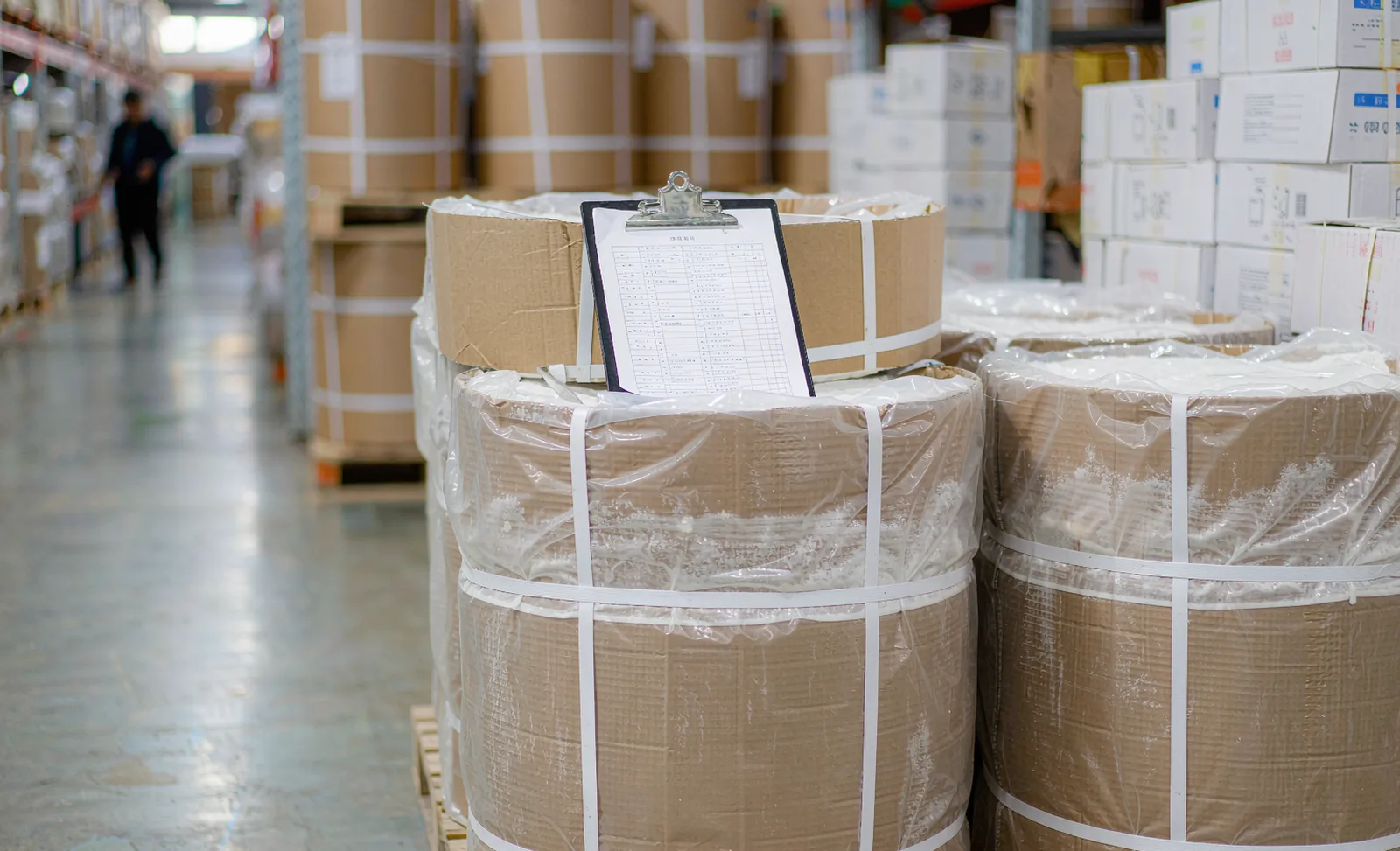
The operational heart of a smooth transition is overlap. Do not plan the new supplier's first lot to arrive exactly when the incumbent's last lot runs out — that zero-gap schedule converts any delay into a stockout. Instead, build a bridge: hold enough incumbent material (typically 8–12 weeks of finished-goods demand) to cover the full qualification-plus-transition window, including one repeat batch if the first qualification lot misses a parameter. Produce a formal bridging batch — a finished batch made with the challenger's PS — and run it through your full finished-goods release testing and, ideally, a sensory or dissolution check if the dosage form is sensitive. Only after that batch passes do you declare the switch effective for that SKU. The bridge lot also gives you a clean before/after comparison to show customers or auditors: same finished spec, new qualified source, documented evidence of equivalence.
Regulatory Handover: US and EU Labeling Considerations
A new PS source can ripple into your label and regulatory file. In the US, confirm the new material still fits your existing dietary-ingredient posture: if your notification or self-affirmed GRAS position references a specific manufacturing process or source (soy versus sunflower), the challenger must match or you need a documented equivalence assessment. Ingredient declarations rarely change for PS itself, but allergen statements will change if you move from soy-derived to sunflower-derived material. In the EU, if the new material's novel-food status documentation differs from the incumbent's, your product's compliance narrative must be updated before shipping. Where customer contracts or retailer vendor agreements require prior notification of supplier changes, calendar those notices early — some chains expect 60–90 days' warning with supporting documentation. Structured change management aligned to an ISO 9001-style quality system (ISO 9001:2015) is the simplest way to demonstrate the transition was controlled rather than improvised.
Retiring or Downgrading the Incumbent Supplier
If you dual-source, decide the steady-state split and write it down: many buyers keep 20–30% of volume flowing to the secondary supplier precisely so the qualification never goes stale. A supplier whose material sits unused for a year is, for practical purposes, unqualified again — annual re-qualification, fresh audit dates, and current document packs are required. If you fully switch, formalize the incumbent's exit: close the supplier record with a documented rationale, keep their document pack and batch records for your retention period (their lots are still in your traceability file), and confirm any outstanding commitments such as reserve samples or warranty claims. Do not simply delete the record — auditors ask what happened.
Common Failure Modes During Transitions
Four failure modes account for most painful transitions. Assay-basis drift: the new supplier's PS assay method reads differently, and finished-goods potency quietly moves. Excipient interaction: powder flow or blend uniformity changes with the new material's particle size, discovered only at the filler. Zero-gap scheduling: qualification slips six weeks and there is no bridge inventory, so production stops. Document gaps: the new supplier's certification scope does not actually cover the PS production step, or their novel-food/NDI file differs from what your label claims assume. All four are preventable with the reconciliation and overlap discipline described above — the playbook is not complicated, but every step skipped resurfaces later as either a stockout or an audit finding.
FAQ
Q1: How long does a typical PS supplier switch take?
Plan for 10–16 weeks end to end: 2–4 weeks for document review and sample evaluation, 4–6 weeks for the qualification lot and testing, and 4–6 weeks of bridging-batch production and overlap before the new supplier carries production volume. Dual qualification with bridge inventory is faster in calendar risk terms because a slip does not stop production.
Q2: Do I need to redo stability studies when I change PS suppliers?
If the new material matches your registered finished-goods specification and the excipient system is unchanged, a comparative or bracketed stability approach is usually acceptable, but your quality unit must document that justification. If assay basis, particle size, or the source (soy to sunflower) changes, run the finished product made with the new material on a full stability protocol before relying on existing data.
Q3: Can I switch suppliers without notifying my retail or B2B customers?
Check your contracts. Many retail vendor agreements and B2B supply agreements require prior written notice of raw-material or manufacturing changes, sometimes 60–90 days in advance with supporting documentation. Even where not contractually required, notifying customers of a controlled, documented switch protects the relationship if a future issue is traced to the transition.
Q4: What is the minimum order I should request for qualification?
Order enough for one full production-scale batch of your largest affected SKU plus retain samples and incoming-QC testing — commonly 25–100 kg depending on your formula. Sample-size-only qualification leaves you unable to run the bridging batch that proves real-world equivalence.
Q5: Is a remote audit acceptable for a new PS supplier?
A structured remote audit (live facility video, real-time document review, interviews with production and QC staff) is widely accepted when travel is impractical, but many US and EU buyers require on-site audits for critical raw materials like PS at least once. Whatever you accept, document the scope, limitations, and findings in your supplier file.
Conclusion
Switching or dual-sourcing a phosphatidylserine supplier is a controlled qualification project, not a purchase-order change. The buyers who do it cleanly share three habits: they reconcile specifications line by line before ordering anything, they maintain bridge inventory so qualification delays never touch customer shipments, and they treat the regulatory file — US dietary-ingredient posture, EU documentation, allergen statements — as part of the switch itself. With a 10–16 week plan, a formal bridging batch, and a written steady-state split, you reduce single-source risk without ever letting a customer feel the transition.
Sources
- FDA — FSMA Final Rule for Preventive Controls for Human Food: https://www.fda.gov/food/food-safety-modernization-act-fsma/fsma-final-rule-preventive-controls-human-food
- FDA — Dietary Supplements (regulatory background and guidance): https://www.fda.gov/food/dietary-supplements
- ISO 9001:2015 Quality Management Systems: https://www.iso.org/standard/62085.html
- USP — Food and Dietary Supplement Standards: https://www.usp.org/standards
- EFSA — Regulated Products Applications (novel food context): https://www.efsa.europa.eu/en/applications/regulatedproducts
Recommended next steps
- Review the Phosphatidylserine product page.
- Compare Soy PS and Sunflower PS.
- Check manufacturing proof and Quality & R&D.
Contact sales for product documents
Share source preference, application, country, and annual quantity.
Contact Sales