
For buyers in the US and EU, sunflower-derived phosphatidylserine exists for one dominant commercial reason: a meaningful share of the market — soy-avoidant consumers, kosher-keeping shoppers, retailers with allergen policies — will choose a soy-free PS product when one is available. Sunflower lecithin feeds the enzymatic conversion behind sunflower-source PS, and the ingredient genuinely contains no soy-derived material when the supply chain is what it claims. But "soy-free" on a label is a claim with legal weight in both markets, and it inherits every weakness in your documentation. A brand that prints "soy-free" while its supplier shares equipment with soy lecithin, or while its raw-material file quietly says "processed in a facility that also handles soybeans," has bought a compliance problem at a premium price. Unlike a style word such as "premium," a free-from claim is treated by regulators, US plaintiff attorneys, and EU market-surveillance authorities as a factual statement about composition and control — it is only as good as the file behind it. This article sets out the US and EU regulatory baselines, the evidence a substantiation file needs, and the wording and review practices that keep the benefit without the legal exposure.
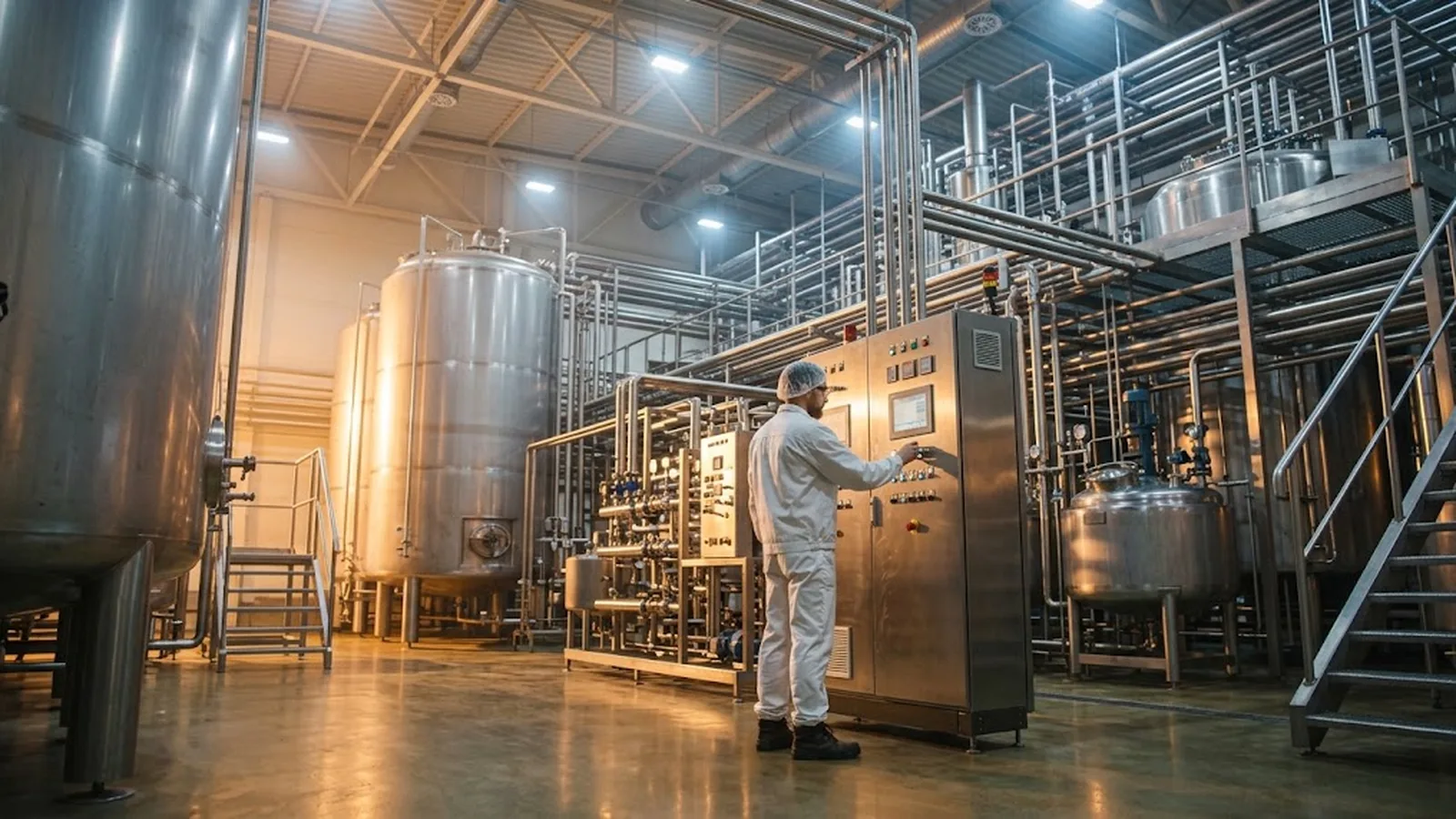
!Sunflower oil processing facility interior with stainless steel tanks and a worker at a control panel Where source selection is part of the decision, our soy phosphatidylserine page documents the extraction, specification and paperwork behind the soy route.
The US Baseline: FALCPA, Soybeans, Sesame, and What "Free" Implies
Under the Food Allergen Labeling and Consumer Protection Act (FALCPA), implemented through FDA labeling rules, packaged foods must declare any major food allergen — one of nine: milk, egg, fish, crustacean shellfish, tree nuts, wheat, peanuts, soybeans, and sesame (added by the FASTER Act, effective January 2023). Soybeans are on the list; sunflower is not. Two consequences follow.
First, if the ingredient truly contains no soy-derived material, FALCPA imposes no "Contains Soybeans" statement — there is nothing to declare. Second, nothing in US law defines how low soy content must be before a product may be labeled "soy-free." The FDA set a threshold for "gluten-free" (below 20 ppm), but there is no analogous number for allergen-free claims, so the claim is judged under the general prohibition on misleading labeling: it must be truthful in light of all label statements, including advisory statements like "may contain soy," and must reflect the manufacturer's actual controls. Treat "soy-free" as a claim the company must defend with documentation — supplier statements, process knowledge, testing — because a consumer complaint, a state consumer-protection action, or an FDA label review will ask exactly that. The same FALCPA rules apply to the finished supplement, so the claim flows into a panel-level obligation.
The EU Baseline: Annex II Allergens and the Discipline of Free-From Claims
The EU approach under Regulation (EU) No 1169/2011 is structurally similar: the 14 Annex II substances — including soybeans — must be emphasized in the ingredients list whenever present. Sunflower is not among them, so sunflower-derived PS needs no allergen emphasis from its own composition. Two EU-specific disciplines matter, however.
First, voluntary "free-from" claims are not lightly permitted. EU case law (notably the "Quadriga" ruling of the Court of Justice) and the regulation's recitals establish that a free-from claim may only be made where the food inherently does not contain the allergen, or where the absence results from a demonstrably rigorous production process; an unsubstantiated claim risks being judged misleading under the Unfair Commercial Practices framework. Second, precautionary "may contain" statements remain voluntary and unquantified — but an EU label declaring "soy-free" on the front while carrying a soy advisory statement on the back is close to indefensible. Align claim wording with the product notification filed in each member state, where claims language may draw questions.
Building the Substantiation File: Supply-Chain Evidence
The substantiation file is the difference between a claim and a slogan. For sunflower PS, assemble and version-control these documents from the supplier, before the first commercial order and refreshed at each annual review:
- Supplier allergen statement covering the specific product and grade — not a generic corporate statement — confirming no soy-derived ingredients and stating which allergens are handled at the site.
- Raw-material provenance: specifications and declarations for the sunflower lecithin and the conversion inputs (typically a serine donor and the enzyme phospholipase D), confirming none are soy-derived. Some enzyme preparations are produced using soy-based media; ask explicitly and obtain the answer in writing.
- Process description showing dedicated handling of sunflower-derived materials, or, where lines are shared, the documented changeover and cleaning regime.
- Analytical evidence: soy residue testing where relevant — typically ELISA targeting soy protein — with the method's matrix validation noted, and results interpreted honestly: a "not detected at X ppm" result is bounded by the detection limit.
- Certifications and audits: the site's food-safety certification scope and allergen-management modules, read for what they actually cover rather than what the logo implies.
File completeness is a qualification asset: a supplier who produces these documents in days has the allergen discipline the claim requires; one who sends a marketing flyer has told you something important.
Cross-Contact Reality: Shared Lines, Advisory Statements, and Testing
Most "soy-free claim" failures in this category are cross-contact failures, not formulation failures. Sunflower and soy lecithin often run through the same plants, and enzyme conversion equipment commonly serves both substrates. Three controls determine the outcome:
- Segregation status by product, not by plant. Ask whether the grade you buy runs on a dedicated train or a shared one after validated cleaning. Both answers can support a claim, but the file must match the answer.
- Advisory statement logic. If the supplier's own statement carries "may contain soy," your "soy-free" claim is contradicted by your supply chain. Either the supplier's controls justify removing the advisory through documented risk assessment, or the claim must be softened. Marketing cannot outrun the allergen statement.
- Testing as verification, not as control. Periodic soy ELISA checks on incoming lots or finished capsules verify the system; they cannot substitute for process control, since sampling never proves every drum is clean. Test at risk-based frequency and trend the results in the supplier scorecard.
The economics are favorable: ELISA testing runs in the low hundreds of dollars per sample, while a single US claims action or EU market-surveillance challenge can consume multiples of an annual ingredient budget.
Claim Wording and Label Review Checklist for US/EU Labels
Before artwork approval, run this checklist on the finished label:
- Wording matches evidence. "Soy-free" is the strongest form; "made without soy ingredients" or "no soy added" are softer and sometimes more defensible where the site is shared. Never pair any of them with a soy advisory statement.
- Consistency across surfaces. The claim must agree with the ingredient list, the US "Contains" statement, any "manufactured in a facility" language, and the website copy — regulators and plaintiff attorneys read all of them together.
- Jurisdiction fit. A US claim does not automatically transfer to EU artwork; review against each market's rules and member-state free-from phrasing before filing notifications.
- Sub-object claims are covered too. "Non-GMO," "vegan," and kosher claims often ride along with soy-free positioning; each has its own substantiation file.
- Change control on the claim. If the supplier changes substrate, site, or cleaning validation, the claim review reopens — write this into the supplier change-notification triggers.

FAQ
Q: Is sunflower-derived PS required to carry an allergen statement at all?
A: Not for its own composition — sunflower is not a regulated allergen in either the US (FALCPA major allergens plus sesame) or the EU (Annex II) lists. The statements you collect concern what the product does not contain and what the site handles — substantiation documents, not mandatory declarations.
Q: Can I claim "soy-free" if the supplier's statement says "processed in a facility that also handles soy"?
A: Not safely. Claim and advisory statement contradict each other, and in a dispute the advisory wins because it is the supplier's own risk assessment. Either document that the shared-facility risk is controlled to the level the claim requires and have the statement revised, or drop the claim to wording that matches reality.
Q: Is there a ppm threshold for "soy-free" like the 20 ppm rule for gluten-free?
A: No. The FDA defined 20 ppm for "gluten-free" specifically, but no numerical threshold exists for soy or other allergen-free claims in either market. The claim is judged on truthfulness and the strength of your documented controls — which is why the substantiation file, not a single test report, is the core evidence.
Q: What testing should I run on sunflower PS lots to support the claim?
A: Risk-based soy protein ELISA on incoming lots or finished product, using a method validated for the matrix, recorded against the detection limit. Treat testing as verification of process controls — a clean trend across lots is powerful substantiation; a single test on one drum is not.
Q: Does enzymatic conversion introduce any soy-derived inputs?
A: The conversion from sunflower phosphatidylcholine to phosphatidylserine typically uses the enzyme phospholipase D with a serine donor, and neither is inherently soy-derived — but enzyme preparations and media vary by manufacturer. Require written documentation of enzyme and donor input origins; this is the most overlooked page in soy-free files.
Conclusion
Sunflower-derived phosphatidylserine earns its premium honestly: it lets brands serve soy-avoidant consumers with a clean, verifiable story. But "soy-free" is judged by regulators in both markets — against FALCPA's nine-allergen baseline and no-threshold truthfulness standard in the US, and against Annex II and the courts' rigor standard for free-from statements in the EU. The defense is a file: a product-specific allergen statement, documented enzyme-chain provenance, cross-contact controls matching the wording, risk-based ELISA verification, and label review keeping the claim consistent from panel to website. Build it before print, refresh it with every supplier change, and the marketing advantage arrives without the compliance liability. When you are ready to move from checklist to quotation, contact our team with the grade, source and document set described above.
Sources
- FDA — Major Food Allergens (FALCPA labeling requirements and the nine major allergens): https://www.fda.gov/food/food-labeling-nutrition/major-food-allergens
- FDA — Food Allergies and allergen labeling guidance for industry: https://www.fda.gov/food/food-labeling-nutrition/food-allergies
- EUR-Lex — Regulation (EU) No 1169/2011 on food information to consumers (Annex II allergens and mandatory labeling): https://eur-lex.europa.eu/legal-content/EN/TXT/?uri=CELEX:32011R1169
- EFSA — Food allergens topic (risk assessment background on allergens in the EU): https://www.efsa.europa.eu/en/topics/topic/allergens
- EUR-Lex — Commission Regulation (EU) 2021/382 amending Annex II of Regulation 852/2004 on food safety management, including allergen management: https://eur-lex.europa.eu/eli/reg/2021/382/oj
Buyer fit
Who this guide is for
This guide is written for the buyer profiles below. Open your profile for the matching grades, documents and next steps, or tell us your requirements directly.
Recommended next steps
- Review the Phosphatidylserine product page.
- Compare Soy PS and Sunflower PS.
- Check manufacturing proof and Quality & R&D.
Contact sales for product documents
Share source preference, application, country, and annual quantity.
Contact Sales