

Stick packs and sachets have become the fastest-growing single-serve format in the supplement aisle, and phosphatidylserine fits the format well: the dose is small, the benefit is positioned around focus and stress, and consumers prefer to take it on the go, stirred into water or coffee at work. For brands, however, stick pack OEM is a different engineering exercise from bottle filling. Fill accuracy depends on powder behavior, shelf life depends on the foil laminate, and cost depends on film roll quantities and line speeds that most first-time buyers have never had to specify. This guide walks through the specification decisions that determine whether a PS stick pack launch fills smoothly, survives distribution, and passes retailer documentation review in the US and EU. Buyers preparing this documentation can review our phosphatidylserine programme alongside the grade, source and market detail above.
Why Stick Packs Fit Phosphatidylserine Products
The case for stick packs starts with dose geometry. Typical PS servings range from 100 to 300 mg of active, which is far too small to dose reliably with a scoop and awkward to carry as capsules for consumers who already take several supplements. A single-serve stick pack removes the measuring step, protects the dose from oxidation until it is opened, and supports positioning around morning coffee, pre-workout routines, or afternoon focus breaks. The format also opens formulation options that bottles do not: a PS stick pack can carry electrolytes, citicoline, L-theanine, or vitamins alongside the PS, creating a differentiated claim profile without a new bottle SKU. Retail buyers in the US and EU increasingly ask for single-serve evidence as well, since stick packs travel into gym bags and office drawers where bottles do not. The trade-off is a higher per-unit packaging cost and a filling process that demands tighter powder specification, which is exactly what the rest of this guide addresses.
Dose and Fill-Weight Engineering
Start by separating active content from fill weight. If the claim is 150 mg of PS from a 50% grade on a carrier, the raw material contribution is 300 mg, and once flavorants, sweeteners, and electrolytes are added, the finished fill weight may land between 2 and 5 grams. Stick pack machines dose by volumetric cups or auger fillers, and dosing accuracy is typically expressed as a percentage of target weight; a machine set up for a 3 g fill may hold tolerance comfortably, while a 1 g fill of the same powder can drift. Agree fill-weight tolerance with the contract packer in the specification, along with the statistical basis for checking it, because label compliance in both the US and EU depends on the finished unit delivering the declared amount. Also plan the headspace question early: a tall narrow stick pack presents a large surface area of loose powder, so underfills look visibly empty and can trigger consumer complaints even when the dose is correct.
Powder Properties That Make or Break Fill Accuracy
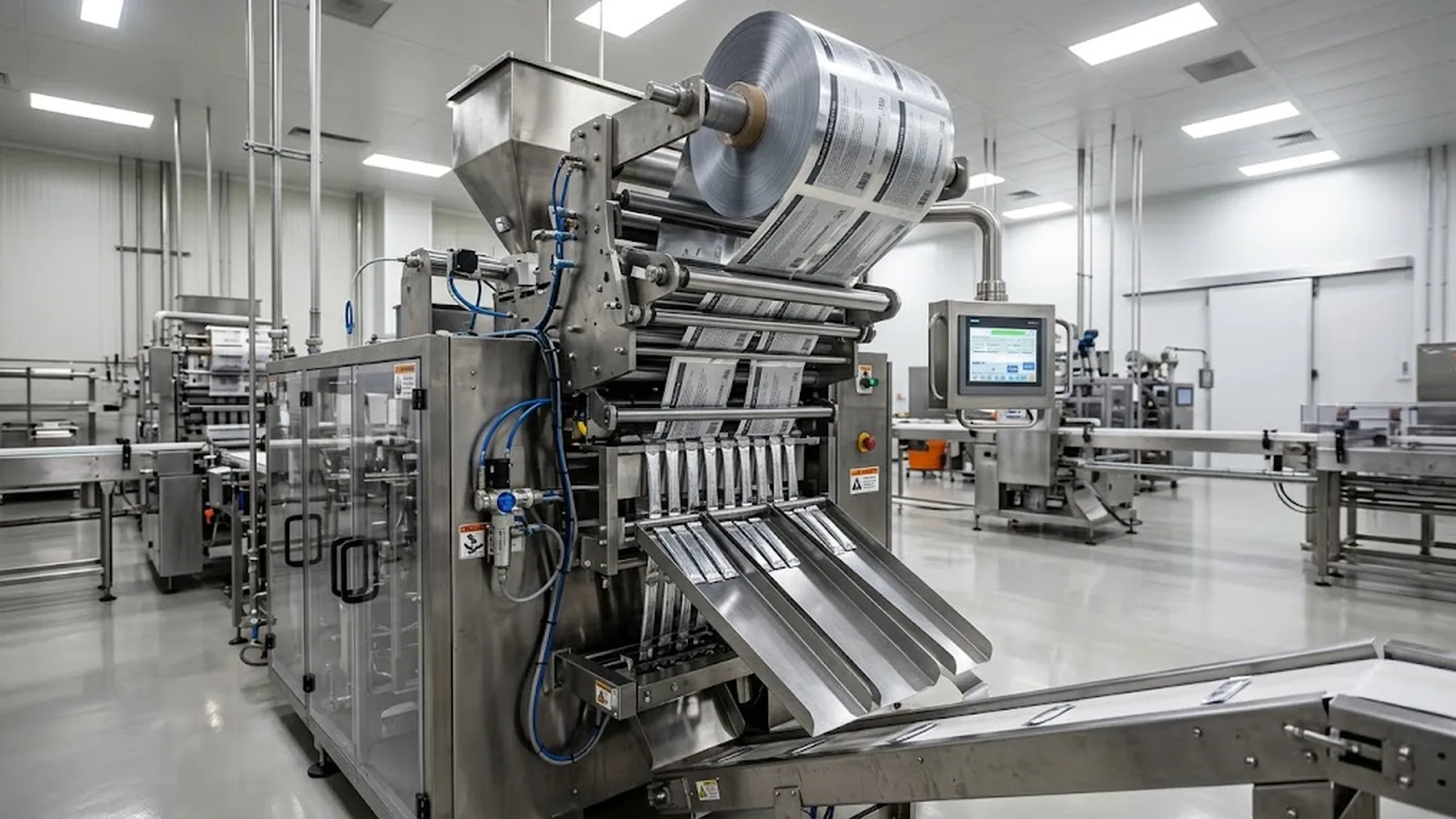
Stick pack filling amplifies every powder weakness. Flowability governs whether the auger or cup feeds consistently; hygroscopic powders gain moisture on the line and start bridging; fine particles fluidize and coat sealing jaws. Before locking the formula, ask your PS supplier for bulk density, particle size distribution, and water activity on the exact grade, and ask the packer to run flow trials on the proposed blend. Carriers matter here: the same concentration-grade logic that applies to capsules applies to stick packs, and a grade carried on a soluble polysaccharide may disperse beautifully in the glass but behave differently in the hopper. Set numerical acceptance limits rather than adjectives, for example a Carr index range or a target bulk density band, so incoming material can be released against a specification instead of a judgment call. If the blend includes flavorants or hygroscopic actives, define the hold time between blending and filling, because a blend that sits overnight in an open tote can change behavior mid-run and push fill weights out of tolerance.
Film, Foil, and Moisture Barrier Selection
PS is an oxidatively sensitive phospholipid, so the laminate is a shelf-life decision, not a cosmetic one. Most PS stick packs use a PET-aluminum-polyethylene laminate: PET for print and stiffness, foil as the oxygen and light barrier, polyethylene as the sealant. Transparent or paper-forward laminates look premium but transmit oxygen and light, which shortens the reliable shelf life for phospholipids unless an opaque overwrap compensates. Specify the barrier with numbers: oxygen transmission rate, water vapor transmission rate, and sealant peel force, and ask the film supplier for certificates with each roll lot. Sealing windows deserve equal attention, since PS blends with fatty carriers can contaminate the seal area and produce weak seams; the packer should validate seal temperature, pressure, and dwell on your blend, then monitor seal integrity in-process. Finally, confirm the laminate is compatible with nitrogen flush if the line supports it, and agree whether residual oxygen in the headspace will be measured per lot or validated once and monitored periodically.
Line Capability, MOQ, and Changeover Realities
Stick pack economics are driven by film roll quantities and changeover time. Minimum order quantities are usually set by the film: a printed laminate roll may require tens of thousands of units before the artwork investment makes sense, so brands launching several flavors should weigh digital printing for short runs against gravure for volume. Ask prospective packers which stick pack machine platforms they run, the dose range and lane count of each, and their changeover procedure between blends, because allergen cleaning between a soy-derived PS blend and a sunflower-only blend may require a validated cleaning step with documented release. Lead times also behave differently from bottle lines: film lead time often exceeds material lead time, so the artwork approval and roll delivery sit on the critical path. Model the landed cost per stick pack including film, filling, cartons, and freight on the finished cartons, and compare it honestly against a bottled format before committing, because the per-serve premium is real even though the format advantages are too.
QC Checks and Release Documentation
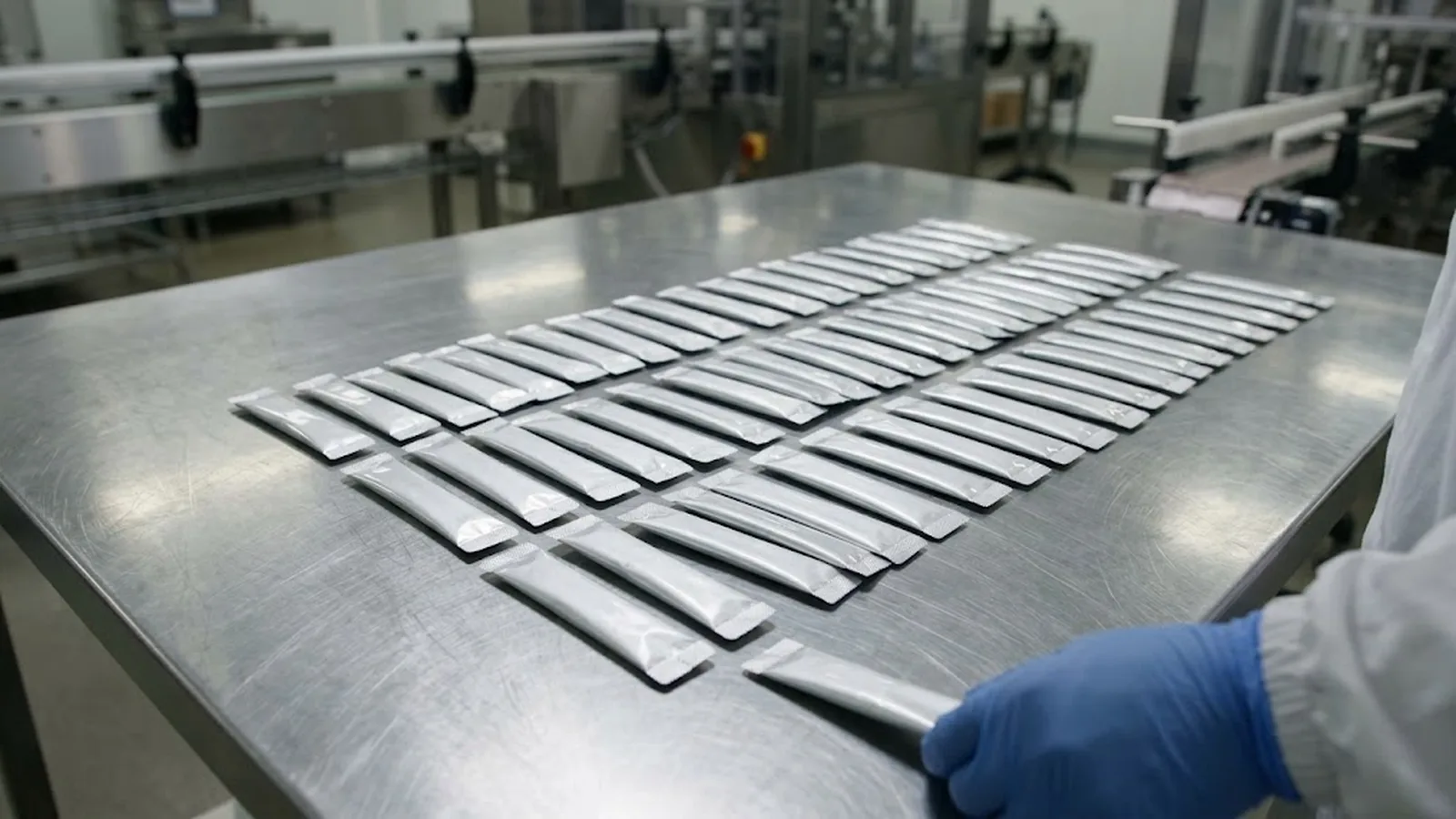
A credible stick pack QC plan covers the powder, the pack, and the paperwork. On the powder, the packer should verify identity against the certificate of analysis and check water activity on receipt, since moisture drift shows up later as caking in the sachet. In process, fill weight checks run at defined intervals per lane, seal integrity is tested by burst or vacuum methods, and leak testing catches the weak seams that foil laminates can hide. On release, each lot should carry the finished-pack certificate of analysis, retain samples stored under controlled conditions, and batch records that tie the PS lot, the blend, the film roll lots, and the line cleaning record together, which is exactly the traceability chain FSMA 204 and EU official controls expect importers and brand owners to produce on request. Agree the stability protocol before the first production run: real-time data on the finished stick pack at intended storage conditions is what supports the expiry date printed on the sachet, and accelerated data alone will not satisfy every retailer in the US or EU.
Artwork, Printing, and Mandatory Markings
The artwork on a stick pack carries more regulatory weight than on a bottle, because there is no carton to hold mandatory information. In the US, the Supplement Facts panel, statement of identity, net quantity, and manufacturer or distributor line must appear on the sachet itself, which pressures the designer to fit small type into a format that was built for a logo. In the EU, the mandatory food information requirements apply to the single serving, so the ingredient list, allergen emphasis, best-before date, lot number, and storage instructions must all survive on the sachet unless an outer carton carries them. Plan the printing method alongside the layout: gravure delivers crisp small type and consistent color at volume, digital supports shorter runs and faster artwork changes, and both need a proof approved against the final laminate, since foil surfaces shift color perception. Include machine-readable elements early too, because retailers increasingly expect GS1 barcodes and serialized codes for traceability pilots. Finally, reserve a quiet zone for your own lot coding and confirm with the packer that their coder will not obscure mandatory text, a small detail that generates surprisingly frequent rework orders.
FAQ
Q: Can phosphatidylserine be filled into stick packs without a carrier?
A: Practically, no. Un-carried PS extract is oily and sticky, which defeats volumetric and auger dosing. High-assay grades carried on phospholipid or polysaccharide matrices are the standard route, and the carrier choice should be validated for flow and dispersibility in your blend.
Q: What barrier does a PS stick pack actually need?
A: Treat it as an oxygen-sensitive phospholipid product. A foil-containing laminate with low oxygen and water vapor transmission, light protection, and a validated seal is the default for 18 to 24 month shelf life. Transparent laminates need either an overwrap or a shortened expiry supported by stability data.
Q: How large is a typical stick pack MOQ?
A: MOQs are usually film-driven, commonly tens of thousands of units per artwork. Digital printing lowers the entry point for launches and tests, while gravure becomes economical at volume. Ask packers to quote both routes so the crossover point is visible in your business case.
Q: Do stick packs need nitrogen flush?
A: It is strongly preferred for PS. Flushing reduces residual headspace oxygen and slows oxidative rancidity. If the chosen line cannot flush, compensate with a higher-barrier laminate and confirm the shelf life claim with real-time stability on unflushed packs.
Conclusion
Stick packs give phosphatidylserine brands a modern, convenient format that fits how consumers actually take focus and stress supplements, but the format rewards buyers who specify like engineers. Define fill weights and tolerances around the carrier and the claim, set numerical powder limits before the flow trial, choose the laminate for oxygen protection rather than shelf appeal, and put seal integrity, traceability, and finished-pack stability into the release file. Brands in the US and Europe that bring this specification to the OEM conversation get faster line trials, fewer complaint-driven returns, and documentation that survives retailer and regulator scrutiny. Nutranexa supports PS stick pack projects from grade selection through blend qualification and can connect your formulation to packers experienced in single-serve filling. When you are ready to move from checklist to quotation, contact our team with the grade, source and document set described above.
Sources
- U.S. Food and Drug Administration — Dietary Supplements: https://www.fda.gov/food/dietary-supplements
- U.S. Food and Drug Administration — FSMA Final Rule on Traceability (FSMA 204): https://www.fda.gov/food/food-safety-modernization-act-fsma/fsma-final-rule-requirements-additional-traceability-records-certain-foods
- European Commission — Food Labelling: https://food.ec.europa.eu/food-labelling-and-nutrition/food-information_en
- Institute of Packaging Professionals — Resources: https://www.iopp.org/
- PubChem — Phosphatidylserine: https://pubchem.ncbi.nlm.nih.gov/compound/Phosphatidylserine
Buyer fit
Who this guide is for
This guide is written for the buyer profiles below. Open your profile for the matching grades, documents and next steps, or tell us your requirements directly.
Recommended next steps
- Review the Phosphatidylserine product page.
- Compare Soy PS and Sunflower PS.
- Check manufacturing proof and Quality & R&D.
Contact sales for product documents
Share source preference, application, country, and annual quantity.
Contact Sales