Phosphatidylserine is one of the most approachable cognitive-health ingredients for a first private-label launch: long history of use, an established science narrative, and a mature supply base. But approachable is not the same as simple. New brand owners routinely stumble on three things — choosing a supply model before understanding its cost structure, underestimating how MOQs shape their cash commitment, and discovering compliance tasks late when they should have started them in week one. This roadmap lays out the launch sequence the way an experienced sourcing team would run it.
Step 1: Define the Product Before You Source
Every downstream decision follows from a one-page product definition. Before contacting any supplier or contract manufacturer, answer these questions in writing:
- Format and dose: capsules, gummies, powder sticks, or functional-food format? Typical finished-product PS doses run 100–300 mg per serving.
- Market scope: US only, EU only, or both? Dual-market launches roughly double the label and dossier work.
- Origin and positioning: does the brand promise demand soy-free sunflower PS, or is soy-derived acceptable at a better cost? This single choice moves ingredient cost 15–30%.
- Claims strategy: what the label will say determines which markets you can enter and which evidence file you need.
- Volume ambition: honest first-year volume estimates protect you from MOQs you cannot sell through.
Brands that skip this step end up re-quoting mid-project — and each re-quote costs two to three weeks.
Step 2: Choose Your Supply Model
Three models dominate private-label PS launches, and they differ more in control than in headline price:
Model A — Turnkey private label. You select a stock formula (or a lightly customized one) from a contract manufacturer that already works with PS, apply your artwork to their standard packaging, and take delivery of finished goods. Lowest complexity, fastest route to market — commonly 10–16 weeks from formula selection to delivered stock. Trade-offs: limited formula differentiation and less visibility into the ingredient supply chain.
Model B — OEM with your own formula. You specify the ingredient (origin, assay grade, form), the excipient system, and the finished-product spec; a contract manufacturer produces to your specification. This is where most serious cognitive-health brands land. You need an ingredient supplier relationship of your own or a manufacturer willing to disclose theirs — ask directly, because undisclosed ingredient sources complicate your traceability and audit story.
Model C — Branded ingredient licensing. You build the product around a trademarked, clinically referenced PS ingredient and pay a royalty or premium. Higher ingredient cost, but retail buyers recognize the documentation trail and your marketing borrows the ingredient's published research.
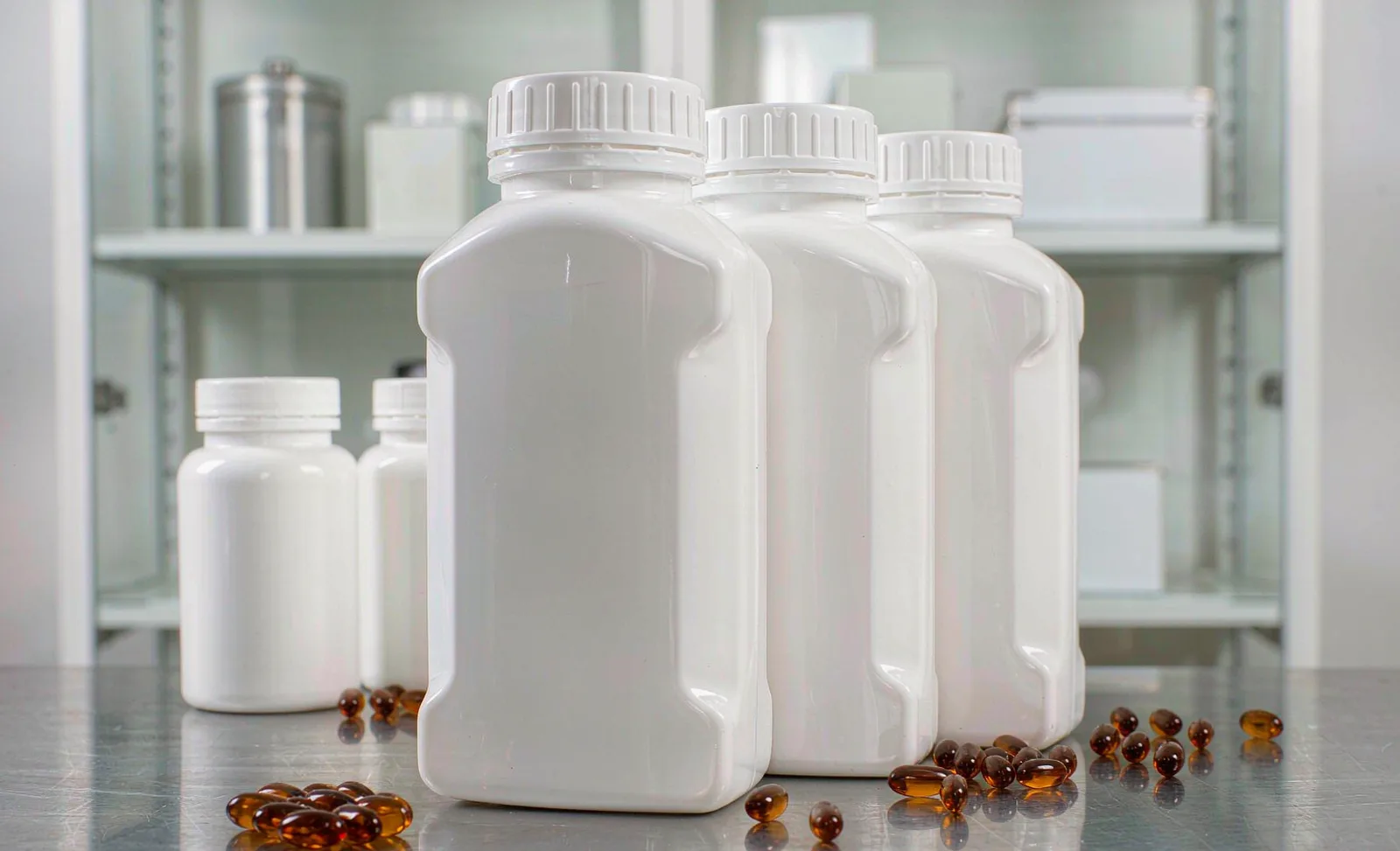
Ask each candidate manufacturer the same five questions: What PS origin and assay do you stock? What is your MOQ per SKU? What is your lead time from approved artwork? Can you share the ingredient supplier's CoA directly? Who owns the finished-product specification? Divergent answers will tell you more than their price sheets.
Step 3: Select the Ingredient Specification
The ingredient spec is the interface between your brand and the factory, so write it down before quoting. Decisions to lock:
- Assay grade: 20% PS suits cost-driven blends and functional foods; 50% is the workhorse for capsules; 70% serves high-dose or premium single-ingredient products. Higher assay means less powder per serving.
- Form: powder for capsules, tablets, and blends; liquid/paste PS for softgels and gummy systems.
- Origin: soy or sunflower, with the allergen-labeling consequence decided consciously.
- Documentation scope: batch CoA, allergen and GMO statements, origin declaration, and market-specific add-ons.
Send identical specs to at least three suppliers and compare on cost per kilogram of actual PS, documentation completeness, and lead time — not just headline price.
Step 4: MOQ, Packaging, and Budget Realities
Illustrative numbers for a first US or EU private-label PS run (typical ranges, not quotes):
- Ingredient: 50% PS powder commonly quotes in the low-to-mid hundreds of USD per kilogram depending on origin; a 100,000-capsule run at 200 mg of raw PS per capsule consumes roughly 40–60 kg of ingredient depending on overage and assay assumptions.
- Contract manufacturing MOQs: capsule runs commonly start around 50,000–150,000 units per SKU; gummies often start higher, 150,000–300,000 units, due to line-setup economics.
- Packaging: bottles, closures, desiccants, and labels typically add USD 0.15–0.50 per unit at moderate volumes; artwork and plate/setup costs run USD 500–2,000 per SKU.
- Testing: finished-product identity and potency verification, plus any retailer-required screens, commonly USD 500–1,500 per batch.
- Working capital: a realistic first-SKU budget lands around USD 25,000–60,000 all-in for a capsule product at 100,000 units — before marketing.
Two rules protect first-time buyers: never commit to an MOQ you cannot sell through in 12–18 months, because PS carries a 24–36 month shelf life and cash tied in slow stock is cash lost; and reserve 10–15% of the budget for testing and rework contingencies.
Step 5: Compliance Groundwork in the US and EU
Start compliance in week one, not after production. In the US: PS has history of use in supplements predating 1994, but your specific form, dose, and claims still need a regulatory review; structure/function claims require substantiation and the standard disclaimer; finished-product labels must follow 21 CFR 101.36 Supplement Facts format; and your manufacturer must hold a registered, GMP-compliant facility. In the EU: food supplement frameworks vary by member state — check notification requirements in each country of sale, respect the EU claims register (no authorized cognitive-health claim for PS currently exists), and follow Regulation (EU) No 1169/2011 for labeling and allergen declaration.
Build a compliance file as you go: ingredient spec, CoAs, statements, finished-product spec, label artwork versions, and claim substantiation summaries. Retailers increasingly ask for this pack at onboarding — having it ready shortens every downstream negotiation.
Step 6: Timeline and Launch Sequence
A realistic week-by-week envelope for an OEM-model capsule launch:
Weeks 1–3: product definition, spec drafting, supplier shortlisting. Weeks 3–6: quotations, ingredient samples, sample evaluation, manufacturer selection. Weeks 6–9: artwork, label compliance review, purchase orders placed, ingredient sourced. Weeks 9–14: production, finished-product testing, release. Weeks 14–16: freight, customs, warehouse intake, channel onboarding. A well-run project ships in roughly 4–5 months; compressed timelines below 3 months usually mean skipped sample evaluation or testing — the two shortcuts that create recalls.
Run milestones in parallel where possible — artwork during ingredient lead time, compliance review during quoting — but never start production before a written, approved finished-product spec and a released ingredient CoA exist.
FAQ
Q: How much PS powder do I need for a 100,000-capsule run at 200 mg per capsule?
At 100 mg of actual PS per capsule from a 50% grade, you need about 10 kg of PS content — roughly 20–40 kg of raw powder depending on overage and losses. Request the manufacturer's batch yield calculation before ordering ingredient.
Q: Should a new brand choose turnkey private label or full OEM?
Turnkey suits founders validating demand quickly with limited capital. Full OEM suits brands with differentiated positioning and a longer horizon. A common path is turnkey for the first run, OEM with an owned specification from the second cycle onward.
Q: Can I make cognitive-health claims for PS on my label?
In the US, structure/function claims such as "supports memory and focus" are permitted with substantiation and the FDA disclaimer, provided claims stay within dietary-supplement boundaries. In the EU, no authorized health claim for PS currently exists, so label and marketing wording must avoid disease or unapproved function claims — have EU wording reviewed per market.
Q: What MOQ should I expect for a private-label PS product?
Capsule SKUs commonly start at 50,000–150,000 units; gummies at 150,000–300,000. Ingredient-side MOQs of 25 kg are common for standard grades. Anything below these ranges usually means shared lines or stock formulas.
Q: Do I need my own ingredient supplier if I use a contract manufacturer?
For an owned formula, yes — it gives you specification control, direct CoA access, and a second quality checkpoint. Turnkey programs may use the manufacturer's stock ingredient, but ask for full disclosure and documentation rights before signing.
Conclusion
A private-label phosphatidylserine launch rewards brands that front-load decisions: a written product definition, a consciously chosen supply model, a locked ingredient specification, and compliance work started in week one. The budget math is manageable, but the sequencing is unforgiving — the most common failures are self-inflicted: MOQs bought on optimism, claims written before they were substantiated, and production started against an unfinished spec. When you are ready to move from plan to quotation, send us your target format, dose, origin preference, and first-year volume, and Nutranexa will return an ingredient specification, sample offer, and pricing suitable for your first production run.
Sources
- U.S. Food and Drug Administration — Dietary Supplements: https://www.fda.gov/food/dietary-supplements
- eCFR — 21 CFR 101.36, Supplement Facts labeling: https://www.ecfr.gov/current/title-21/chapter-I/subchapter-B/part-101/section-101.36
- European Commission — Food Supplements: https://food.ec.europa.eu/food-safety/food-supplements_en
- European Commission — Food Information to Consumers (Regulation (EU) No 1169/2011): https://food.ec.europa.eu/food-safety/food-information-consumers_en
- NIH Office of Dietary Supplements — Dietary Supplements background: https://ods.od.nih.gov/
Recommended next steps
- Review the Phosphatidylserine product page.
- Compare Soy PS and Sunflower PS.
- Check manufacturing proof and Quality & R&D.
Contact sales for product documents
Share source preference, application, country, and annual quantity.
Contact Sales