

Phosphatidylserine buyers in the United States and Europe have learned the hard way that the calendar matters as much as the purchase order. Most PS supply chains run through Asian ports, and the same few weeks that concentrate holiday production also concentrate container demand: space tightens, vessels roll cargo, and a booking that would have sailed in October can drift a fortnight past the Golden Week exodus. For an ingredient with stability limits, retailer fill deadlines, and production schedules already locked months ahead, peak-season freight is not a transport detail — it is a planning discipline. This guide maps the peak periods that disrupt PS shipments, quantifies the buffer serious importers add, and details the booking tactics and contract clauses that protect delivery dates through the busiest weeks of the year. Where supplier qualification is the next step, our manufacturing overview documents the facility, process controls and batch records behind each lot.
Why Peak Season Hits PS Shipments Hard
Phosphatidylserine concentrates the classic peak-season risks into a single high-value, temperature-sensitive cargo. First, volume: Q4 retail builds and the pre-Chinese New Year export surge compress months of demand into a few weeks of sailings, and carriers prioritize full container loads from anchor customers while smaller bookings roll. Second, cargo profile: PS drums and cartons are dense but modest in value per container compared with electronics, so PS shipments rarely win a space contest when a rollout freight war breaks out on the same service loop. Third, temperature sensitivity: containers sitting on a congested terminal in a tropical summer or a Gulf summer risk internal temperatures far above the storage conditions printed on the specification, which is a quality problem even when the box eventually sails. Finally, the schedule itself degrades: carriers blank sailings, ports stack up, and transit times stretch, so a booking made with a standard transit estimate can land too late for the production window it was purchased to feed.
The Peak Calendar Buyers Should Plan Around
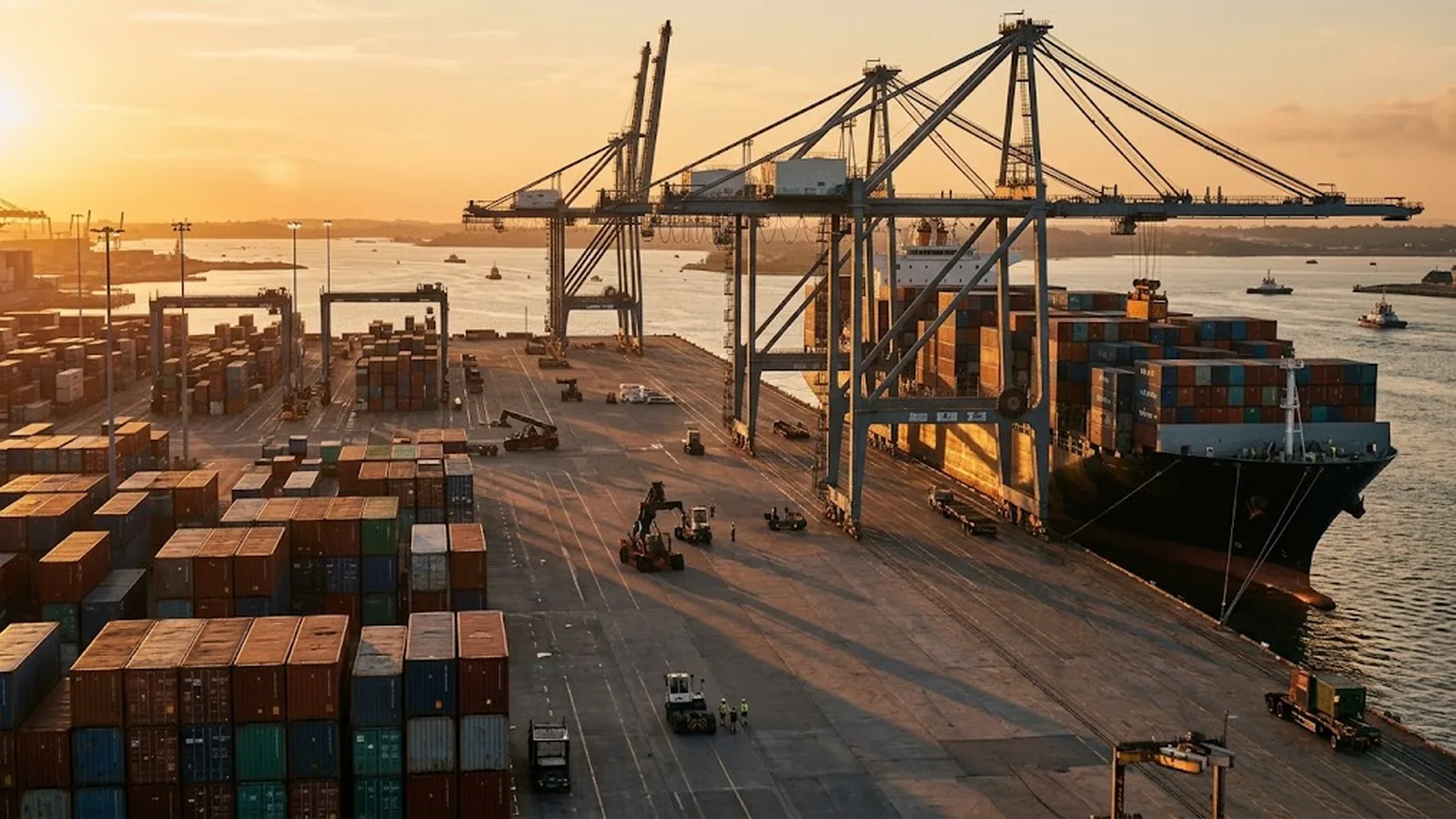
Four windows shape the year. Golden Week in early October closes Chinese factories and ports for a week, so exports pile up in late September and restart in a rush mid-month. Q4 retail season runs from October through December, when US and EU importers compete for space on transpacific and Asia-Europe loops and transit reliability drops. Chinese New Year is the largest disruption: factories wind down one to two weeks before the holiday and restart slowly for two to three weeks after, so January shipments must effectively be booked and produced in December, and the pre-CNY rush starts as early as late November. Finally, European year-end inventory builds and any regional events — port labor actions, Panama or Red Sea routing changes — add volatility that is impossible to schedule but certain to recur. The practical takeaway is to reverse-engineer each window from your production start date backward, marking booking cutoffs, factory ex-factory dates, and vessel cutoffs on the same timeline as your fill schedule.
How Much Buffer to Add to Lead Times
In off-peak weeks, a booked container on a reliable service is a planning anchor. In peak weeks, treat published transit times as a floor, not a promise. A workable rule is to add two to three weeks of buffer for Q4 sailings and three to four weeks for anything ex-factory between mid-December and mid-February, then confirm the buffer against the specific carrier service your forwarder proposes. Work the timeline backward with named milestones: production completion, container stuffing, drayage to port, vessel cutoff, sailing, ocean transit, terminal handling, customs clearance, and delivery to your 3PL. Each handoff is a place where a peak-season backlog inserts delay. For PS specifically, add one more checkpoint: the booking should allow enough slack that if the vessel rolls, the next sailing still lands inside the stability and production window, or the decision point for an air freight switch arrives early enough to act. Importers who plan the buffer per shipment rather than per year consistently avoid the expediting fees that eat margin.
Booking Tactics That Protect Delivery Dates
Booking behavior changes when space is scarce, and the tactics are straightforward. Book earlier — three to four weeks out in Q4 and four to six weeks before Chinese New Year — and confirm the booking in writing with vessel name and cutoff rather than accepting a soft promise of space. Consider committing to named-vessel sailings instead of flexible space on service loops with a history of rolling cargo, and ask your forwarder which services their customers' boxes actually roll from; local knowledge is worth more than a rate sheet. Where volume justifies it, negotiate with carriers directly or through a forwarder's contract allocation rather than riding purely on spot market, because contractual space survives peak season better than spot bookings. Diversify gateways: if one port's backlog grows, an alternate gateway with different land transport may sail on time even when the primary port does not. Finally, centralize visibility — one tracking sheet with vessel, cutoff, sailing, and latest forecasted arrival for every PS lot in motion lets a planner see roll risk days before the carrier's notification arrives.
Contract Clauses: Cutoffs, Late Fees, and Force Majeure

Peak-season risk should be allocated in writing before it materializes. If you buy on FOB terms, you control the booking and should specify in the purchase order who is responsible for meeting vessel cutoffs and what happens when the factory misses them; a late-documentation penalty or an explicit rebooking cost allocation keeps both sides honest. If you buy CIF or CFR, confirm the carrier, service, and expected sailing window in the contract rather than accepting the supplier's freight forwarder by default, and reserve approval for significant routing changes. Demurrage, detention, and per-diem liability at destination should follow the same planning logic used in your congestion planning, with clear cutoffs for pickup after discharge. Force majeure clauses deserve a read with peak season in mind: port closures and blanked sailings are foreseeable seasonal events, and well-drafted clauses carve out what each party must do — rebook, notify, and share documentation — rather than simply suspending obligations. Whatever the terms, agree the communication cadence: who confirms stuffing, who confirms sailing, and who alerts the production planner when a forecast arrival slips.
Contingencies: Air Freight and Partial Shipments
Even good booking plans need a fallback. Air freight is the highest-value contingency for PS because the economics can work: the active dose is small, a pallet of PS can support a launch or a full production run, and the cost of air freighting a partial shipment is often trivial against the cost of a stopped line or a missed retail slot. Set the decision rule in advance — for example, if forecast arrival slips beyond a defined date, a defined quantity moves by air — so the switch is a calculation, not a negotiation under pressure. Partial ocean shipments are the middle path: sending the critical portion on the first available sailing while the balance follows on a later vessel or a different gateway. Keep one more lever in reserve: temporary specification relief, such as accepting the next-best grade or a different packaging configuration, can rescue a production window when the constraint is the material, not the box. Whatever the contingency, debrief after each peak season and record which lead times actually occurred, because next year's buffer should be built from your own data.
Post-Season Review and Data Capture
The cheapest improvement to next year's peak season is a structured debrief of this year's. Within a month of the last container clearing, assemble the actual dates behind every shipment: ex-factory, gated in at origin, sailed, discharged, cleared, and delivered. Compare them with the plan and identify where the buffer was consumed — was it the factory that stuffed late, the terminal that stacked out, the customs queue, or the 3PL appointment backlog? Feed the findings back into three artifacts. Update the lead-time table so next year's buffers come from your own data instead of industry averages. Update the supplier scorecard, since on-time ex-factory performance is a procurement variable even though the delay surfaced in transport. And update the contingency rules, because the trigger date for an air freight switch is only useful if it reflects the real distribution of delay, not the first bad week. Importers who skip the debrief tend to repeat the same season annually; importers who document it usually find that one or two root causes, a single congested terminal or a single slow documentation step, explain most of the damage.
FAQ
Q: How early should I book a PS shipment before Chinese New Year?
A: Target ex-factory dates in late November or early December, book four to six weeks ahead, and add three to four weeks of transit buffer. Treat anything produced in the two weeks before the holiday as at risk until it is confirmed stuffed and gated in at the terminal.
Q: Does peak season affect temperature-sensitive cargo like PS beyond delays?
A: Yes. Congested terminals and dwell time in hot or cold climates expose containers to conditions outside the storage specification. Ask for terminal dwell expectations, consider insulated or ventilated packaging strategies, and inspect product temperature indicators on arrival before release.
Q: What does roll risk mean for my booking?
A: Rolling is when the carrier denies your container the booked sailing and defers it to a later vessel. In peak season it is routine for non-priority cargo. Named-vessel bookings, contractual space, and early documentation reduce it; a tracking sheet surfaces it early enough to rebook or air freight.
Q: Is air freight ever justified for a bulk ingredient like PS?
A: Often, for the critical fraction. A pallet of PS is compact relative to its production value, so air freighting a partial shipment to keep a line running or a launch date is usually far cheaper than the cost of stopping production or missing a retailer fill window.
Conclusion
Peak season is not an emergency when it is on the calendar — it is simply the part of the year when planning discipline pays. Map Golden Week, Q4, and Chinese New Year against your production schedule, add honest buffers with named milestones, book earlier and with more commitment than feels necessary, and put cutoffs, demurrage allocation, and rebooking obligations into the paperwork before the space crunch starts. Importers of phosphatidylserine in the US and EU who run this playbook keep their fill schedules intact through the weeks that break less-prepared competitors. Nutranexa plans peak-season dispatches with its customers, including booking calendars, rolling updates, and air freight contingencies for time-critical lots. When you are ready to move from checklist to quotation, contact our team with the grade, source and document set described above.
Sources
- UNCTAD — Review of Maritime Transport: https://unctad.org/topic/transport-and-trade-logistics/review-of-maritime-transport
- Drewry — World Container Index: https://www.drewry.co.uk/supply-chain-advisors/supply-chain-expertise/world-container-index-assessor-for-container-freight-rate-assessments
- U.S. Customs and Border Protection — Importing into the United States: https://www.cbp.gov/trade/basic-import-export/importing-goods
- European Commission — Taxation and Customs Union, Import into the EU: https://taxation-customs.ec.europa.eu/customs-4/importing-goods-eu_en
- World Shipping Council — Industry Information: https://www.worldshipping.org/
Buyer fit
Who this guide is for
This guide is written for the buyer profiles below. Open your profile for the matching grades, documents and next steps, or tell us your requirements directly.
Recommended next steps
- Review the Phosphatidylserine product page.
- Compare Soy PS and Sunflower PS.
- Check manufacturing proof and Quality & R&D.
Contact sales for product documents
Share source preference, application, country, and annual quantity.
Contact Sales