Cross-border phosphatidylserine projects usually start with familiar sourcing questions: source route, target assay, MOQ, drum size, specification format, COA path, and destination-market statements. Then a narrower supplier-qualification question appears and slows the approval file down: does this Chinese supplier's food production license actually cover the phosphatidylserine route we want to buy, and what should that document prove for US and EU buyers?
The short answer is that a phosphatidylserine food production license should be reviewed as an entity, site, and licensed-scope control, not as a generic stamp of complete commercial approval. That is the safest reading of the relevant primary sources. FDA's FSVP rule says importers must evaluate the risk posed by the food and the foreign supplier's performance, approve suppliers using that evaluation, and maintain a separate program for each food and foreign supplier. Regulation (EC) No 178/2002 says food business operators must be able to identify from whom they have been supplied a food and to whom it has been supplied. On the Chinese side, the current Food Production License Management Measures state that food production licenses have a five-year validity period, require defined application materials for food additive production, and place responsibility for the authenticity of application materials on the applicant. The practical business implication is simple: a buyer should know exactly which entity, site, and licensed scope sits behind the phosphatidylserine quotation before treating the supplier as approved.
That distinction matters because phosphatidylserine sourcing often involves several teams at once. Procurement may be comparing a general PS route with soy phosphatidylserine or sunflower phosphatidylserine. QA may be reviewing the current specification and COA path. A distributor may need a supplier file for customer onboarding. A contract manufacturer may want to know whether the named producer and production scope in the document pack actually match the item being handed off. If those questions are mixed together, the same "license file" gets used as a shortcut for facts it does not actually prove.
This article is written for ingredient importers, distributors, supplement manufacturers, functional food brands, procurement managers, formulation teams, QA teams, and technical reviewers in Europe and North America. It focuses on supplier qualification, document scope, and approval workflow. It does not provide legal advice and it does not make medical treatment claims.
Where Nutranexa is mentioned, only verified site facts are used. The current site identifies the operating company as Shandong Nutranexa Biopharmaceutical Co., Ltd., founded in 2013, operating a 110,000+ m2 campus, and primarily serving Europe and North America. It provides separate buyer paths for Phosphatidylserine, Soy Phosphatidylserine, and Sunflower Phosphatidylserine, together with buyer-facing request routes through Manufacturing, Quality & R&D, and Contact Sales. Final supplier approval should still depend on the exact route, the current controlled documents, and the buyer's own US or EU review path.
The Short Answer Buyers Need First
If your team is screening a phosphatidylserine supplier for a US or EU project, the cleanest workable process is:
- Lock the exact route first: general PS, soy PS, or sunflower PS.
- Separate the supplier's business identity file from the food production license and any food-additive item-detail sheet.
- Match the named legal entity, production address, and licensed scope to the exact route under quotation.
- Check whether the file is current enough for the approval stage and whether any route, site, or scope change has happened since it was first collected.
- Keep the license file separate from the specification, COA, allergen logic, and destination-market statements.
- Close with one written go, hold, or escalation decision.
That is the operating line buyers need. A food production license can be commercially important without answering every question in the approval folder. The stronger question is not only "does the supplier have a license?" The stronger question is which legal entity, which production site, and which licensed scope support the exact phosphatidylserine route the team plans to buy?
| Buyer question | What the team is really trying to confirm |
|---|---|
| Do you have a food production license? | Is there a current controlled file for the named producer behind this exact PS route? |
| Is the license enough to approve the supplier? | No. The team still needs specification, COA path, route fit, and other project documents |
| Does the business license prove the same thing? | No. Identity and production-scope review are related but not interchangeable |
| Can we use one generic license file for soy PS and sunflower PS? | Not by assumption; the buyer still has to match route and scope to the quoted product |
| Is this only a China-side paperwork check? | No. It supports US supplier approval logic and EU traceability discipline too |
Why License Review Is Its Own Buyer Task
A food production license proves entity, site, and licensed scope, not full commercial approval
The first reason this topic deserves its own workflow is that a Chinese food production license answers a narrower question than many buyers assume. It helps identify the producing entity and the permitted production scope. The Food Production License Management Measures also frame licensing as a controlled administrative process, with defined application materials and applicant responsibility for document authenticity. For food additive production, the measures specifically call for materials such as production layout, process flow, major equipment and facilities, and food-safety personnel and management-system information.
For phosphatidylserine buyers, the business lesson is direct. A license file can help confirm:
- which legal entity is presenting itself as the producer
- which production address belongs in the supplier file
- whether the quoted item sits inside the licensed production framework being shown
- whether the file looks current enough for the approval stage
What it does not prove by itself is just as important:
- that the quoted assay and technical specification are commercially correct
- that the current COA path fits the route being approved
- that a destination-market customer questionnaire is fully answered
- that Halal, Kosher, allergen, GMO, SDS, or label-review questions are closed
That is why this topic should not be buried inside a broad supplier onboarding or document checklist discussion. Those are wider workflows. The license question is narrower and easier to mishandle if it is not isolated.
US and EU import controls still require supplier identification and documented approval logic
The second reason this topic matters is that US and EU approval systems still need a clear supplier-identity trail even though the Chinese license itself is not a US or EU regulatory certificate. FDA's FSVP framework says the importer must evaluate both the food risk and the foreign supplier's performance, approve suppliers on that basis, and maintain a distinct program for each food and foreign supplier. Regulation (EC) No 178/2002 requires food business operators to identify from whom a food was supplied and to whom it was supplied. The practical inference from those primary sources is straightforward: if the legal entity and production scope behind the phosphatidylserine quotation are unclear, the buyer's downstream approval logic is already weak.
This matters most when teams are handling several files at the same time:
| File type | What it can help answer | What it does not prove by itself |
|---|---|---|
| Business license | Who the registered company is | That the quoted PS route is inside the production scope being relied on |
| Food production license | Which producer and scope are being presented for food production approval | That the exact PS route, batch, or commercial specification is approved for purchase |
| Food-additive item-detail sheet or related scope support | How the supplier is showing the product category or item scope tied to the license file | That every downstream customer or market statement is settled |
| Specification or COA | What technical item is being quoted and how a batch is reported | That the supplier identity and production scope were reviewed correctly |
This is why a license-review article sits beside, not inside, pages such as Phosphatidylserine Supplier Onboarding, Phosphatidylserine Contract Manufacturer Handoff, and Phosphatidylserine Manufacturer Audit Checklist for European Buyers. Those pages answer different buyer questions.
The Six-Part Workflow for Reviewing a PS Food Production License
Lock the exact phosphatidylserine route and buying entity first
Before anyone approves the supplier file, write down the route and the buying structure in one short note. Is the team qualifying general phosphatidylserine at shortlist stage, soy PS for an existing supplement formula, or sunflower PS for a non-soy positioning brief? Is the buyer an importer, distributor, contract manufacturer, or private-label brand? Is the next approval step internal supplier onboarding, customer packet preparation, or incoming raw-material release?
This matters because file confusion usually starts while the route is still moving. Procurement may still be comparing soy and sunflower options while QA already stored one license file in a generic "PS supplier" folder. A customer may ask for supplier approval evidence while the actual commercial route has not been fixed. That makes a real document easy to misuse.
At minimum, the opening note should record:
- exact product route
- buyer entity and destination market
- current approval stage
- which document question the next reviewer needs answered
- whether the request is about supplier identity, production scope, or both
Separate the business license, food production license, and item-detail sheet
The second step is to stop calling every China-side company file "the license." In practice, buyers may receive at least three different identity-and-scope documents:
- a business license or company registration file
- a food production license
- a food-additive item-detail sheet or related scope attachment
Those files work together, but they do not do the same job. The business license helps confirm the company identity. The food production license helps confirm the production-approval framework. The item-detail or scope attachment helps show what product category or product detail is being tied to that framework.
This is where buyers save time by asking one disciplined question: what exact document will the next team rely on, and what decision is that file supposed to support?
If the team cannot answer that question, the supplier file is not ready for approval, even if the folder already contains several official-looking PDFs or images.
Match legal entity, production address, licensed scope, and validity status
Once the file types are separated, match them to the quoted phosphatidylserine route. The review should normally check:
- legal entity name on the file set
- production address or named site
- whether the scope support aligns with the item under quotation
- whether the files appear current and internally consistent
- whether the approval stage requires more than identity-and-scope confirmation
This step sounds basic, but it prevents a common failure. A supplier may show a genuine company file and still leave the buyer with an unresolved route question because the team never checked whether the named entity, site, and scope actually match the phosphatidylserine route under review.
| Review checkpoint | Buyer question |
|---|---|
| Legal entity match | Does the license file belong to the same company path that is quoting the PS route? |
| Site match | Is the named production address aligned with the manufacturing path being presented? |
| Scope fit | Does the scope support the product route the team is trying to buy? |
| Validity and freshness | Is the document current enough for supplier approval or customer-facing review? |
| Stage fit | Is the file only good for early screening, or strong enough for the next controlled decision? |
Review whether the route or manufacturing scope has changed since the file was collected
This is the step many teams skip. The Food Production License Management Measures make change control a real issue by requiring change applications when licensed matters change. The practical buyer implication is that a license file should not be treated as permanently self-explanatory once it is saved in a supplier folder.
For phosphatidylserine buyers, the practical questions are:
- has the route changed from a general PS discussion to a soy or sunflower route
- has the supplier entity or production address changed in the commercial file
- is the team relying on an old screenshot or older attachment that predates a scope change
- does the next reviewer need a refreshed controlled copy rather than a legacy internal file
This is also why procurement, QA, and technical teams should not rely only on "we already have the license." The stronger question is whether they have the right license support for the current route and approval stage.
Keep the license separate from specification, COA, and market-facing certificates
Once the license review feels complete, many teams relax too early. But a phosphatidylserine supplier is not fully approved just because one China-side scope file looks acceptable. Buyers still need the route-specific specification, the agreed COA path, and any market-facing support file that matters for the project.
That is why buyers should keep at least three lanes separate:
- supplier identity and production-scope control
- product specification and batch evidence
- destination-market or customer-specific document review
This separation keeps the Nutranexa process cleaner too. Buyers can request the current route-specific specification path through Quality & R&D, review manufacturing context through Manufacturing, and request current controlled supplier documents through Contact Sales without assuming that one license image closes every other question.
Close with a go, hold, or escalation decision
The last step is to record one decision another team can use:
- Go: the route is stable, the entity and scope file match the supplier path, and the next stage can move forward.
- Hold: the project may still be viable, but the file is too generic, too old, or too loosely matched to the route being approved.
- Escalate: the file needs refreshed scope support, legal-entity clarification, or additional technical review before anyone relies on it downstream.
Without that closeout, the same supplier-license question returns later, usually when a customer file pack is being assembled, a contract manufacturer is waiting for onboarding approval, or a repeat order is being prepared under changed commercial conditions.
Need a Current Supplier License File for a US or EU Project?
If your team is still relying on a generic note that "the supplier is licensed" while the source route, commercial entity, or downstream customer file is still changing, stop before the answer becomes a purchasing shortcut. Use Nutranexa's contact page to request the current route-specific specification path, COA-review path, and available supplier identity and production-scope files for the exact phosphatidylserine route under review.
The fastest inquiries usually include the route, target market, buyer type, whether the next review is internal approval or customer-facing, and which document question is still unresolved.
Common Mistakes in Phosphatidylserine License Review
Most failures here are scope-control failures, not document-existence failures.
- Treating a business license, food production license, and food-additive scope file as if they were the same document.
- Approving a generic PS supplier file while procurement is still switching between soy and sunflower routes.
- Forgetting to match the named legal entity and production address to the commercial quotation path.
- Assuming a current-looking license image automatically replaces the specification, COA, and market-facing document set.
- Reusing an older internal supplier file after the route, site, or customer approval stage changed.
- Failing to record a clear go, hold, or escalation decision after the review.
The practical fix is narrow and repeatable: keep one question at the center of the file. Which legal entity, which production site, and which licensed scope support the exact phosphatidylserine route this team is about to approve?
How Verified Nutranexa Facts Fit This Workflow
For buyers evaluating Nutranexa, several verified site facts support a cleaner license-review process.
First, the site already separates Phosphatidylserine, Soy Phosphatidylserine, and Sunflower Phosphatidylserine into distinct buyer paths. That helps teams keep the supplier file tied to one stable route instead of one vague "PS" category.
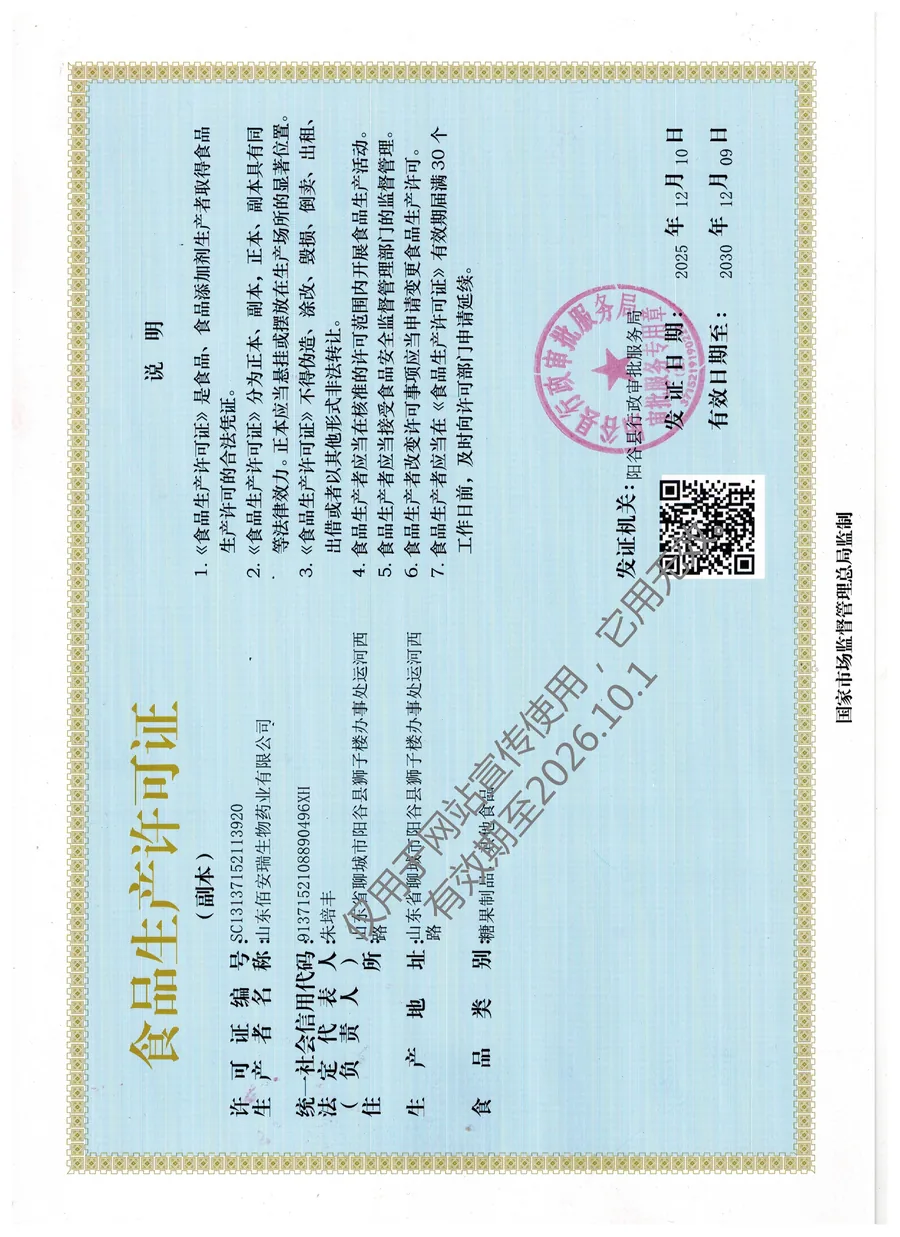
Second, the site confirms qualification facts that are safe to reuse while screening suppliers: the company was founded in 2013, operates a 110,000+ m2 campus, and primarily serves Europe and North America. It also shows buyer-facing document proof for business-license, food-production-license, and food-additive-scope review alongside manufacturing and quality request paths.
Third, the site provides verified commercial handling facts for phosphatidylserine, including 25 kg MOQ and 25 kg net per drum packaging, along with visible COA and specification evidence, factory and dispatch imagery, and R&D cooperation context. Those facts help supplier qualification, but they do not replace the entity-and-scope review described in this article.
Sources
- FDA: FSMA Final Rule on Foreign Supplier Verification Programs (FSVP) for Importers of Food for Humans and Animals
- EUR-Lex: Regulation (EC) No 178/2002, Article 18 on traceability
- Ministry of Justice of the People's Republic of China: Food Production License Management Measures
- State Administration for Market Regulation: Food Production License Management Measures PDF
- State Administration for Market Regulation: Notice on issuing the 2022 General Rules for Food Production License Review
FAQ
Do US and EU buyers really need to review a phosphatidylserine supplier's food production license?
Often yes, especially when the buyer needs a controlled supplier-identity and production-scope file before onboarding, contract-manufacturer handoff, or customer-facing qualification. The useful question is not only whether a file exists, but whether it matches the exact phosphatidylserine route and supplier path under review.
Is a Chinese food production license enough to approve a phosphatidylserine supplier?
No. Buyers should still review the route-specific specification, COA path, commercial item fit, and any market-facing support files needed for the project. The license answers a narrower entity-and-scope question.
What is the difference between the business license and the food production license?
In buyer workflow terms, the business license helps confirm company identity, while the food production license helps confirm the production-approval framework being presented. They support each other, but they should not be treated as interchangeable.
Should soy phosphatidylserine and sunflower phosphatidylserine be approved under one generic supplier file?
Not by assumption. Buyers should confirm that the route under quotation matches the route and scope logic being reviewed, and reopen the file if the product path changes.
What should buyers request from Nutranexa before approving a phosphatidylserine supplier?
Request the exact route-specific specification path, the current COA-review path, and the available supplier identity and production-scope files for the quoted phosphatidylserine route, then align those files to the next downstream approval step.
Conclusion
Phosphatidylserine supplier-license review becomes manageable when buyers stop treating it as a generic proof-of-company attachment and start treating it as a route-specific entity, site, and scope decision.
The strongest US and EU workflow is practical: lock the route first, separate the business-license and production-license files, match them to the named entity and site, check whether the scope is still current for the route being approved, keep that review separate from the specification and COA file, and close with one clear decision. That process helps importers, distributors, supplement manufacturers, and QA teams avoid a common failure pattern: the supplier folder looks complete, but nobody can show which legal entity and production scope actually support the phosphatidylserine route being purchased.
Recommended next steps
- Review the Phosphatidylserine product page.
- Compare Soy PS and Sunflower PS.
- Check manufacturing proof and Quality & R&D.
Contact sales for product documents
Share source preference, application, country, and annual quantity.
Contact Sales