
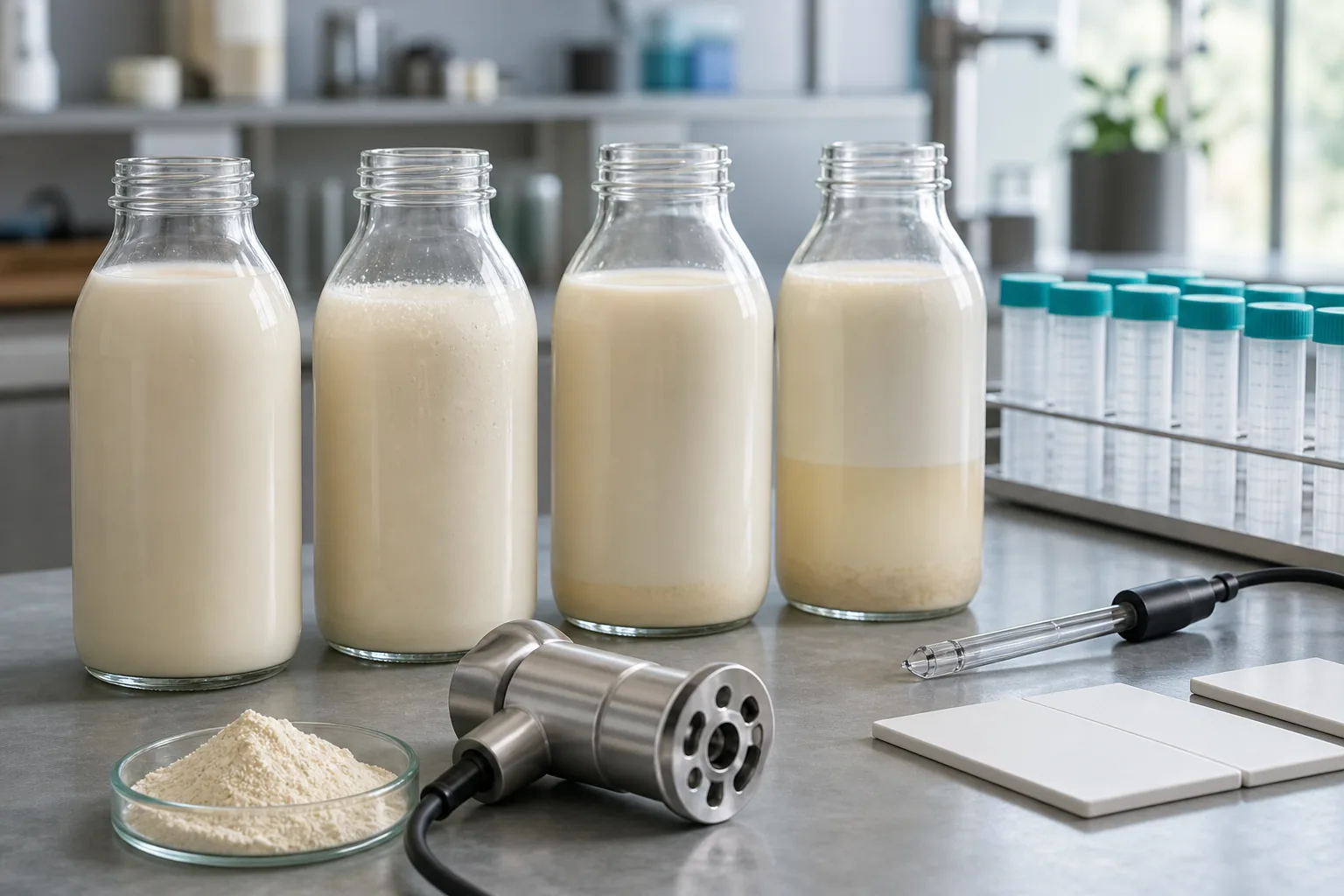
Uma equipe de bebidas pode receber uma amostra atraente de polissacarídeo solúvel de soja e ainda assim aprender muito pouco com uma única garrafa de bancada. Sistemas de proteínas acidificadas são sensíveis ao caminho do pH, tipo de proteína, sólidos, composição mineral, ordem de adição de ingredientes, cisalhamento, tratamento térmico, preenchimento e armazenamento. Uma amostra estável no primeiro dia não prova a adequação para a produção.
A resposta direta é: Avalie o polissacarídeo de soja solúvel no processo completo-alvo, não em água e não a partir de uma dosagem de fornecedor copiada na fórmula. Fixe uma receita de controle, varie um fator de cada vez na fase de triagem, registre o histórico completo do processo e meça tanto a estabilidade imediata quanto a armazenada. Em seguida, repita a condição principal em uma escala que reproduza mistura de plantas, homogeneização, tratamento térmico, preenchimento e embalagem.
Listas Nutranexa Polissacarídeo de soja solúvel para bebidas proteicas ácidas e aplicações alimentares relacionadas. A especificação disponível do TJ-110 descreve um pó de baixa viscosidade. Esses são fatos de posicionamento de produto, não garantia de desempenho em toda bebida. O nível final de uso, a janela do processo, o resultado sensorial e o desempenho na vida útil devem ser demonstrados na própria formulação do comprador.
Que Bom Piloto Deve Responder
Um piloto útil responde quatro perguntas comerciais:
- A amostra se dispersa de forma reprodutível na água, proteína, açúcar, ácido, mineral e sistema de sabor do comprador?
- Qual pH, sequência de adição, hidratação, cisalhamento e janela térmica produzem estabilidade física aceitável?
- A bebida permanece aceitável por meio de enchimento, armazenamento, simulação de transporte e manuseio esperado pelo consumidor?
- A condição pode ser reproduzida com o grau de fornecedor, especificação e controles comerciais selecionados?
Estudos publicados mostram por que o trabalho específico para fórmulas é necessário. Pesquisas sobre SSPS e sistemas de proteína do leite relatam interações dependentes do pH, mudanças no tamanho das partículas, comportamento de sedimentação e diferenças entre tipos de polissacarídeos ou perfis moleculares. Esses estudos explicam mecanismos e sugerem medições; eles não são uma receita universal para material Nutranexa ou para uma bebida finalizada do comprador.
Comece com um Resumo de Candidatura
Defina a bebida antes de solicitar uma amostra
Envie ao fornecedor um resumo técnico compacto:
- laticínios, soro de leite, soja, ervilha ou outro sistema proteico
- Proteína e Sólidos Totais
- pH alvo e rota de acidificação
- açúcar, minerais, sabores, adoçantes e outros hidrocoloides
- Sequência do processo, temperatura de hidratação, cisalhamento, homogeneização e tratamento térmico
- Condições de embalagem e enchimento
- Temperatura de armazenamento alvo e vida útil pretendida
- Mercados de destino e restrições de rótulos
Sem essa informação, a "dose recomendada" é apenas uma hipótese inicial. Mesmo sistemas modelo publicados usam concentrações definidas de proteínas, níveis de SSPS, faixas de pH e métodos de teste que podem não representar uma formulação comercial.
Bloquear a identidade da amostra
Registrar a entidade legal do fornecedor, nome e código do produto, lote, informações de fabricação ou reteste quando disponíveis, revisão da especificação, tamanho da amostra, embalagem e condição de armazenamento. Fotografe a amostra lacrada e retenha material suficiente para confirmação ou repetição.
Revise a especificação atual e o COA disponível em vez de tratar a aparência como identidade. Para uma compra comercial, alinhe a amostra aprovada com o produto cotado para que a fonte não substitua outra categoria após a conclusão do teste pela equipe de formulação.
Um projeto piloto em três estágios
Etapa 1: Triagem controlada
Use um lote pequeno e repetível e uma receita base escrita. Inclua:
- um controle sem SSPS
- um estabilizador de referência atual ou sistema incumbente quando relevante
- duas ou mais condições SSPS justificadas
- pelo menos uma repetição do ponto central esperado
Não mude pH, nível de SSPS, homogeneização e tratamento térmico ao mesmo tempo. Um design compacto que isola variáveis produz decisões mais úteis do que muitas garrafas não controladas.
Registre a temperatura dos ingredientes, tempo de hidratação, geometria do misturador, velocidade ou entrada de energia, tipo de ácido, taxa de adição de ácido, pH intermediário, pH final, condições de homogeneização, perfil térmico, resfriamento, tempo de enchimento e espaço de carga do embalagem. A ampliação da planta frequentemente falha porque esses detalhes do processo nunca foram capturados.
Etapa 2: Desafio do processo
Escolha a melhor condição de triagem e desafie variações realistas:
- Variabilidade normal de matéria-prima
- Alvos de pH superior e inferior
- Hidratação tardia ou espera prolongada
- Cisalhamento mínimo e máximo planejado
- tratamento térmico real e caminho de resfriamento
- Sabor e carga mineral pretendidos
- Retrabalho ou recirculação somente se a planta quiser usá-la
O objetivo não é forçar o fracasso. É descobrir quão estreita é a janela de operação aceitável antes da exibição comercial.
Etapa 3: Confirmação da ampliação
Repita a condição de liderança usando equipamentos que se assemelhem à produção. Sequência de mistura de correspondência, campo de cisalhamento, arranjo do homogeneizador, taxa de transferência de calor, tempo de residência, enchimento e embalagem.
O sucesso no banco não escala automaticamente porque a concentração local de ingredientes, a incorporação de ar, o bombeamento, o tempo de retenção e o histórico térmico mudam. Mantenha os mesmos pontos analíticos e sensoriais para que os resultados de laboratório e piloto possam ser comparados.
Variáveis Críticas a Controlar
Caminho do pH, não apenas o pH final
Duas garrafas podem terminar com o mesmo pH, mas apresentam diferentes concentrações locais de ácido e agregação de proteínas durante a adição de ácido. Registre onde o ácido entra, a rapidez com que ele é adicionado, a intensidade da mistura, temperatura e pH intermediário.
Pesquisas comparando SSPS e pectina em bebidas láctinas acidificadas encontraram comportamentos de interação diferentes entre as regiões de pH. Trabalhos mais recentes em modelos também mediram mudanças no tamanho das partículas, potencial zeta, viscosidade e estabilidade acelerada conforme o pH mudava. A lição do comprador é operacional: trate o pH como uma trajetória do processo e verifique a faixa alvo na fórmula real.
Ordem de adição e hidratação
Decida se o SSPS é pré-disperso, misturado a seco ou adicionado em outra fase. Controle a qualidade da água, temperatura, agitação, tempo de hidratação e o ponto em que proteínas, açúcar, minerais e ácidos entram.
Fique atento a olhos de peixe, depósitos de parede, espuma, umedição incompleta e perda de pó. Um sistema de baixa viscosidade ainda pode ser mal disperso. Documente o método para que um segundo operador possa reproduzi-lo.
Sistema proteico e mineral
A fonte de proteína, concentração, histórico térmico e ambiente mineral afetam a carga e a agregação. Não presuma que os resultados dos laticínios sejam transferidos para soro, soja ou proteína vegetal. Se a fórmula usar cálcio, sais tamponantes ou pré-misturas minerais, inclua-os no teste em pontos realistas do processo.
Cisalhamento, homogeneização e calor
Meça o efeito da mistura pré-homogeneização e, quando utilizada, da homogeneização após acidificação. Cisalhamento excessivo ou insuficiente pode alterar a distribuição de partículas, a espuma e o corpo. O tratamento térmico pode expor uma condição que parecia estável na temperatura ambiente do banco de bancada.
Use limites reais do processo em vez de um ambiente de laboratório impressionante. O objetivo é uma faixa operacional robusta que a fábrica possa controlar.
O que medir
Verificações imediatas
No enchimento, registro:
- uniformidade visual e cor
- Comportamento de espuma e desaeração
- pH final e temperatura
- viscosidade ou comportamento de fluxo usando um método definido
- Tamanho de partícula ou outra medida de dispersão, quando disponível
- Consistência de preenchimento de embalagens
As fotografias devem usar a mesma iluminação, recipiente, altura de enchimento e fundo. Fotos descontroladas são evidências fracas.
Verificações aceleradas e de armazenamento
Em intervalos predefinidos, avalie:
- altura ou massa do sedimento usando um método consistente
- Separação sérica ou creme
- Floculação, ringing ou depósito na parede
- Deriva do pH
- Mudança de viscosidade
- Distribuição por tamanho de partícula quando disponível
- Resultados de centrifugação ou estabilidade analítica
- sabor, aroma, sensação na boca e retrogosto
Ferramentas aceleradas podem comparar candidatos rapidamente, mas não preveem automaticamente a vida útil comercial. Use-os como evidência de triagem e confirme com o pacote e o programa de armazenamento pretendidos.
Ajuste sensorial e de etiquetas
Uma bebida fisicamente estável ainda pode falhar devido à liberação de sabor, adstringência, corpo, cor ou restrições de rótulo. Use uma avaliação interna treinada ou um método sensorial apropriado. Confirme o nome do ingrediente e a declaração de alérgeno ou fonte com a equipe reguladora responsável para cada mercado.
Não converta um resultado de função técnica em uma reivindicação de saúde. Este guia trata apenas do desempenho da formulação.
Placar do Piloto
| Área de decisão | Evidências | Desfecho aceitável |
|---|---|---|
| Identidade da amostra | Código do produto, lote, especificação, COA | Material de teste corresponde à nota citada |
| Dispersão | Registro de adição, fotos, verificação de resíduos | Molhamento reprodutível sem nódulos descontrolados |
| Janela de processo | pH, cisalhamento, calor, desafios de retenção | Faixa de operação definida, nenhuma garrafa de sorte |
| Estabilidade física | Sedimento, separação, viscosidade, dados de partículas | Atende a critérios específicos do projeto por meio de verificações planejadas |
| Sensorial | Comparação cega ou controlada | Nenhum problema não resolvido de sabor, corpo ou aparência |
| Ampliação | Registro e comparação do lote piloto | Performance reproduzida em equipamentos representativos |
| Transferência comercial | Especificação aprovada e controle de alterações | Aquisição e produção uso do grau testado |
Como Comparar Amostras de Dois Fornecedores de Forma Justa
Quando a aquisição compara amostras de SSP, as equipes de formulação devem eliminar viés evitável. Armazene ambas as amostras sob as mesmas condições, aclimate-as pelo mesmo período e prepare-as com a mesma água, tamanho de lote, recipientes, geometria do misturador, sequência do operador e cronograma de medição. Randomize códigos de amostra quando for prático para que as expectativas visuais e sensoriais não guiem a decisão.
Execute o benchmark e ambos os candidatos na mesma sessão ou em ordem equilibrada. Se uma amostra recebe hidratação mais longa, cisalhamento maior, taxa diferente de adição de ácido ou proteína mais fresca, o resultado não é uma comparação com o fornecedor. Inclua uma condição central repetida para estimar a variação normal do piloto. Uma diferença visível menor do que a variação normal de uma corrida para a outra não deve se tornar uma reivindicação de compra.
Compare mais do que sedimento. Revise o tempo de dispersão, espuma, trajeto do pH, viscosidade, resultados de partículas ou estabilidade acelerada, sabor, sensação na boca, resíduos do processo e repetibilidade. Também compare os arquivos de produto controlados: especificação, COA do lote, armazenamento, embalagem, notificação de mudança e identidade comercial. O resultado tecnicamente mais forte do banco ainda pode ser uma escolha ruim de aquisição se a amostra testada não puder ser associada a um fornecimento em grande quantidade repetível.
Feche a comparação com uma conclusão escrita como "avançar para ampliar a escala", "repetir sob controles corrigidos" ou "não adequado para esta formulação." Evite classificar um fornecedor como universalmente superior. A conclusão pertence à fórmula exata, processo, embalagem, amostras e data do teste.
Precisa de uma amostra de SSP específica para a aplicação?
Compartilhe o sistema proteico, o pH alvo, o processo térmico, o pacote, o tamanho do ensaio e a demanda anual com a Nutranexa. Peça a especificação atual do SSP, evidências disponíveis do lote, informações de embalagem e armazenamento, e uma amostra que corresponda ao grau comercial proposto. Uso Contato de vendas alinhar a identidade do ensaio antes que a equipe de formulação invista em escalonamento.
Erros Comuns de Piloto
- Testando o SSPS apenas na água.
- Copiar um nível de uso publicado ou de fornecedor sem recriar a fórmula completa.
- Mudando várias variáveis de processo em cada garrafa.
- Registrando o pH final, mas não a taxa de adição ácida ou pH intermediário.
- Avaliar a estabilidade apenas no dia da fabricação.
- Usar a centrifugação como uma previsão completa de vida útil.
- Ignorando as implicações sensoriais e de rótulos.
- Escalar sem corresponder ao histórico de cisalhamento, aquecimento, retenção e preenchimento.
- Aprovar um exemplo sem travar o código e especificação do produto comercial.
Como os Fatos Verificados da Nutranexa se encaixam no julgamento
A Nutranexa foi fundada em 2013 e opera um campus de 110.000+ m². O centro de produtos da empresa inclui polissacarídeo de soja solúvel junto ao portfólio de PS, e o site fornece um caminho de solicitação de especificação SSP, informações de fabricação e qualidade, imagens de embalagem e despacho, e contexto de cooperação em P&D.
A especificação TJ-110 posiciona o ingrediente como um pó de baixa viscosidade para estabilização de bebidas proteicas ácidas e usos alimentares relacionados. Os compradores devem solicitar a versão controlada atual e verificar o lote fornecido. Esses fatos apoiam a identificação de amostras e o diálogo com fornecedores; Eles não garantem estabilidade, dosagem, desempenho sensorial ou vida útil na fórmula do comprador.
Fontes
- Página do produto de polissacarídeos solúveis de soja da Nutranexa
- Efeito do pH na estabilidade de bebidas láctinas estabilizadas com polissacarídeos de soja solúveis
- O comportamento estabilizador do polissacarídeo solúvel em soja e da pectina em bebidas láctinas acidificadas
- Efeito dos polissacarídeos solúveis em soja na estabilidade da proteína do leite sob condições ácidas00095-4)
- Estabilidade coloidal excepcional de bebidas acidificadas de proteína de soro estabilizadas por polissacarídeo solúvel de soja
Perguntas frequentes
Qual é o melhor nível de uso de SSPS para uma bebida proteica acidificada?
Não existe uma resposta universal. Estudos publicados utilizam sistemas modelo específicos, e fórmulas comerciais diferem em proteínas, sólidos, minerais, caminho de pH, processamento e alvos sensoriais. Faça uma exibição justificada na fórmula completa do alvo.
O SSPS deve ser adicionado antes ou depois da acidificação?
A ordem adequada depende da fórmula e do processo. Compare sequências controladas ao registrar hidratação, mistura, temperatura, adição de ácido e pH intermediário. Selecione a sequência que é reproduzível em escala de produção.
Uma amostra estável de bancada é suficiente para aprovação do fornecedor?
Não. A aprovação do fornecedor também exige identidade do produto, especificações e evidências do lote, enquanto a aprovação da formulação deve incluir desafios de processo, estabilidade armazenada, revisão sensorial e confirmação de ampliação em escala.
A centrifugação pode substituir o teste de vida útil em tempo real?
Não. A centrifugação pode classificar candidatos ou expor instabilidade rapidamente, mas não reproduz todas as mudanças físicas, químicas, sensoriais, de embalagem e de transporte ao longo da vida útil pretendida.
Quais informações o comprador deve enviar ao solicitar uma amostra de SSP?
Envie o sistema proteico, sólidos totais, pH alvo, método de acidificação, processo de calor e homogeneização, embalagem, tamanho do ensaio, mercado de destino e demanda anual esperada. Isso ajuda o fornecedor a combinar a amostra e o conjunto de documentos ao projeto.
Conclusão
O piloto mais forte do SSPS é um estudo de processo controlado, não uma fileira de frascos atraentes. Defina a bebida, bloqueie a identidade da amostra, isole variáveis durante a triagem, desafie a janela do processo, meça a estabilidade armazenada e o desempenho sensorial, e reproduza o resultado em escala representativa.
Esse fluxo de trabalho dá à aquisição uma decisão comercial defensável e dá à manufatura um processo que ela pode realmente repetir.
Contato de vendas
Desenvolvendo um laticínio, soro de leite acidificado ou outra bebida proteica? Entre em contato com a Nutranexa Sales solicitar a especificação atual de polissacarídeos solúveis de soja, disponibilidade de amostras e detalhes de identificação do produto para seu teste de aplicação.
Próximas etapas recomendadas
- Revise o Página do produto Polissacarídeo de Soja Solúvel.
- Defina o projeto através Aplicações Funcionais de Alimentos.
- Verifique prova de fabricação e Qualidade e P&D.
Entre em contato com o departamento de vendas para obter documentos do produto
Compartilhe preferência de fonte, aplicação, país e quantidade anual.
Contato de vendas