
For B2B buyers, Thailand combines the scale of a large consumer market with the connectivity of a regional manufacturing and distribution base. The regulatory pathway, however, is materially stricter than some of its neighbours: dietary supplements sold in Thailand fall under the Thai Food and Drug Administration (Thai FDA) and the Food Act B.E. 2522, and finished supplements require product registration before legal import for sale. That gate sits in front of every phosphatidylserine programme, built on ingredient-level documentation only the manufacturer can reliably supply. A PS consignment that is fully documented for Rotterdam or Los Angeles can still stall if the Thai registration dossier, the importer of record, or the Thai-language label were never aligned with Thai FDA expectations. This guide walks through the market entry sequence from the buyer's perspective: the registration framework, customs and documentation, labelling and claims, and the supplier-readiness checks that prevent avoidable holds. Most programmes begin with a well-specified phosphatidylserine powder grade whose assay, source, and document set are already organized for regulator review.
Why Thailand Matters as a Market and ASEAN Entry Point
Thailand pairs high pharmacy penetration and a large wellness-conscious consumer base with a domestic contract-manufacturing sector that many regional brands use for finished-goods production. For ingredient buyers this creates two distinct programme shapes: a full-import model in which the registered supplement is imported ready for retail, and a tolling model in which the PS raw material enters Thailand and is blended, encapsulated, or packed locally into a locally registered finished product. Both shapes converge on the same upstream requirement — a raw material whose specification, safety data, and manufacturing evidence survive regulator and auditor scrutiny.
Thailand's logistics infrastructure, port capacity, and free-trade-agreement coverage make Bangkok a credible second hub for buyers serving Indochina alongside Malaysia and Vietnam. Buyers mapping several Asian destinations in parallel may find it useful to compare approaches in this phosphatidylserine Southeast Asia market entry guide, which frames how the region's regimes differ in registration depth and enforcement style.
The Thai FDA Dietary-Supplement Registration Framework
Dietary supplements are a controlled category in Thailand: the finished product must be registered with the Thai FDA before it is imported for sale, and the registration is held by a Thai-licensed company — an importer, distributor, or the local contract manufacturer. Foreign ingredient suppliers do not register products themselves, but the dossier is assembled from upstream evidence they must provide: the complete product formula with ingredient specifications, a certificate of free sale from the country of origin, evidence of the manufacturing site's quality management such as a GMP certificate, and supporting safety information for the ingredient and its intended use level. For a soy-derived phosphatidylserine, the specification should state the source organism, the enzymatic conversion route, and the assay method; for a sunflower-derived PS, the soy-free positioning should be supported consistently across the certificate of analysis, allergen statements, and the draft label.
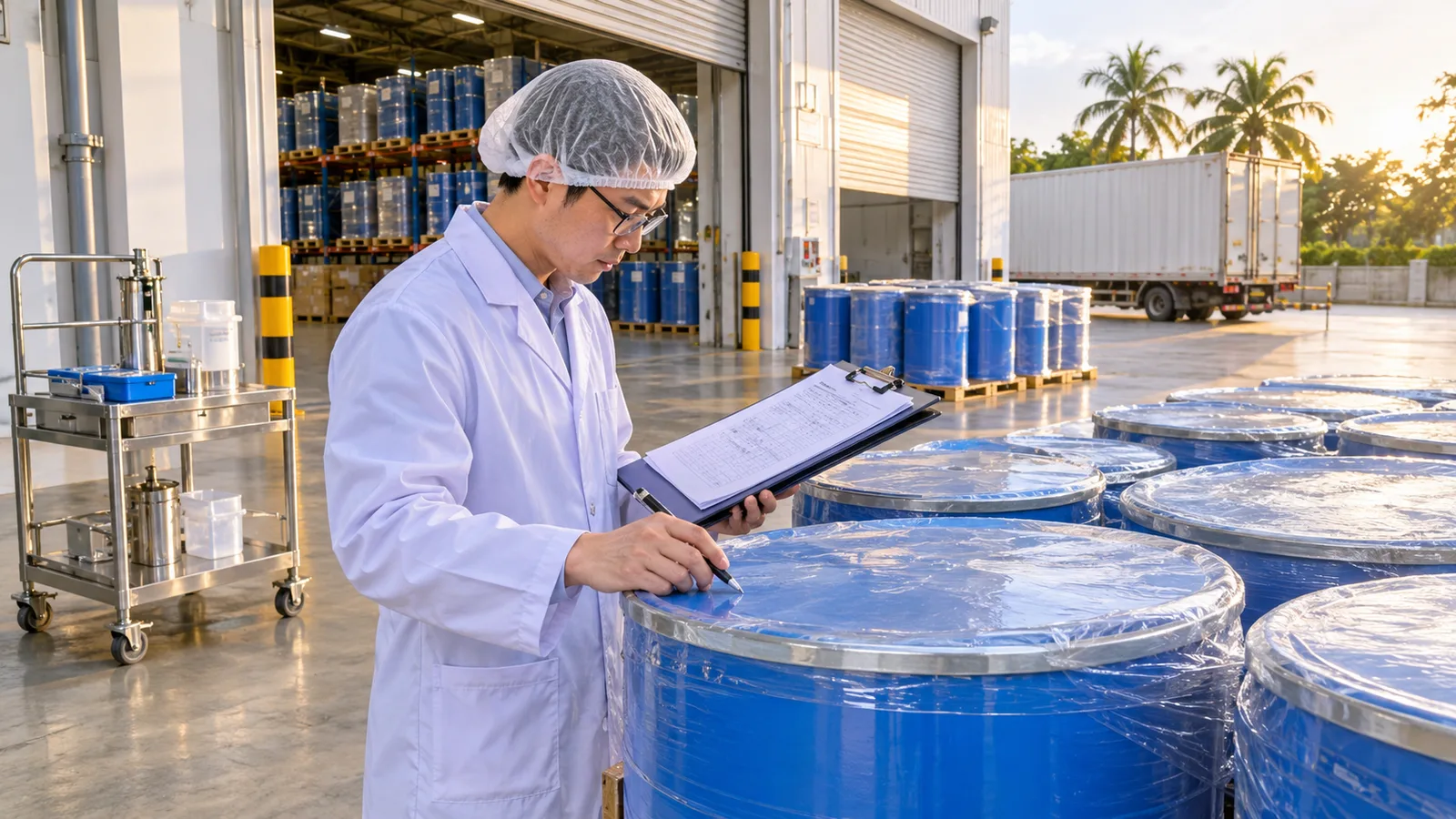
Practically, buyers should treat the ingredient file as the registration's critical path rather than a shipping formality. Registration timelines are measured in months, and an incomplete or inconsistent specification — an assay method that does not match the COA, a source organism missing from the safety narrative, or an allergen statement that contradicts the formula — is a common cause of resubmission and launch delay. Working with a supplier whose grades are documented under the controls described on our 품질 및 연구개발 페이지 shortens the dossier considerably, because the method summaries, limit tables, and lot-specific results the Thai importer needs already exist in a coherent set.
기록 수입인, 통관 및 위탁 문서 팩
Once the finished product registration is in place, the border side of the programme runs through the Thai importer of record and Thai Customs. The consignment is declared under the applicable HS classification for the finished supplement or raw material, with import duty determined by the classification and origin and value-added tax applied at entry — costs buyers should model into the landed cost rather than discover at the port. The document pack is familiar in shape to any exporter: commercial invoice, packing list, bill of lading or air waybill, certificate of origin where tariff treatment depends on it, and a lot-specific certificate of analysis. Because the registered product, the declared goods, and the shipped lot must all tell the same story, consistency of product names, manufacturer addresses, and batch numbers across the pack is the single most effective way to avoid queries.
Two PS-specific points deserve attention. First, buyers running tolling or bulk raw-material programmes should reconcile the duty and classification treatment of the ingredient consignment with their Thai partner before the first shipment, using the same discipline set out in this 포스파티딜세린 수입에 대한 랜드 비용 계획 가이드. Second, Thailand's tropical climate makes transit and warehousing conditions a quality issue, not just a logistics preference: PS powder is best held under controlled temperature and humidity, so confirm that the Bangkok warehouse — your partner's, your 3PL's, or a bonded facility — can demonstrate those conditions before the first pallet arrives.
Thai-Language Labelling, Claims, and Halal Positioning
Labelling obligations attach at the finished-product level, but the ingredient supplier determines what is achievable. Thai FDA-registered supplements must carry Thai-language mandatory information — product name, registration number, net content, full ingredient declaration, the manufacturer and local importer details, and directions for use — and the label review should happen at artwork stage, not after printing. Claim wording is more restricted than in the US market: disease-treatment claims are not permitted, and cognitive "support"-style claims must stay within the supplement framework and remain substantiated by the ingredient documentation on file. Allergen declaration is equally source-dependent: soy-derived PS requires a consistent soy declaration from specification to retail label, while a 해바라기 유래 포스파티딜세린 등급 with clean allergen documentation allows a soy-free claim to carry through from raw material to artwork without reconciliation work.

Halal positioning is a commercial lever in Thailand that buyers should decide early rather than late. Certification is not required for every supplement category, but a large Muslim consumer base and export ambitions toward Malaysia and Indonesia make manufacturer-level halal documentation commercially valuable, and distributors often prefer ingredient packs that can serve neighbouring markets without requalification. Where your programme involves local blending or contract packing, align the packing site's label controls and the Thai-language artwork on the critical path alongside production scheduling, since label rework is one of the few delay causes a registered, duty-paid programme cannot easily absorb.
공급업체 측 준비 상태: 배송 전에 확인해야 할 사항
The Thailand pathway rewards buyers who audit supplier readiness before the registration and the first order rather than during clearance. A short readiness checklist for a Thailand-bound PS programme covers: lot-specific COAs matching the agreed specification; allergen, GMO, and origin statements consistent with the intended Thai label; irradiation-free and residual-solvent statements where applicable; GMP and free-sale documentation the Thai registration holder can file without translation gaps; and export packing and storage recommendations suitable for tropical transit. Ask prospective suppliers for a sample document pack from a previous Asian shipment — manufacturers who can produce one within a day have usually cleared this path before. For first orders, a pilot consignment with a full document rehearsal is cheaper than a launch delayed at registration or at the port, and it converts regulatory uncertainty into a rehearsed, repeatable process.
자주 묻는 질문
Does phosphatidylserine require Thai FDA registration before import into Thailand?
The finished dietary supplement must be registered with the Thai FDA before it can be legally imported for sale, and the registration is held by a Thai-licensed company — importer, distributor, or local contract manufacturer. Phosphatidylserine itself enters the dossier as a registered ingredient: its specification, safety documentation, and manufacturing evidence must support the formula, use level, and label claims filed in the application.
What documents does the Thai importer need from the ingredient supplier?
The core upstream pack includes the ingredient specification, lot-specific certificates of analysis, a safety data sheet, allergen and GMO statements, a certificate of free sale or equivalent origin documentation, and evidence of the manufacturing site's quality management such as a GMP certificate — all consistent with the formula and label filed in the registration. Any mismatch between the COA, specification, and label wording is a common trigger for resubmission.
Are health claims for PS supplements restricted in Thailand?
Yes. Thai FDA rules do not permit disease-treatment claims for supplements, and functional wording must stay within the applicable supplement claim framework and be substantiated by the documentation on file. Buyers should review draft Thai-language claims against the ingredient specification, COA, and allergen statements before artwork lock so the registered label survives distributor and regulator review.
Is halal certification needed for phosphatidylserine sold in Thailand?
It is not a universal regulatory requirement, but it is often commercially decisive. Thailand has a large Muslim consumer base, and distributors serving Malaysia and Indonesia favour ingredients with manufacturer-level halal certification so one document pack can cover multiple ASEAN markets without requalification.
결론
Thailand offers phosphatidylserine buyers a large, well-connected market — provided the registration gate is treated as a documentation programme rather than a formality. The sequence is manageable: identify a Thai-licensed registration holder early, assemble the ingredient dossier from specification and COA to GMP and free-sale evidence at the manufacturer level, model duty and VAT into the landed cost, and align Thai-language labelling, claim wording, and allergen positioning before artwork lock. Buyers who embed these checks into their standard supplier qualification process will find Thailand not only navigable in its own right but a strong second anchor for ASEAN distribution. If you are qualifying a manufacturer for a Thailand or regional programme, our team supports compliance and quality reviews across US, EU, and APAC markets, and you can 문의하세요 to start a specification match for your Thai launch.
출처
- Thai Food and Drug Administration — Official Portal
- Thai FDA — Food and Dietary Supplement Regulations
- Thai Customs Department — Import Procedures
- Board of Trade of Thailand — Certificate of Origin Services
적합한 구매자 유형
이 가이드가 필요한 구매자
이 가이드는 아래 구매자 유형을 위해 작성되었습니다. 해당 프로필에서 맞는 등급·서류·다음 단계를 확인하거나, 필요 사항을 바로 문의해 주세요.
추천 다음 단계
- 검토 포스파티딜세린 제품 페이지.
- 비교 Soy PS 그리고 Sunflower PS.
- 체크 제조 증명 그리고 품질 및 연구개발.