
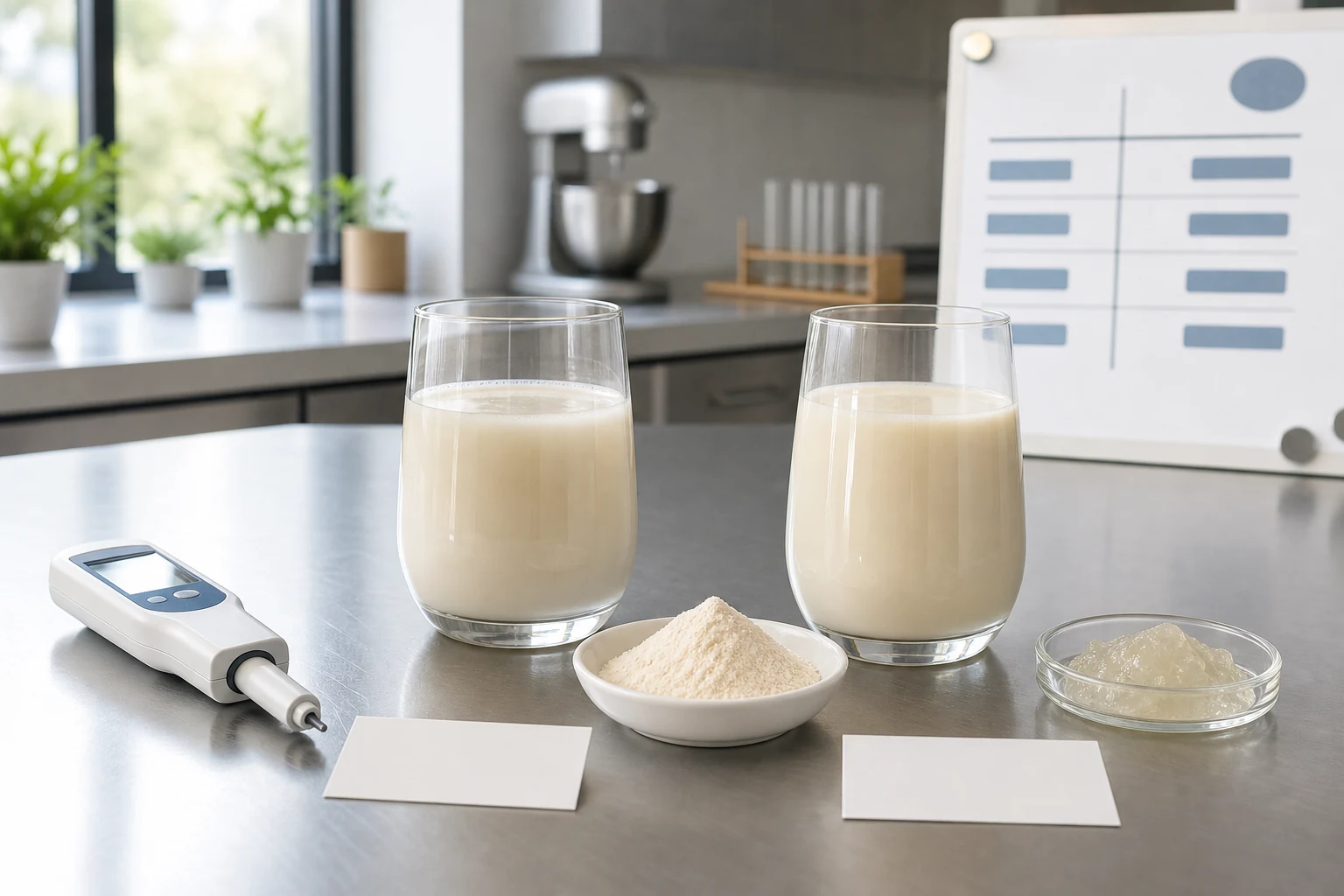
غالبا ما تبدأ فرق مشروبات البروتين المحمض في أوروبا وأمريكا الشمالية من نفس الافتراض: البكتين هو المثبت المألوف، لذا يجب أن تبرر كل بديل التغيير. هذا معقول تجاريا، لكنه قد يؤدي إلى موجز فحص خاطئ. المشروب الذي يحتاج إلى عكارة منخفضة، وجسم أخف، ومسار مثبت أضيق يتم التحكم فيه بالعملية لا يجب أن يحكم عليه بنفس معايير النجاح التي يقيم عليها مشروب يمكنه تحمل المزيد من الجسم، ومبني على عملية بكتين معتمدة.
الإجابة المباشرة هي: حافظ على البكتين كمعيار عندما يقدر مشروعك الألفة الراسخة للعملية ويقبل اللزوجة والمظهر المصاحبة له؛ قم باختيار بولي ساكاريد فول الصويا القابل للذوبان عندما يعطي الملخص الأولوية لتقليل العكارة، وإحساس الفم الأخف، وملف المكونات المنفصل الذي يمكن تأهيله لمسار المشروب والسوق بالضبط. تظهر الأبحاث التي تقارن بين النظامين أنهما لا يتصرفان بشكل متطابق أثناء التحميض، وتؤكد الدراسات الحديثة على المشروبات القابلة للذوبان في فول الصويا المثبتة بالسكريات أن درجة الحموضة وتفاعل البروتين تتحكم في نتائج الاستقرار.
بالنسبة لمشتري الأعمال بين الشركات، الخيار ليس تقنيا فقط. كما أنه خيار مستند وموافقة. لدى بيكتين بالفعل لائحة محددة للمعايير العامة الأمريكية في 21 CFR 184.1588، بينما لدى الاتحاد الأوروبي مواصفات إضافية لكل من البكتين (E 440) ونصف السليلوز الصويا (E 426) بموجب اللائحة (EU) رقم 231/2012. هذا لا يعني أن مسارا واحدا أفضل تلقائيا. هذا يعني أن فريق المشروبات يجب أن يقارن ملاءمة العملية، ومسار الملصق، وأدلة الموردين قبل بدء التجربة التجريبية.
قوائم نوترانيكسا بوليسكريد فول الصويا القابل للذوبان في محفظة المكونات ويوفر مسار طلب المواصفات لمشاريع المشروبات والأغذية الوظيفية. تذكر الشركة أيضا أنها تأسست في عام 2013، وتدير حرما جامعيا بمساحة 110,000+ متر مربع، وتخدم بشكل أساسي أوروبا وأمريكا الشمالية. تدعم هذه الحقائق مراجعة المورد، لكن القرار النهائي للمثبت يجب أن يعتمد على نظام المشروبات، ونافذة العملية، والملف الفني المسيطر عليه.
الإجابة المختصرة التي يحتاجها المشترون أولا
استخدم البكتين عندما يحتاج المشروع إلى مسار هيدروكولويد مألوف، ويمكن للتركيبة قبول الجسم والشفافية وافتراضات العملية التي تأتي مع هذا المعيار. استخدم بولي سكوريد فول الصويا القابل للذوبان عندما يكون الوقت أقرب إلى منتجات الألبان أو مصل اللبن منخفضة اللزوجة، ويرغب الفريق في اختبار مسار مثبت ربطته الأبحاث بعكارة أقل واستقرار قوي في بعض أنظمة البروتين المحمضة.
يجب إغلاق الشاشة الأولى بخمسة أسئلة للمشترين:
| سؤال مشتري | لماذا يهم ذلك |
|---|---|
| ما المشروب الذي نصنعه فعليا؟ | منتجات الألبان، مصل اللبن، البروتينات المختلطة، وغيرها من أنظمة الحمض لا تطرح نفس سؤال المثبت. |
| ما هي النتيجة الأهم: الوضوح، الجسد، أم الألفة في العملية؟ | يمكن للبكتين وبوليسكاريد فول الصويا القابل للذوبان دعم أولويات حسية وعملية مختلفة. |
| ما هو الرقم الهيدروجيني ومسار الحرارة الذي ستمر به الصيغة؟ | يعتمد الاستقرار على مسار التحميض، وليس فقط على الرقم الهيدروجيني النهائي. |
| هل يتناسب الملصق وملف السوق مع المسار المختار؟ | قد تراجع أوروبا وأمريكا الشمالية ملف المكونات بشكل مختلف حتى عندما يكون هدف المشروبات متشابها. |
| هل يمكن للمورد مطابقة العينة المختبرة مع درجة تجارية مضبوطة؟ | النتيجة الواعدة من المنصة لا قيمة لها إذا لم يكن بالإمكان تنفيذ الطريق المختبر في مرحلة الشراء. |
القاعدة العملية بسيطة: لا تسأل أي مثبت أفضل بشكل عام؛ اسأل أي مثبت أفضل لهذا المشروب، وهذه العملية، وملف الموافقة هذا.
لماذا هذا قرار مشتري مختلف عن دليل التجارب التجريبية
السابقة دليل تجريبي لمشروب بولي سكواريد بولي سكوريد القابل للذوبان يشرح كيفية إجراء تجربة منضبطة بمجرد أن يكون SSPS في النطاق بالفعل. يجيب هذا المقال على سؤال تجاري سابق: هل يجب على فريق المشروبات حتى وضع SSPS في مجموعة الفحص، أم يجب أن يبقى البكتين كمسار عمل؟
هذا التمييز مهم لأن العديد من الفرق متعددة التخصصات تدمج قرارين منفصلين:
- أي عائلة من المثبتين تستحق مكانا في المشروع؟
- كيف يجب اختبار المثبت المختار؟
إذا تم دمج هذه الأسئلة مبكرا جدا، يطلب المشترون مستندات خاطئة، ويراجع قسم ضمان الجودة تفاصيل المواصفات الخاطئة، وقد يجري البحث والتطوير تجربة دون معرفة النتيجة التي تبرر التغيير.
ما تقوله المصادر الأولية فعليا
السلوك التقني غير مطابق
أفادت ورقة *المجلة الدولية للألبان* لعام 2006 التي قارنت بين بولي ساكاريد الصويا القابل للذوبان وبيكتين عالي الميثوكسيل في مشروبات الحليب المحمضة أن SSPS أظهر خصائص استقرار أفضل من بكتين عالي الميثوكسيل تحت pH 4.2، وأن تشتتات الحمض المستقرة بواسطة SSPS كانت أقل تأثرا بدرجة الحموضة عبر جزء من النطاق الحمضي.
وجدت دراسة *مجلة الكيمياء الزراعية والغذائية* لعام 2007 حول المستحلبات المستحلبة المستحنبة بالكازينات الصوديوم أن كل من 0.2٪ SSPS و0.2٪ بكتين عالي الميثوكسيل منعا التجمع الناتج عن الحمض، ومع ذلك كان سلوك التفاعل في SSPS أثناء التحمض مختلفا عن البكتين. بالنسبة لمشتري المشروبات، هذا يعني أن التركيبة لا يمكن أن تفترض نفس الاستجابة ببساطة لأن كلا المادتين تصنفان كعدادات السكريات المثبتة.
ذهبت ورقة *مجلة علوم الأغذية* لعام 2020 حول مشروبات بروتين مصل اللبن المحمضة إلى أبعد من ذلك. قارن بين SSPS وببكتين عالي الميثوكسيل بنسب مختلفة ووجدت أن مجمعات بروتين SSPS-مصل اللبن ظلت مستقرة في جميع النسب المختبرة، بينما أظهرت مجمعات البكتين تخثرا بعد 72 ساعة من التخزين. أفادت نفس الدراسة بانخفاض عكارة مركبات SSPS-مصل اللبن عند نسب متشابهة بين متعدد السكريات والبروتين.
مؤخرا، أظهرت ورقة *Foods* لعام 2025 حول مشروبات الألبان المستقرة بواسطة SSPS أن درجة الحموضة لا تزال تتحكم بشكل قوي: فقد انخفض الاستقرار نحو pH 5 وتحسن مرة أخرى عند pH 6 إلى 7، مع تشكل تجمعات أكبر بالقرب من منطقة الحليب وبروتين متساوية الكهرباء. درس المشتري هو أن أداء SSPS يعتمد على مسار الحموضة الحقيقي ونظام البروتين.
الملف التنظيمي أيضا مختلف
في الولايات المتحدة، تم تأكيد البكتين كمكونات غذائية بشرية مباشرة من GRAS في 21 CFR 184.1588 ووصف بأنها تستخدم كمستحلبات ومثبتات ومكثفات بمستويات تتوافق مع ممارسات التصنيع الجيدة الحالية. في الاتحاد الأوروبي، تقدم اللائحة رقم 231/2012 مواصفات إضافية لنصف السليلوز من فول الصويا (E 426) والبكتين (E 440). هذه الطرق الرسمية مهمة لأن المشتري لا يقارن الملمس وحده. يقوم الفريق بمقارنة كيفية دعم المثبت المختار في ملف التركيبة، وملف المورد، وسير عمل الملصق النهائي.
لهذا السبب لا ينبغي لمشروع المشروبات أن يعامل "معيار البكتين" كعادة تقنية فقط. كما أنها عادة في التوثيق. قد يكون التحول إلى SSPS مبررا، لكنه يجب أن يبرر بناء على أدلة الصياغة وملف السوق الصحيح.
إطار قرار مكون من خمسة أجزاء
1. حدد نتيجة المشروب قبل مقارنة المثبتات
يجب أن تنص ملخص المشروبات الواضح على:
- مصدر البروتين وتركيزه
- نطاق الرقم الهيدروجيني المستهدف ومسار التحمض
- سواء كانت النتيجة المرغوبة معتمة، أو عكرة قليلا، أو واضحة قدر الإمكان
- هل الجسم الإضافي مقبول أو غير مرغوب فيه
- المعالجة الحرارية، التجانس، ونوع العبوة
- السوق المستهدف ومسار قائمة المكونات المتوقعة
هذه هي النقطة التي يبدأ فيها البكتين وSSPS في الانفصال التجاري. إذا كان مفهوم المنتج يتحمل المزيد من الجسم ومبني على عملية بكتين معروفة، فقد يظل البكتين المعيار المعقول. إذا كان المفهوم يحتاج إلى ملف بصري أنظف أو لزوجة أقل في نظام بروتيني حمضي، فإن SSPS يستحق مكانة رسمية في مجموعة الفحص.
2. قارن البكتين وSSPS مقابل نفس معايير النجاح
لا تدع مثبتا واحدا ينتهي لأنه تم اختباره بنظام أكثر ودية. استخدم بطاقة تقييم واحدة:
| نقطة مقارنة | سؤال عن معيار البكتين | سؤال عن اختبار SSPS |
|---|---|---|
| المظهر | هل يبدو المشروب مقبولا عند درجة الحموضة المستهدفة والمواد الصلبة؟ | هل يبقى المشروب موحدا إلى حد ما مع الملف الأقل عكارة الذي يريده المشروع؟ |
| اللزوجة والجسم | هل الجسم الإضافي مرغوب تجاريا؟ | هل لا يزال طريق اللزوجة المنخفضة يحمي الاستقرار بما فيه الكفاية؟ |
| سلوك التخزين | هل يبقى المعيار المرجعي مستقرا خلال فترة الانتظار المطلوبة؟ | هل يحافظ SSPS على النظام مستقر دون ترسيب غير متوقع أو فصل الطور؟ |
| ملاءمة العملية | هل تتحمل الصيغة ترتيب الإضافة المختار، القص، وملف الحرارة؟ | هل يحتاج SSPS إلى تخصص ترطيب أو تحمض مختلف ليؤدي بشكل جيد؟ |
| مسار المستند | هل المواصفة الحالية وملف السوق متوافقان؟ | هل يمكن ربط عينة SSPS ومواصفتها بمسار المراجعة المقصود في الولايات المتحدة والاتحاد الأوروبي؟ |
هذا يحافظ على نزاهة المحاكمة.
3. تحديد ما إذا كان الهدف الحقيقي للمشروع هو تقليل العكارة أو الجسم الأقوى
تشير الأوراق الأساسية إلى مقايضة عملية. لا يزال البكتين مرجعا تقليديا في أنظمة الألبان المحمضة. ومع ذلك، أظهر SSPS عكارة أقل واستقرارا قويا في الغرويات في دراسات مصل اللبن والألبان ذات الصلة. وهذا يجعل SSPS جذابا تجاريا عندما يفضل المشروع أن يكون مشروبا أخف وزنا وأقل لزوجة بدلا من مشروب أكثر تنظيما.
هذا لا يعني أن كل علامة تجارية تريد مسار SSPS. بعض الفرق تفضل ذاكرة العملية والإحساس المتوقع بالفم الذي يأتي مع البكتين. وآخرون يحاولون حل مشاكل الضباب، أو ثقل الجسم، أو عدم الاستقرار التي تجعل البكتين أقل جاذبية في المفهوم المحدد. يجب على المشتري أن يكتب أي مشكلة تحاول المقارنة حلها قبل خلط الزجاجة الأولى.
هل تحتاج إلى ملف SSP خاص بالمشروبات قبل تشغيل اختبار الاختبار؟
إذا كان فريق البحث والتطوير يفكر في SSPS مقابل نظام بكتين حالي، اطلب من نوترانيكسا التيار بوليسكريد فول الصويا القابل للذوبان مسار المواصفة، وسياق المشروب المقصود، وملف المورد المطلوب ل الجودة والبحث والتطوير راجع قبل بدء الحلقة التجريبية. وهذا يتجنب مقارنة عينة لا يمكن مقارنتها لاحقا بالمشتريات.
4. راجع العلامة التجارية ومسار السوق قبل أن تعتبر الفوز الفني كفوز تجاري
بالنسبة لأوروبا وأمريكا الشمالية، يمكن أن يواجه نفس المشروب أسئلة وثائقية مختلفة. قد يتناسب مسار البكتين مع ملف داخلي تعرف فرق الفرق كيفية التعامل معه مسبقا. يمكن أن يكون مسار SSPS هو الخيار التقني المناسب، لكن يجب أن يكون الفريق مستعدا لمراجعة ملف المكونات المحددة، خاصة فيما يتعلق بهوية الإضافات الأوروبية وللأسئلة المتعلقة بالملصقات أو مسببات الحساسية المتعلقة بفول الصويا عند الضرورة.
تشمل نقاط التفتيش الداخلية المفيدة ما يلي:
- ال مراجعة بوليسكاريد فول الصويا القابل للذوبان E 426 لأسئلة الهوية والفئة الأوروبية
- ال مراجعة بيان حساسية فول الصويا القابل للذوبان لأسئلة حول المصدر وتسليم الملصقات
- ال تطبيقات الغذاء الوظيفية صفحة للسياق بصيغة المنتج
هذا ليس تحذيرا ضد SSPS. إنه تذكير بأن الطيران الفائز لا يزال بحاجة إلى ملف فائز.
5. تثبيت هوية العينة التجارية قبل التوسع
مقارنة المثبت تساعد في الشراء فقط إذا كان يمكن للعينة المختبرة أن تصبح الدرجة المعلنة المذكورة. قبل اعتبار SSPS هو المسار المفضل، يجب على المشترين التأكد ع:
- رمز المنتج الدقيق والجهة الموردة
- مراجعة المواصفات قيد المراجعة
- مسار المستند الدفعي الحالي الذي سيدعم الموافقة لاحقا
- من يملك العلامة التجارية والإغلاق التنظيمي للسوق المستهدف
- ما هي الإجراءات أو التغييرات في الصيغة التي قد تجبرك على إعادة المراجعة
بدون هذه الخطوة، قد يختار فريق المشروبات SSPS لأسباب تقنية ثم يكتشف أن ملف المورد اللاحق غير مكتمل أو غير متطابق.
عندما يكون البكتين عادة نقطة البداية الأفضل
غالبا ما يكون البكتين هو نقطة البداية الأفضل عندما:
- العملية الحالية مبنية بالفعل على معيار Pectin
- الجسم الإضافي أو قوام الألبان التقليدي مقبول
- الجدول الزمني للمشروع ضيق والفريق يريد أقصر مسار تغيير
- لا يحتاج المشروب إلى ملف أقل عكارة يجعل SSPS جذابا
- سير العمل التنظيمي الداخلي ووضع العلامات أصبح موحدا بالفعل حول البكتين
متى تستحق SSPS محاكمة رسمية
تستحق SSPS محاكمة رسمية عندما:
- يستهدف موجز المشروب جسما أخف وزنا أو أقل عكارة
- مسار البكتين الحالي مستقر لكنه لا يعطي النتيجة البصرية أو الفموية المرغوبة
- التركيبة هي مشروب ألبان أو مصل مصل اللبن الحامض حيث تكون أبحاث SSPS المنشورة ذات صلة
- الفريق مستعد لتأهيل ملف المكونات المحدد بدلا من الاعتماد على عادة البكتين
- تريد المشتريات مسارا يدعم استراتيجية تثبيت مميزة إذا كانت البيانات قوية
وهذا مهم بشكل خاص للمشترين الذين يخدمون أوروبا وأمريكا الشمالية، لأن مقارنة تقنية قوية واحدة يمكن أن تدعم فريقين في السوق إذا تم التحكم في هوية العينة ومسار المستند منذ البداية.
الأخطاء الشائعة في قرارات SSPS-مقابل Pectin
- مقارنة المثبتين دون تحديد ما إذا كانت الوضوح أو اللزوجة أو الألفة على العملية هي الأهم.
- بافتراض أن جرعة أو عملية البكتين تنتقل مباشرة إلى SSPS.
- إجراء اختبار احتياطي دون مراجعة ملف المكونات الذي سيحتاجه مسار الفوز لاحقا.
- اختيار المثبت بناء فقط على مظهر اليوم الأول بدلا من التخزين القصير وسلوك العملية.
- التعامل مع نتيجة تقنية جيدة كما لو أنها تحل تلقائيا أعمال مراجعة الملصقات في أوروبا وأمريكا الشمالية.
كيف يتناسب نوترانيكسا مع سير عمل المشتري
يدعم موقع نوترانيكسا العام هذا السير بأربع طرق:
- بوضوح تضع بوليسكريد فول الصويا القابل للذوبان داخل مجال أوسع يعتمد على المكونات الوظيفية
- يوفر طريقا لطلب الملفات الفنية الحالية بدلا من الاعتماد فقط على لغة المبيعات
- فهي تعطي المشترين سياقا داعما من خلال التصنيع و الجودة والبحث والتطوير
- يظهر موردا يخدم أوروبا وأمريكا الشمالية بدلا من تقديم المكون كعرض معزول
هذه النقاط مهمة لأن أقوى فرق المشروبات لا تغير المثبتات بناء على وعد مجرد. يتم تحويلها فقط عندما يمكن للبيانات التقنية وملف المورد أن ينتقلا معا إلى التسويق.
المصادر
- 21 CFR 184.1588 - البكتينات
- لائحة المفوضية (الاتحاد الأوروبي) رقم 231/2012 - مواصفات الإضافات الغذائية، بما في ذلك E 426 وE 440
- السلوك المستقر لبوليسكاريد وبكتين القابل للذوبان في فول الصويا في مشروبات الحليب المحمضة
- مقارنة حول تأثير بكتين عالي الميثوكسيل أو متعدد السكريات القابل للذوبان في فول الصويا على استقرار المستحلبات المثبتة بالزيت/الماء المثبتة بالكازينات الصوديوم
- استقرار غروي استثنائي لمشروبات بروتين مصل اللبن المحمضة مستقرة بواسطة بولي الصويا القابل للذوبان في بولي سكواريد
- تأثير الرقم الهيدروجيني على استقرار مشروبات الألبان مع عدادات السكريات القابلة للذوبان من فول الصويا
الأسئلة الشائعة
هل فول الصويا القابل للذوبان أفضل من البكتين لكل مشروب بروتين محمض؟
لا. المسار الأفضل يعتمد على نظام المشروبات، الرقم الهيدروجيني المستهدف، الجسم المطلوب، أهداف المظهر، ونافذة العملية. تظهر الدراسات الأولية سلوك تفاعل مختلف، وليس فائزا عالميا لكل صيغة.
متى يجب على المشتري اختبار SSPS بدلا من البقاء مع البكتين؟
اختبر SSPS عندما يعطي المشروع الأولوية لتقليل العكارة، أو الهيكل الأخف، أو شاشة مثبتة جديدة لمنتجات الألبان أو مصل اللبن الحامض. احتفظ بالبكتين كمعيار للبداية عندما تكون معرفة العملية وملف الخامات الحالي قد عملا تجاريا بالفعل.
هل يمكن نسخ عملية البكتين مباشرة إلى تركيبة SSPS؟
لا. تظهر الدراسات التي تقارن بين البكتين وSSPS سلوكا مختلفا أثناء التحاميض. يجب على الفرق إعادة فحص ترتيب الإضافة، مسار الرقم الهيدروجيني، نسبة البروتين، القص، وسلوك التخزين بدلا من نسخ إعداد البكتين دون تغيير.
هل فوز فني في SSPS يؤدي تلقائيا إلى تسوية مراجعة الامتثال في أوروبا وأمريكا الشمالية؟
لا. النتيجة الفنية لا تزال تحتاج إلى ملف المكونات الصحيح، ومراجعة خاصة بالسوق، وقرار تسليم الملصق. بالنسبة لأوروبا، قد تحتاج الفرق إلى مراجعة E 426؛ بالنسبة للعمل الأوسع عبر الأسواق، يمكن أن يكون التحكم في ملفات المصدر والمسبب للحساسية مهما أيضا.
ماذا يجب أن يطلبه المشتري من مورد SSP قبل تجربة مقارنة البكتين؟
اطلب المواصفات الحالية المحكومة للدرجة الدقيقة، وهوية العينة التجارية، وسياق استخدام المشروبات المقصود، ومسار المستندات الحالية حيثما توفر، وأسئلة السوق أو الملصق التي يتوقع الفريق الداخلي إغلاقها إذا نجحت التجربة.
الخاتمة
الاختيار الحقيقي بين بولي ساكاريد فول الصويا القابل للذوبان والبكتين ليس نقاشا عاما حول المكونات. إنه قرار خاص بالمشروع حول المظهر، الجسم، سلوك الرقم الهيدروجيني، انضباط العمليات، وقوة ملف المورد الذي سيتبع التجربة.
يظل البكتين معيارا معقولا للعديد من مشروبات البروتين المحمض. يستحق SSPS دراسة جادة عندما تكون القيم الموجزة أقل عكارة، وجسم أخف، ومسار مثبت مميز يمكن توثيقه بشكل صحيح لأوروبا وأمريكا الشمالية. الخطوة التجارية الصحيحة هي تحديد معايير الفرز أولا، ثم ترك البيانات لتقرر ما إذا كان يجب أن يبقى المعيار أم يتغير.
اتصل بالمبيعات
مقارنة بوليسكاريد فول الصويا القابل للذوبان مع معيار مشروب البكتين الحالي؟ تواصل مع نوترانيكسا للمبيعات مع نظام البروتين، الرقم الهيدروجيني المستهدف، خطوات العملية، نوع العبوة، أسواق الوجهة، والوثائق الفنية المطلوبة. اطلب مسار مواصفات SSP الحالي وهوية العينة الدقيقة قبل بدء تجربة المقارنة.
الخطوات التالية الموصى بها
- قم بمراجعة صفحة منتج بولي الصويا القابل للذوبان من بولي ساكاريد.
- تعريف المشروع من خلال تطبيقات الغذاء الوظيفي.
- يفحص إثبات التصنيع و الجودة والبحث والتطوير.
اتصل بالمبيعات للحصول على مستندات المنتج
مشاركة تفضيلات المصدر والتطبيق والبلد والكمية السنوية.
اتصل بالمبيعات