
Most brands interviewing contract manufacturers for a phosphatidylserine product ask the wrong first question. They ask "who is the best factory?" when the more consequential question is "which operating model do we want?" — because full-service and toll manufacturing distribute cost, control, and regulatory responsibility so differently that the model choice shapes everything downstream, from margins to recall exposure. Neither model is universally better. The right answer depends on how much formulation and quality capability you keep in-house, how sensitive the ingredient is to handling, and how much of the value chain you want to control. PS sits at the demanding end of the ingredient spectrum, which makes the model decision more than a procurement preference.
Two Models, Two Ownership Structures
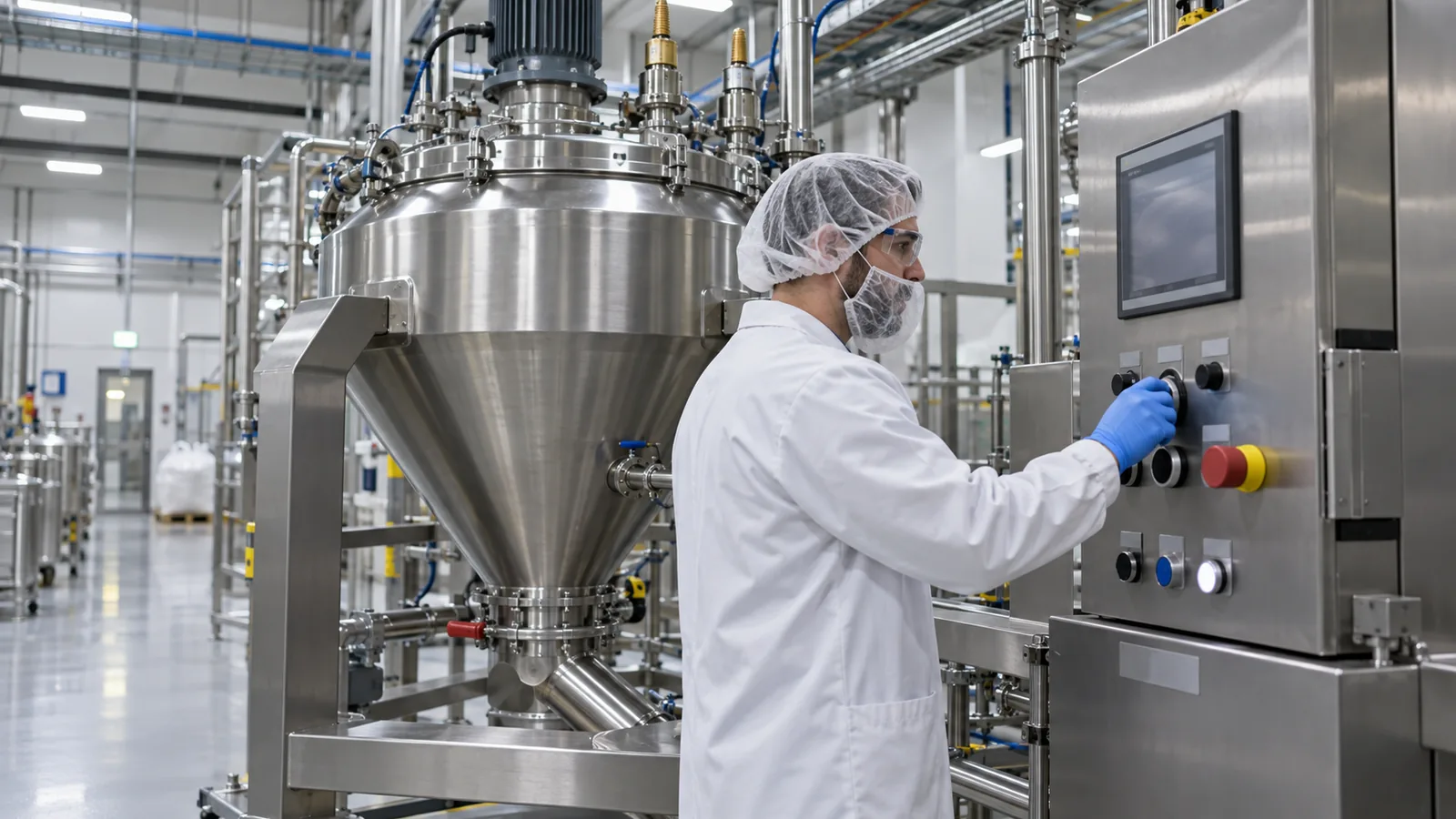
A full-service contract manufacturer offers a turnkey service: it sources ingredients (or accepts your nominated supplier), formulates, blends, fills, packages, manages stability and release testing, and ships finished retail-ready goods. A toll manufacturer does one defined step: you supply the material — typically the PS powder or premix — plus process instructions, and the toller blends, encapsulates, or packs under your direction, returning goods for your release. The dividing line that matters is not the equipment; it is who designs the process, who validates it, and who signs the batch release. In full-service, those duties sit with the manufacturer; in tolling, they remain with the brand, which becomes the de facto technical owner of the product.

Cost Economics: Priced Differently, Felt Differently
Full-service pricing bundles everything: ingredient procurement margin, formulation amortization, processing, packaging, often inventory carrying. It looks expensive per unit but caps the brand's fixed costs and staffing needs — appropriate for brands without technical teams or when speed-to-market outweighs unit economics. Tolling bills only the conversion step, which looks attractively low — until you total the brand's own costs: ingredient financing (PS is bought in drum quantities and sits in your warehouse), freight to the toller, quality testing, stability programs, and the internal expertise to direct all of it. Brands that switch to tolling purely on quoted unit price often find the total landed cost is comparable. Compare on total cost of ownership at your realistic annual volume, not on the converter's line rate.
Quality and Release Responsibility Under Each Model
Under 21 CFR Part 111 in the US, the brand marketing the product is responsible for finished specifications and for verifying the manufacturer's work — and in practice, responsibility allocation tracks the model. With full-service OEMs, your leverage lies in the quality agreement: audit rights, batch-record access, change notification, and the right to verify release testing. With tolling, those duties are yours to execute: you approve the master manufacturing record, qualify the toller's process, own incoming testing of the PS lots, and perform or commission finished-product release. EU practice is similar in spirit — the food business operator placing the product on the market carries the compliance burden, so tolling shifts more HACCP and documentation work onto the brand or must be contractually pinned down. A well-run toll relationship gives a capable brand tighter control; a brand without QA depth outsourcing release responsibility is the classic failure mode.
Why PS Raises the Stakes of the Model Choice
Phosphatidylserine is unforgiving of handling errors, and each model handles it differently. In full-service, the OEM procures the PS — nominate the supplier and grade, or accept theirs, and demand traceability to your chosen source, because ingredient substitution is a documented industry risk. The oxidation-sensitive powder needs low-humidity blending, gentle shear, and limited exposure windows; verify the OEM's actual controls, not brochure claims. In tolling, the PS environment is yours to manage end to end: warehouse storage, drum handling, premix dispersibility, and hold times at the toller all belong on your SOP list. The payoff is that the stability data, blending validation, and process knowledge stay with you — real value if you plan a platform of PS products or expect to move manufacturers. Either way, the ingredient spec and its analytical methods are the contract's technical backbone, so write the specification before you sign the manufacturer.
A Decision Framework and Selection Checklist
Choose full-service when: you lack in-house QA and formulation staff; you want speed and a single accountable partner; your volumes do not yet justify ingredient warehousing; or your product needs equipment-intensive formats like softgels or gummies. Choose tolling when: you already hold a qualified PS supply and technical team; product ownership and process IP matter strategically; you run multiple SKUs from one premix; or your margin model depends on controlling ingredient cost directly. Whatever the model, audit against the same checklist: PS or phospholipid handling experience with verifiable references; oxidation-control practices in blending and hold steps; analytical capability for PS assay and peroxide value; documentation quality that survives inspection; change-notification and traceability terms in the quality agreement; and capacity headroom across seasonal peaks. The best brands revisit the model decision annually — the right answer at 20,000 units is often wrong at 2 million.
SSS
Q: In toll manufacturing, who performs the finished-product release?
A: The brand does, as the party placing the product on the market. You own or commission the finished specifications, review the toller's batch documentation, verify testing, and sign release. Make this explicit in the tolling agreement — ambiguity about release responsibility is the most common gap auditors find.
Q: Can I nominate my own PS supplier with a full-service OEM?
A: Yes, and for a functional phospholipid you should. The OEM purchases from your qualified source against your specification, and the quality agreement must include a no-substitution clause with change notification if the OEM ever proposes an alternative.
Q: Which model is cheaper for a PS capsule product?
A: Neither in absolute terms — it depends on volume and internal capability. Below roughly the manufacturer's mid-volume tiers, full-service usually wins once you count ingredient financing and QA staffing. At larger volumes with in-house technical depth, tolling often achieves better total cost while giving you control of the PS supply. Model it both ways with your real annual volume.
Sonuç
Full-service and toll manufacturing are two different bargains about who carries cost, who controls process knowledge, and who answers the regulator. For phosphatidylserine products the decision is sharper than usual, because the ingredient punishes sloppy handling and rewards whoever owns the storage, blending, and stability disciplines. Match the model to your capability and volume honestly, pin the quality terms in writing either way, and keep the PS specification at the center of the contract. Nutranexa works in both models — supplying qualified PS powder and granulation grades to toll processors, or coordinating with full-service OEMs through nominated-supplier agreements — with the technical dossier, stability data, and change-control support either route requires.
Kaynaklar
- U.S. FDA — Current Good Manufacturing Practice for Dietary Supplements (21 CFR Part 111): https://www.fda.gov/food/current-good-manufacturing-practice-cgmp-dietary-supplements
- U.S. FDA — Dietary Supplements Guidance Documents and Regulatory Information: https://www.fda.gov/food/dietary-supplements-guidance-documents-regulatory-information
- European Commission — Food Supplements portal: https://food.ec.europa.eu/food-labelling-and-nutrition/food-supplements_en
- NIH Office of Dietary Supplements — Background and safety resources: https://ods.od.nih.gov
- PubMed — Literature on phosphatidylserine manufacturing and stability: https://pubmed.ncbi.nlm.nih.gov/?term=phosphatidylserine+stability
Önerilen sonraki adımlar
- Gözden geçirin Fosfatidilserin ürün sayfası.
- Karşılaştır Soy PS ve Ayçiçeği PS.
- Kontrol Üretim kanıtı ve Kalite ve Ar-Ge.
Ürün belgeleri için satış görüşüne ulaşın
Kaynak tercihini, başvurunu, ülkeyi ve yıllık miktarı paylaşın.
İletişim Satışları