
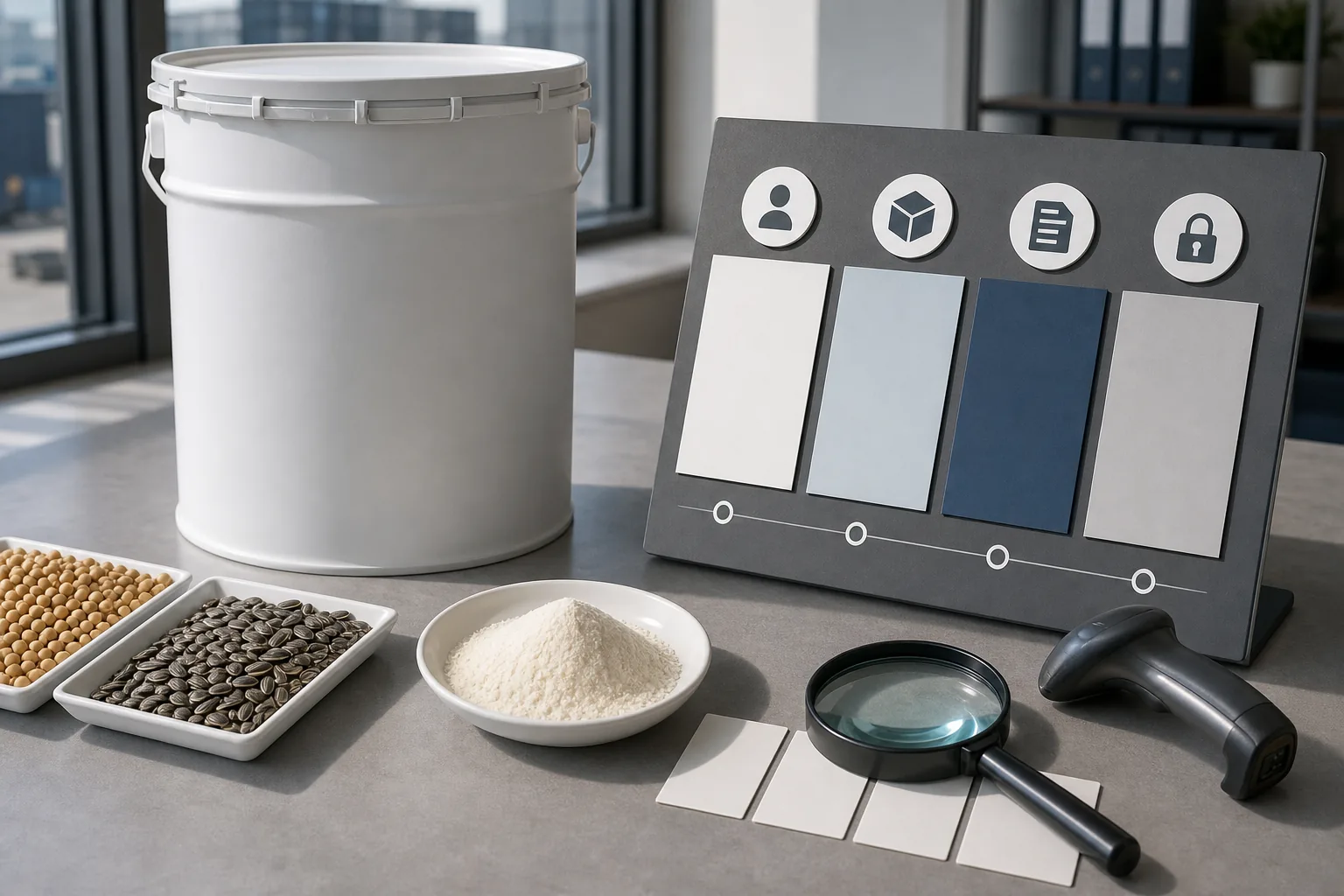
Projetos de fosfatidilserina na América do Norte frequentemente passam rapidamente pela seleção de rotas, revisão de especificações, revisão do COA, planejamento do MOQ e confirmação de embalagem. Então, uma pergunta mais restrita aparece pouco antes do registro ou inscrição: qual código HS ou classificação tarifária o importador deveria realmente apoiar para fosfatidilserina nos Estados Unidos ou Canadá?
A resposta curta é que a classificação da fosfatidilserina deve ser tratada como um Fluxo de trabalho de revisão personalizada de rotas, não como um número copiado de uma fatura antiga, e-mail de corretor ou arquivo de lecitina não relacionado. Os quadros tarifários oficiais dos EUA e Canadá colocam lecitinas e outros fosfoaminolipídios na direção 2923. Nos EUA, materiais tarifários publicados e uma decisão da CBP sobre fosfatidilserina direcionam os importadores para o subtítulo 2923.20.2000 para um produto específico descrito à CBP. No Canadá, a Tarifa Alfandegária de 2026 lista 2923.20.00 para lecitinas e outros fosfoaminolípidos. Esse é um ponto de partida forte, não uma desculpa para pular a correspondência de fatos.
Essa distinção importa porque a classificação alfandegária é apenas uma parte do arquivo de importação. Um corretor também pode precisar de suporte em fatura, embalagem, origem, aviso prévio, importação de alimentos ou rastreabilidade. Uma equipe de compras também pode estar revisando Responsabilidades do FSVP ou um questionário técnico para clientes. Essas são tarefas relacionadas, mas não são a mesma questão jurídica.
Este artigo é escrito para importadores de ingredientes, corretores alfandegários, distribuidores, fabricantes de suplementos, equipes de aquisição e equipes regulatórias ou de qualidade nos Estados Unidos e Canadá. Foca na disciplina da classificação tarifária, lógica de decisões e evidências prontas para corretores. É uma orientação operacional, não um aconselhamento jurídico ou um substituto para uma decisão vinculativa ou antecipada.
Quando o Nutranexa é mencionado, apenas os fatos verificados do site são usados. A Nutranexa identifica a empresa operacional como Shandong Nutranexa Biopharmaceutical Co., Ltd., fundada em 2013, que opera um campus de 110.000+ m² e atende principalmente a Europa e América do Norte. O site oferece caminhos separados para compradores Phosphatidylserine, Soja Phosphatidylserine, e Girassol Phosphatidylserine, junto com caminhos de solicitação de documentos através Qualidade e P&D, Fabricação, e Contato de vendas. Esses fatos ajudam a construir o arquivo alfândega, mas não substituem a análise de classificação.
A resposta curta: os times importados precisam primeiro
Se sua equipe está se preparando para importar fosfatidilserina para os EUA ou Canadá, o processo mais limpo e viável é:
- Primeiro tranque a rota exata da fosfatidilserina, a descrição da composição e a apresentação comercial.
- Comece sua revisão com o rumo 2923 porque os cronogramas oficiais indicam lecitinas e outros fosfoaminolípidos lá.
- Verifique se os produtos exatos seguem o mesmo padrão de fatos de qualquer decisão publicada que você pretende citar.
- Construa um pacote de classificação para o corretor usando a especificação, descrição da composição, linguagem da fatura, detalhes da embalagem e qualquer suporte de regra.
- Mantenha a classificação separada do FSVP, Aviso Prévio, registro de instalações alimentares e tarefas de questionários posteriores.
- Escalar para uma decisão vinculativa nos EUA ou uma decisão antecipada no Canadá quando os fatos não forem estáveis o suficiente para uma decisão pré-entrada confortável.
Para muitas importações comerciais de PS, isso significa 2923.20 é a primeira rota a testar, não porque a fosfatidilserina seja mágica, mas porque as tarifas cobrem expressamente lecitinas e outros fosfoaminolípidos ali. Os materiais tarifários dos EUA ainda separam o 2923.20.10 do 2923.20.20, e a decisão da CBP N270760 classificado como produto fosfatidilserina em 2923.20.2000. A Tarifa Alfandegária do Canadá de 2026 lista 2923.20.00 para lecitinas e outros fosfoaminolípidos. A lição prática é útil, mas limitada: a estrutura do cronograma e o histórico das regras fornecem um ponto de partida forte, mas o importador ainda precisa de um arquivo com fatos correspondentes para o envio real.
| Pergunta do comprador | Resposta prática |
|---|---|
| Podemos usar o mesmo código de um carregamento antigo de lecitina? | Somente se os bens e os fatos que o sustentam ainda forem materialmente os mesmos |
| Uma decisão da CBP resolve todas as importações do PS? | Não. As decisões dos EUA se aplicam aos fatos descritos na decisão |
| Se o Canadá mostrar 2923.20.00, terminamos? | Não até que os bens exatos e o tratamento tarifário atual sejam verificados |
| A especificação sozinha pode provar a classificação? | Não. Ele suporta classificação, mas fatura, descrição, composição e rota também importam |
| A revisão do código do ensino médio é igual ao FSVP ou ao Aviso Prévio? | Não. Essas são tarefas separadas de controle de importação |
Por que a revisão de código HS é uma tarefa independente para o comprador
A revisão do HTS dos EUA é específica para fatos, mesmo quando existe uma decisão da CBP
De acordo com o 19 CFR Parte 177, a CBP emite decisões sobre transações prospectivas especificamente descritas. O regulamento explica que uma decisão aplica a lei aduaneira a um conjunto específico de fatos, e que as decisões de classificação tarifária se aplicam apenas a artigos idênticos à amostra submetida ou a bens descritos de forma idêntica.
Isso importa para a fosfatidilserina porque as equipes frequentemente pulam diretamente do resultado da busca para um número de registro. Uma decisão publicada do CBP pode ser muito útil, especialmente quando se trata da própria fosfatidilserina. Mas a decisão não é um cheque em branco para toda rota de soja, rota de girassol, sistema de transportadores, concentração ou apresentação física que possa ser vendida sob um amplo rótulo comercial PS.
Portanto, o arquivo de importação precisa responder a uma pergunta restrita: Os bens que planejamos importar são descritos da mesma forma que os produtos por trás do código que queremos usar? Se a resposta for incerta, a equipe não deve confiar na memória, no hábito ou em uma planilha copiada.
O Canadá utiliza um processo de classificação tarifária de 10 dígitos e um sistema de decisão antecipada
A CBSA explica que decisões antecipadas para classificação tarifária atribuem um número de classificação tarifária de 10 dígitos aos bens comerciais importados e incluem uma justificativa para esse número ser correto. A CBSA também afirma que uma decisão antecipada oferece certeza e é vinculativa até ser modificada ou revogada, desde que os fatos, condições e legislação permaneçam alinhados.
Para os compradores de fosfatidilserina, isso importa porque a Tarifa Alfandegária Canadense de 2026 coloca lecitinas e outros fosfoaminolipídios em 20.2923.00, com os tratamentos tarifários listados como gratuitos. Importadores canadenses ainda precisam de um arquivo que explique por que seus bens reais pertencem ali e se alguma suposição de origem ou tratamento preferencial foi verificada separadamente.
Por isso, uma revisão de classificação aduaneira não deve ser condensada em uma tarefa geral de aprovação de fornecedores. Uma rota pode ser aprovada comercialmente enquanto sua descrição alfandegária ainda é muito vaga para um arquivo de entrada. Um questionário para clientes pode estar pronto enquanto o pacote do corretor não está.
Um Fluxo de Trabalho em Seis Etapas para a Classificação Tarifária da Fosfatidilserina
Primeiro defina a rota exata e a descrição comercial
Comece pela identidade do produto, não pelo número da tarifa. Registre a rota exata em análise: PS geral, fosfatidilserina de soja ou fosfatidilserina de girassol. Registre o nome do produto usado na cotação, a descrição da fatura comercial, o tamanho da embalagem e se o envio é um ingrediente comercial, pó de ingrediente, amostra ou outra apresentação.
Isso previne a maior parte do desvio do código. Se a fatura diz uma coisa, a especificação sugere outra, e o corretor usa uma terceira etiqueta curta copiada de uma remessa anterior, o arquivo fica fraco antes mesmo da entrada ser arquivada.
No mínimo, a nota de classificação inicial deve capturar:
- Rota e origem
- Descrição comercial
- Forma física e embalagem
- Referência de especificação atual
- país de exportação e destino esperados
- se a equipe está se baseando no histórico de classificação anterior ou solicitando uma nova revisão
Comece com o rumo 2923.20, depois teste a lógica do subtítulo
Quando a rota estiver estável, revise a estrutura tarifária. Os registros oficiais dos EUA e Canadá colocam lecitinas e outros fosfoaminolípidos na direção 2923. Isso faz de 2923,20 o ponto de partida natural para a análise da fosfatidilserina, pois a fosfatidilserina está sendo avaliada como fosfoaminolipídio, e não como suplemento finalizado, produto de varejo de marca ou preparação genérica de alimentos.
Nos Estados Unidos, a estrutura atual do HTS divide o 2923,20 em uma linha de fosfolipídios de ovo purificado de grau farmacêutico e uma linha "Other". Os resultados atuais da busca do HTS mostram 2923.20.20 como "Outros", com uma alíquota geral de 5%. A decisão da CBP N270760 também aponta para 2923.20.2000 para o produto descrito nessa decisão.
No Canadá, a Tarifa Alfandegária de 2026 lista 2923.20.00 para lecitinas e outros fosfoaminolipídios e mostra a taxa livre sobre os tratamentos tarifários exibidos nessa entrada do anexo.
O objetivo não é memorizar dígitos. É para confirmar se os bens reais se encaixam no caminho que você está usando. A classificação começa pelo texto da tarifa e pelas mercadorias à sua frente, não pelo fato de que outra empresa já importou "algo como PS".
Compare cuidadosamente decisões publicadas, em vez de copiar um número cegamente
Decisões publicadas são valiosas porque mostram como as autoridades aduaneiras aplicaram a tabela tarifária a um produto descrito. Eles se tornam arriscados quando os usuários os tratam como universais.
Para inscrições nos EUA, compare qualquer decisão citada com seus próprios produtos linha por linha:
- Identidade do produto e nome técnico
- Composição e descrição do material
- Forma física
- Contexto de uso comercial, se relevante
- se a decisão descreve o mesmo tipo de bem fosfolipídico
Se a correspondência for forte, a decisão apoia o arquivo. Se a correspondência for parcial, anote apenas como orientação. Se a correspondência for fraca, pare de citar como se fosse sua decisão de classificação.
Esse também é o momento em que uma equipe deve decidir se precisa de um novo pedido de decisão sob 19 CFR Parte 177. O regulamento exige uma descrição completa do artigo e, quando relevante, a designação técnica e a composição do material do artigo. Isso informa às equipes de importação exatamente qual nível de detalhe as autoridades aduaneiras esperam.
Construa um pacote de classificação pronto para corretor
O corretor não deveria precisar reconstruir o caso de classificação a partir de cinco tópicos de e-mail. Crie um pacote que reúna os fatos voltados para a alfândega:
| Campo de classificação | O que incluir | Sinal de espera |
|---|---|---|
| Identidade do produto | Rota exata, descrição comercial, fonte | genérico "pó PS" sem nota de rota |
| Suporte técnico | Especificação atual e resumo da composição | Especificação de outra rota ou revisão |
| Linguagem da fatura | redação que corresponde à lógica de classificação | Abreviação de fatura que aponta para outro lugar |
| Embalagem | Contagem de tambores, tamanho do pack, apresentação física | Pacote de amostra, pacote em massa e fatura não coincidem |
| Apoio ao poder | Número de regra e por que ele é relevante | decisão citada sem comparação de fatos |
| Tratamento de serviço | Verificação atual de cronograma para o país de destino | Antiga Suposição de Dever Copiada |
| Nota de corretor | Código de arquivo sob revisão e responsável pela escalonamento | corretor deixado para adivinhar a partir dos anexos |
É aqui que outros recursos ativos do Nutranexa se tornam úteis sem sobrepor este artigo. Revisão de Aviso Prévio, Revisão do registro da instalação alimentar, e Revisão da Declaração de Embalagem Tudo isso pode alimentar o arquivo de importação mais amplo. Eles só não devem ser confundidos com prova de classificação.
Mantenha a classificação tarifária separada das tarefas de importação de alimentos e de arquivo de clientes
Projetos de importação de fosfatidilserina frequentemente falham porque muitos controles separados são unificados em uma única decisão. Um código alfandegário não substitui FSVP. Um arquivo de registro de instalação alimentícia não substitui a classificação tarifária. Um questionário para clientes não substitui a descrição da fatura. A Revisão do COA pode suportar a identidade do produto, mas por si só não comprova o código aduaneiro final.
Quando as equipes mantêm esses arquivos separados, o corretor recebe um pacote mais claro e o importador tem um rastro de auditoria mais limpo. Quando as equipes os fundem, uma resposta que é verdadeira para um propósito é esticada para outro propósito que nunca foi projetado para suportar.
Feche com uma decisão de avançar, reter ou escalar antes do envio
Antes de mover a carga, classifique o resultado do arquivo:
- Vai: A descrição das mercadorias é estável, o caminho do cronograma é suportado e o pacote corretor está completo.
- Segurar: a descrição do produto, a redação da fatura ou documentos de apoio ainda entram em conflito.
- Escalar: os bens diferem o suficiente da prática anterior para que uma decisão vinculativa nos EUA ou uma decisão antecipada no Canadá seja o caminho mais seguro.
Esse fechamento é mais barato do que refazer o trabalho após a entrada. Também complementa os outros recursos de 26 de julho de 2026 neste ciclo de publicação: matemática de controle por lotes na Europa, controle de questionários da América do Norte e agora classificação aduaneira pré-entrada na América do Norte.
Uma Matriz Prática de Classificação EUA-Canadá
| Ponto de revisão | Estados Unidos | Canadá |
|---|---|---|
| Ponto de partida do cronograma | O título 2923 abrange lecitinas e outros fosfoaminolípidos | O título 2923 abrange lecitinas e outros fosfoaminolípidos |
| Indicador útil específico para PS | Decisão da CBP N270760 classificado como produto de fosfatidilserina em 2923.20.2000 | A Tarifa Alfandegária de 2026 lista 2923.20.00 para lecitinas e outros fosfolipídios |
| Mecanismo de governo | Pedido de decisão vinculativa do 19 CFR Parte 177 | Decisão antecipada da CBSA para classificação tarifária |
| Disciplina de fatos | Decisões se aplicam a bens idênticos ou descrições idênticas | As decisões continuam utilizáveis enquanto fatos e lei permanecem alinhados |
| Erro comum do comprador | Copiar um número antigo do HTS sem corresponder aos bens | Tratando a linha tarifária como autocomprovativa, sem justificativa de apoio |
Precisa de um pacote de corretor mais limpo antes de entrada?
Se o corretor estiver trabalhando com base em um código antigo de lecitina, uma especificação meio rotulada e redação da fatura que não corresponde à rota do produto, pare antes que o envio seja arquivado. Uso Contato de vendas solicitar o caminho de especificação específico da rota atual, a linha de base do embalagem e o suporte à descrição do produto para a rota exata da fosfatidilserina em análise. Os pedidos mais rápidos geralmente incluem a rota, país de destino, uso esperado, quantidade comercial e qual questão alfandegária ainda está aberta.
Erros Comuns que Atrasam a Entrada da Fosfatidilserina
- Usar "código HS" como abreviação para uma decisão legal final, sem verificar a tabela tarifária real e a descrição das mercadorias.
- Copiar um código de um antigo carregamento de lecitina ou fosfolipídio sem comparar as mercadorias importadas.
- Deixar que a redação da fatura, as notas do corretor e as especificações descrevam o produto de forma diferente.
- Tratar um COA como se ele provasse automaticamente o código alfandegário.
- Misturar classificação tarifária com FSVP, Aviso Prévio ou tarefas de questionários para clientes a jusante.
- Assumindo que uma decisão dos EUA se aplique automaticamente no Canadá, ou vice-versa.
- Esperar até que a carga esteja em movimento antes de decidir se é necessário um novo pedido de resolução.
A solução prática é estreita e repetível: mantenha uma pergunta no centro do arquivo. Quais produtos exatos de fosfatidilserina estão sendo importados, qual texto tarifário e lógica de decisão apoiam o número, e o corretor pode explicar essa lógica a partir de um pacote limpo?
Como os Fatos Verificados da Nutranexa se encaixam nesse fluxo de trabalho
Para compradores que avaliam a Nutranexa, vários dados verificados do site ajudam a organizar um arquivo de classificação alfandegária. O local se separa Phosphatidylserine, Soja Phosphatidylserine, e Girassol Phosphatidylserine, o que ajuda a manter a identidade da rota estável antes que as instruções de fatura e corretor sejam emitidas.
A Nutranexa também afirma que a empresa foi fundada em 2013, opera um campus de 110.000+ m2 e atende principalmente a Europa e a América do Norte. O local oferece caminhos visíveis para Fabricação, Qualidade e P&D, e acompanhamento de vendas, além de uma linha de base verificada de fosfatidilserina MOQ de 25 kg e 25 kg líquidos por tambor. Esses fatos podem apoiar a identidade do fornecedor, confirmação da rota e contexto de embalagem no pacote de classificação.
Fontes
- Resultados de busca HTS da Comissão de Comércio Internacional dos EUA para o rumo 2923.20
- Decisão CBP CROSS N270760: classificação tarifária da fosfatidilserina
- eCFR: 19 CFR Parte 177 - Decisões Administrativas
- CBP: O que são Cartas de Decisão?
- Tarifa Alfandegária CBSA 2026, Capítulo 29
- CBSA: Decisões sobre classificação, avaliação, origem e marcação tarifária - Visão Geral
- Memorando CBSA D11-11-3: Decisões Antecipadas para Classificação Tarifária
- Guia da CBSA para classificação tarifária de importações canadenses - Recursos
Perguntas frequentes
Qual código HS os importadores devem revisar primeiro para fosfatidilserina?
Para muitas importações comerciais de ingredientes PS, a seção 2923.20 é o primeiro lugar a ser revisado, pois as tarifas oficiais colocam lecitinas e outros fosfoaminolipídios lá. Nos EUA, os materiais atuais da HTS e a decisão CBP N270760 apontam para 2923.20.2000 para o produto específico de fosfatidilserina descrito nessa decisão. No Canadá, a Tarifa Alfandegária de 2026 lista 2923.20.00. As equipes ainda devem confirmar se seus produtos reais correspondem aos fatos que o sustentam.
A decisão da CBP N270760 se aplica automaticamente a todo carregamento de fosfatidilserina?
Não. A prática de decisão dos EUA sob 19 CFR Parte 177 é específica de fato. Uma decisão publicada é uma orientação forte quando os produtos são idênticos ou descritos de forma idêntica, mas os importadores não devem presumir que toda rota, fonte ou apresentação é coberta automaticamente.
A classificação tarifária é a mesma que FSVP ou revisão por aviso prévio?
Não. A classificação determina a lógica do código alfandegário. FSVP, Aviso Prévio, registro de instalações alimentares e controles relacionados à importação de alimentos respondem a diferentes perguntas. Eles pertencem ao mesmo arquivo de remessa, mas não devem ser tratados como intercambiáveis.
O que um corretor deve receber antes de enviar os dados de entrada de fosfatidilserina?
No mínimo, o corretor deve receber a descrição comercial exata, identidade da rota, especificação ou suporte atual de composição, detalhes de embalagem e quantidade, redação da fatura, qualquer referência relevante da decisão e um proprietário interno nomeado para escalonamento caso os fatos mudem.
Quando um comprador deve solicitar uma nova resolução?
Solicite uma nova decisão quando os produtos não correspondem claramente ao histórico de arquivamento anterior, quando a descrição ou composição do produto mudou significativamente, quando as equipes internas se sentem desconfortáveis em defender o código selecionado, ou quando o valor comercial da certeza for maior do que o custo de tempo para obter uma decisão formal.
Conclusão
A classificação alfandegária da fosfatidilserina se torna gerenciável quando as equipes norte-americanas deixam de tratar o código HS como um rótulo reutilizável e passam a tratá-lo como uma decisão baseada em fatos vinculada exatamente às mercadorias importadas.
O fluxo de trabalho mais forte é prático: bloqueie a rota primeiro, comece com o rumo 2923.20, compare fatos decisivos em vez de copiar dígitos, construa um pacote pronto para corretor, separe a classificação de outras tarefas de importação e arquivo de cliente, e finalize com uma decisão escrita de go, hold ou escale antes do envio.
Próximas etapas recomendadas
- Revise o Phosphatidylserine página do produto.
- Comparar Soy PS e Sunflower PS.
- Verifique prova de fabricação e Qualidade e P&D.
Entre em contato com o departamento de vendas para obter documentos do produto
Compartilhe preferência de fonte, aplicação, país e quantidade anual.
Contato de vendas