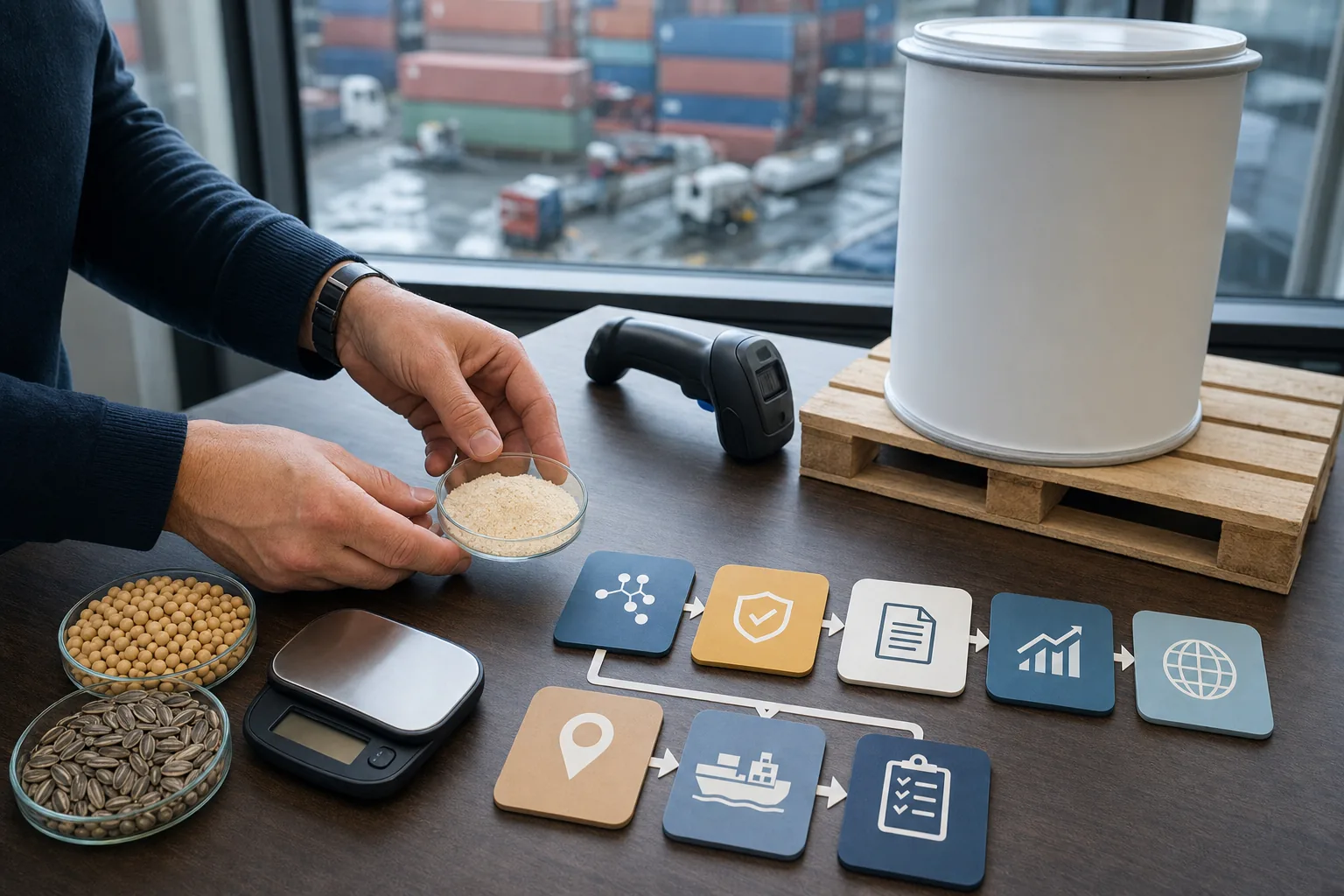
Compradores europeus devem preparar o desalfamento alfandegário de fosfatidilserina como um arquivo de remessa controlado, e não como uma troca de última hora de uma fatura comercial e um código tarifário sugerido. O importador precisa de um caminho de declaração vinculado ao EORI, uma descrição exata do produto, uma revisão de classificação defensável, suporte de valor e origem, dados alinhados de embalagem e transporte, e uma verificação de quaisquer medidas de importação de alimentos que se aplicem ao produto específico e ao país de origem.
A principal cautela é simples: não presuma que todo pó de fosfatidilserina tem a mesma classificação aduaneira ou caminho de controle de importação. Fosfatidilserina geral, fosfatidilserina de soja e fosfatidilserina de girassol podem diferir em fonte, composição, concentração, sistema de transportadores e apresentação comercial. Esses fatos podem ser relevantes quando um importador ou representante alfandegário revisa as medidas da Nomenclatura Combinada e do TARIC.
Esse recurso oferece aos importadores europeus, distribuidores, fabricantes de suplementos, gerentes de compras, equipes de logística e equipes de qualidade um fluxo de trabalho prático antes da chegada. Não atribui um código CN, não calcula direitos e não substitui o aconselhamento da autoridade aduaneira competente ou do representante designado. Mostra quais fatos devem ser estáveis antes que alguém tome essas decisões.
A resposta curta para os importadores da UE
Antes de um envio de fosfatidilserina chegar à UE, o comprador deve ser capaz de responder a seis perguntas em um único arquivo: quem é o importador e declarante, qual EORI está sendo utilizado, qual produto exato está nos tambores, como a classificação proposta CN/TARIC foi apoiada, como o valor alfandegário e a origem foram documentados, e se algum controle de importação de alimentos se aplica exatamente àquela rota e origem.
A Comissão Europeia afirma que um número EORI é obrigatório para operações de desalfanças na UE. Também explica que as mercadorias declaradas à alfândega da UE devem ser classificadas sob a Nomenclatura Combinada ou uma nomenclatura baseada nela; A classificação determina tanto o tratamento tarifário quanto as medidas não tarifárias. O fornecedor pode fornecer provas do produto, mas o importador e seus profissionais alfandegários ainda precisam assumir a decisão da declaração.
Para uma transferência limpa, mantenha o arquivo da alfândega conectado a—mas separado de—o Especificação da fosfatidilserina e revisão do COA. A especificação suporta identidade de produto. O COA apoia uma revisão em lote. Nenhum dos dois, por si só, completa a declaração aduaneira, avaliação, origem ou avaliação de controle de importação.
Por que a desalfandega precisa de seu próprio arquivo PS
Alfândega, conformidade alimentar e aprovação de qualidade são decisões separadas
Liberação alfandegária, prontidão para leis alimentares e liberação interna de QA podem acontecer em torno da mesma remesta, mas não respondem à mesma pergunta. A alfândega precisa de dados de declaração e documentos de apoio. As equipes de alimentos e regulatórias precisam confirmar a rota de mercado pretendida e quaisquer restrições ou controles oficiais aplicáveis. O QA precisa da especificação aprovada, do COA do lote atual, dos critérios de recebimento e do status do documento.
Combinar tudo em uma pasta descontrolada cria dois riscos. Fatos críticos para entrada podem ser ocultados entre certificados não relacionados, enquanto equipes de qualidade podem supor que a liberação alfandegária significa que o ingrediente passou pela aprovação interna. Uma abordagem melhor são três faixas interligadas: o pacote de alfândega e corretor, o arquivo de conformidade alimentar e o arquivo de recebimento de QA.
A Comissão Europeia observa que a maioria dos alimentos de origem não animal não é automaticamente canalizada por uma entidade fronteiriça específica, mas certos produtos e origens podem estar sujeitos a controles mais rigorosos ou medidas especiais. Por isso, uma afirmação geral como "ingrediente alimentar de origem vegetal? não é suficiente. A equipe deve verificar o conjunto de regras atual para os bens exatos e a origem, em vez de assumir certificação automática ou isenção automática.
Um nome genérico de ingrediente não é suficiente para classificação
?PS pó? Pode funcionar em uma conversa inicial de vendas, mas é vago demais para uma revisão controlada da alfândega. Um arquivo de classificação deve distinguir a rota exata do produto e registrar os fatos que um corretor ou autoridade aduaneira pode precisar: nome do ingrediente, fonte biológica, concentração de fosfatidilserina ou grau comercial, outros constituintes ou transportadores, forma física, uso comercial pretendido, unidade de embalagem e identidade do fabricante mostrados nos documentos da transação.
O Sistema de Informação de Classificação da UE explica que a classificação determina a alíquota de imposto alfandegário e as medidas não tarifárias. Reúne informações sobre CN, informações TARIC, regulamentos de classificação, conclusões de comitês e decisões judiciais. A questão não é que os compradores devam se tornar especialistas em tarifas. O ponto é que a proposta de classificação deve estar conectada a fatos verificáveis do produto, e não copiada de uma fatura antiga ou do material de outro fornecedor.
Um Fluxo de Trabalho de Desalfandega da UE em Sete Etapas
Confirme o importador, declarante, representante e EORI
Comece pelas partes, não pelos documentos. Registre qual entidade legal importará as mercadorias, quem fará a declaração aduaneira, se a representação é direta ou indireta, e qual EORI identificará o operador relevante. Confirme o Estado-Membro de destino e o escritório de alfândega ou caminho do porto com o representante designado.
A Comissão Europeia descreve a EORI como o identificador comum para operações alfandegárias e afirma que operadores econômicos estabelecidos pela UE precisam de um. Um operador fora da UE também pode precisar de uma EORI ao realizar atividades alfandegárias específicas. Não espere a chegada do navio ou voo para descobrir que o importador nomeado, comprador da fatura, consignatário, representante e registro EORI não estão alinhados.
Sua nota de remessa inicial deve, portanto, nomear o importador, declarante, representante da alfândega, consignatário, local de entrega, proprietário EORI e contato interno de escalonamento.
Bloqueie a identidade exata do produto comercial
Em seguida, congele uma declaração de identidade específica para rota. É a remessa Fosfatidilserina geral, Fosfatidilserina de soja, ou Fosfatidilserina de girassol? Qual nota ou concentração está sendo vendida? O material comercial inclui outro ingrediente ou suporte? Qual forma física é enviada e como cada pacote é descrito?
Compare essa identidade na cotação, ordem de compra, fatura comercial, lista de embalagem, especificação e folha de dados do corretor. Se um arquivo diz "soy PS? Outro diz apenas "aditivo alimentar". e um terceiro usa uma descrição geral de fosfatidilserina, pausa e resolve o descompasso. Uma descrição limpa deve ser precisa, sem fazer alegações regulatórias sem fundamento ou usar um código tarifário como nome do produto.
Revise a classificação CN e TARIC sem adivinhar um código
Uma vez que a identidade esteja estável, forneça ao representante da alfândega as provas necessárias para revisar a classificação. Isso normalmente inclui a especificação atual, descrição da composição ou do grau, fonte, descrição da fabricação em nível apropriado, forma física, uso pretendido e uma imagem representativa do produto ou amostra, se solicitado.
Use os recursos CLASS e TARIC da Comissão para pesquisar o quadro atual, mas trate um resultado de busca como pesquisa — não como uma decisão vinculante. A Comissão afirma que a Informação Vinculativa sobre Tarifas é uma decisão legal de classificação, geralmente válida por três anos em toda a UE, e que um pedido deve descrever os produtos de forma precisa e completa. Um BTI pode valer a pena ser discutido com o importador ou autoridade aduaneira quando a incerteza da classificação for relevante, recorrente ou comercialmente significativa.
Não publique ou reutilize um código CN nos dados mestres internos até que seu escopo corresponda exatamente ao produto importado. Um código anteriormente usado para uma concentração diferente, sistema de portadores, formulação ou apresentação comercial é evidência para investigar, não prova.
Alinhe a fatura, a lista de embalagem e a descrição do transporte
Os documentos da transação devem contar a mesma história de remessa. Verifique o vendedor e comprador legais, número e data da fatura, Incoterm usado pelas partes, moeda, preço unitário, preço total, quantidade, peso líquido e bruto, número e tipo de embalagens, marcas de embalagem, declaração de origem e descrição do produto.
Depois compare a lista de embalagem, o conhecimento de embarque ou o guia aéreo. Contagem de tambores, paletes, pesos, consignatário e redação do produto devem ser conciliados. As páginas atuais do PS da Nutranexa afirmam um quantidade mínima de 25 kg para pedido e 25 kg líquidos por tambor para fosfatidilserina. Os compradores ainda devem confirmar os detalhes exatos de embalagem e envio do pedido antes de reservar, em vez de tratar uma linha de base do site como o registro final de transporte.
Construa a avaliação e a evidência de origem
A classificação é apenas um dos pilares da alfândega. A Comissão Europeia identifica classificação, origem e valor alfandegário como insumos centrais para o tratamento dos impostos. Sua orientação de avaliação aduaneira diz que o principal método de avaliação é o valor da transação — o preço pago ou a pagar — sujeito a acréscimos e deduções especificados pelo Código Alfandegário da União.
Crie uma planilha de avaliação ou nota de corretor que conecte o preço da fatura ao frete, seguro, comissões, assistências, royalties ou outros elementos relevantes, quando aplicável. Não deixe que o preço de compra da compra, o valor do frete da transportadora e o valor declarado pelo corretor se desenvolvam de forma independente.
Mantenha a origem separada do país de transporte. Registre a base do país de origem utilizada, a entidade fabricante e qualquer reivindicação de origem preferencial em análise. Se for solicitado tratamento preferencial, obtenha a evidência correta de origem para o arranjo aplicável; Não infira preferência a partir de um 'feito em' linha ou rota por um porto específico.
Verifique os controles de importação de alimentos para saber exatamente a rota e a origem
Antes do envio, peça ao proprietário regulador ou alfandegário que verifique os requisitos atuais da UE e dos Estados-Membros para o produto, origem e uso pretendido. Confirme se as mercadorias se enquadram em alguma lista de controle aumentado, medida de emergência, requisito de certificação, caminho pré-notificação ou etapa nacional de implementação.
A Comissão explica que a maioria dos alimentos não de origem animal não é rotineiramente canalizada por entidades de controle de fronteira, enquanto certas combinações produto-origem podem ser listadas para controles reforçados e as listas relevantes são revisadas regularmente. A regra prática, portanto, não é sempre necessário um certificado. nem "nenhum certificado é exigido". A resposta correta deve ser verificada próximo ao envio, usando classificações e medidas atuais.
Esta avaliação deve se conectar com o mais amplo do comprador Certificação de fornecedores e documentos europeus em vez de duplicá-lo.
Feche com uma decisão pré-chegada de ir, reter ou escalar
Complete o arquivo antes da chegada da carga com um status registrado:
- Vai: partes, EORI, identidade, base de classificação, valor, origem, documentos de transação e controles de importação aplicáveis estão alinhados.
- Segurar: Permanece uma lacuna de documento ou de dados corrigível, e a liberação de remessa não deve ser presumida.
- Escalar: Classificação, representação, origem, valor ou aplicabilidade ao controle de alimentos é incerta o suficiente para exigir intervenção de autoridade aduaneira, corretor, jurídico ou regulatório.
O proprietário deve registrar a data da decisão, os itens abertos, a pessoa responsável e o próximo ponto de controle. Isso é mais útil do que um e-mail longo porque armazém, finanças, QA e o representante da alfândega podem ver a mesma posição de liberação.
A Tabela de Transferência do Corretor Prático
| Item de controle | O que o importador deve fornecer | O que isso ajuda a prevenir |
|---|---|---|
| Partidos e EORI | Importador, declarante, representante, consignatário, proprietário EORI, destino | Declarar sob a entidade errada ou um caminho de representação desalinhado |
| Identidade do produto | Rota, origem, grau ou concentração, contexto da composição, forma, uso, fabricante | Reutilizando uma classificação de um produto materialmente diferente |
| Suporte à classificação | Especificação atual, descrição técnica, pesquisa CLASS/TARIC, referência BTI, se aplicável | Codificação CN não suportada e medidas não tarifárias perdidas |
| Pacote de transação | Fatura comercial, lista de embalagem, documento de transporte, marcas e pesos de pacotes | Descrições, quantidades e unidades de embarque conflitantes |
| Valor e origem | Nota de avaliação, entradas/frete/seguro, base de origem, evidência de preferência se reivindicada | Valor aduaneiro incorreto ou tratamento preferencial não sustentado |
| Verificação de importação de alimentos | Revisão atual da rota e origem, certificados ou notificações apenas quando aplicável | Assumindo que toda comida não animal siga o mesmo caminho de fronteira |
| Encerramento | Ir em alerta, manter ou escalonar status com proprietário e data | Carga chegando enquanto questões críticas permanecem em aberto |
Precisa de documentos específicos para rotas antes da revisão pelo corretor?
Se seu representante da alfândega está trabalhando com um pó genérico de 'PS?' Descrição, pause antes da reserva do envio. Envie à Nutranexa a fonte exata do PS, a nota em análise, o país de destino, a aplicação pretendida, a quantidade planejada e a lista de documentos através do Página de contato. A equipe pode ajudar a alinhar as informações atuais do produto e da embalagem para a rota a ser cotada; Seu importador e o representante da alfândega continuam responsáveis pela decisão alfandegária.
Erros comuns de liberação para evitar
A maioria dos problemas evitáveis começa com um time assumindo que outro time validou o mesmo fato.
- Copiar um código CN de uma remessa anterior sem verificar se a origem, concentração, transportador ou apresentação mudaram.
- Usando fosfatidilserina? em um documento, ?soy PS? em outra, e uma descrição comercial diferente nos dados mestres do corretor.
- Tratar a especificação do fornecedor como um pacote completo da alfândega.
- Descobrir após o registro que o importador, consignatário, representante ou proprietário EORI não é a entidade esperada pelo plano de declaração.
- Equiparar país de embarque à origem ou assumir uma preferência sem evidências válidas de apoio.
- Assumindo que alimentos de origem vegetal nunca acionam um controle específico de importação da UE.
- Deixar o valor da fatura avançar sem reconciliar frete, seguros e outros fatores de avaliação.
A melhor prevenção é uma breve revisão pré-chegada, baseada em evidências, propriedade e um status de decisão.
Como os Fatos Verificados da Nutranexa Apoiam o Arquivo
A Nutranexa oferece caminhos comerciais separados para fosfatidilserina geral, soja e de girassol, o que ajuda os compradores a manterem a identidade específica de cada rota. A empresa afirma ter sido fundada em 2013, opera um campus de 110.000+ m², concentra exportações principalmente para a Europa e América do Norte e apoia a cooperação em P&D. Seu site também fornece contexto de fabricação, embalagem, expedição, especificação e COA que os compradores podem usar durante a revisão preliminar dos fornecedores.
Para planejamento logístico, a linha de base de PS publicada é um MOQ de 25 kg e 25 kg líquidos por tambor. Esses são dados úteis para a consulta, não substitutos para o orçamento final, fatura, lista de embalagem ou relatório de transporte. Os compradores devem solicitar documentos atuais para o pedido exato e conectá-los a Evidências de fabricação, Qualidade e P&D, Exemplos de embalagem e despacho, e seus dados mestres internos da alfândega.
Fontes
- Comissão Europeia: Registro e Identificação de Operadores Econômicos (EORI)
- Comissão Europeia: Sistema de Informação de Classificação (CLASS)
- Comissão Europeia: Informações Vinculantes sobre Tarifas da UE (BTI)
- EUR-Lex: Regulamento (UE) nº 952/2013 que estabelece o Código Aduaneiro da União
- Comissão Europeia: Avaliação aduaneira
- Comissão Europeia: Importação e liberação para livre circulação
- Comissão Europeia: Controles oficiais sobre produtos importados
Perguntas frequentes
Quais documentos são necessários para importar fosfatidilserina para a UE?
O conjunto legal exato depende da remessa e do Estado-Membro, mas um arquivo prático normalmente alinha as entradas da declaração aduaneira, detalhes EORI e das partes, fatura comercial, lista de embalagem, documento de transporte, comprovante de identidade do produto, suporte à classificação, insumos de valor aduaneiro, evidência de origem e quaisquer documentos de importação de alimentos aplicáveis à rota exata produto-origem.
Um importador de fosfatidilserina da UE precisa de um número EORI?
Sim, um EORI é obrigatório para operações de desalfândega na UE. A equipe deve confirmar qual operador é o dono da EORI e como o importador, declarante, consignatário e representante alfandegário se encaixam na estrutura de declaração antes do envio.
Qual código CN deve ser usado para fosfatidilserina?
Este artigo não atribui um código CN. A classificação deve ser revisada com base na fonte exata, composição, concentração ou grau, forma física, apresentação comercial e uso pretendido. CLASS e TARIC apoiam pesquisas, enquanto uma decisão de Informações Tarifárias Vinculativas pode fornecer segurança jurídica para o produto descrito na decisão.
A fosfatidilserina de origem vegetal sempre precisa de um certificado de controle de fronteira?
Não se deve assumir uma resposta universal. A Comissão afirma que a maioria dos alimentos de origem não animal não é rotineiramente canalizada por entidades de controle de fronteira, mas combinações específicas de produto e origem podem estar sujeitas a controles reforçados ou medidas especiais. Verifique as regras atuais para a rota exata antes do envio.
Uma especificação e um COA podem substituir o pacote do corretor alfandegário?
Não. Eles apoiam a revisão de produtos e lotes, mas não estabelecem sozinhos as partes, o caminho EORI, os dados de declaração, a classificação tarifária, o valor alfandegário, a reivindicação de origem ou o alinhamento transação-documento necessários para a desautorização.
Conclusão
A desalfandega de fosfatidilserina na Europa torna-se mais previsível quando os compradores controlam os dados de envio antes da chegada da carga. Confirme as partes e o EORI, bloqueie a identidade exata do PS, suporte a classificação sem copiar um código antigo, reconcilie dados de fatura e transporte, documento valor e origem, e verifique as medidas atuais de importação de alimentos para a rota real.
O teste final é prático: o importador e seu representante podem explicar quais são as mercadorias, quem as declara, por que a classificação é defensável, como valor e origem foram sustentados e quais controles de importação atuais foram verificados? Se alguma resposta ainda for baseada em suposições, espere ou escale antes do despacho.
Próximas etapas recomendadas
- Revise o Phosphatidylserine página do produto.
- Comparar Soy PS e Sunflower PS.
- Verifique prova de fabricação e Qualidade e P&D.
Entre em contato com o departamento de vendas para obter documentos do produto
Compartilhe preferência de fonte, aplicação, país e quantidade anual.
Contato de vendas