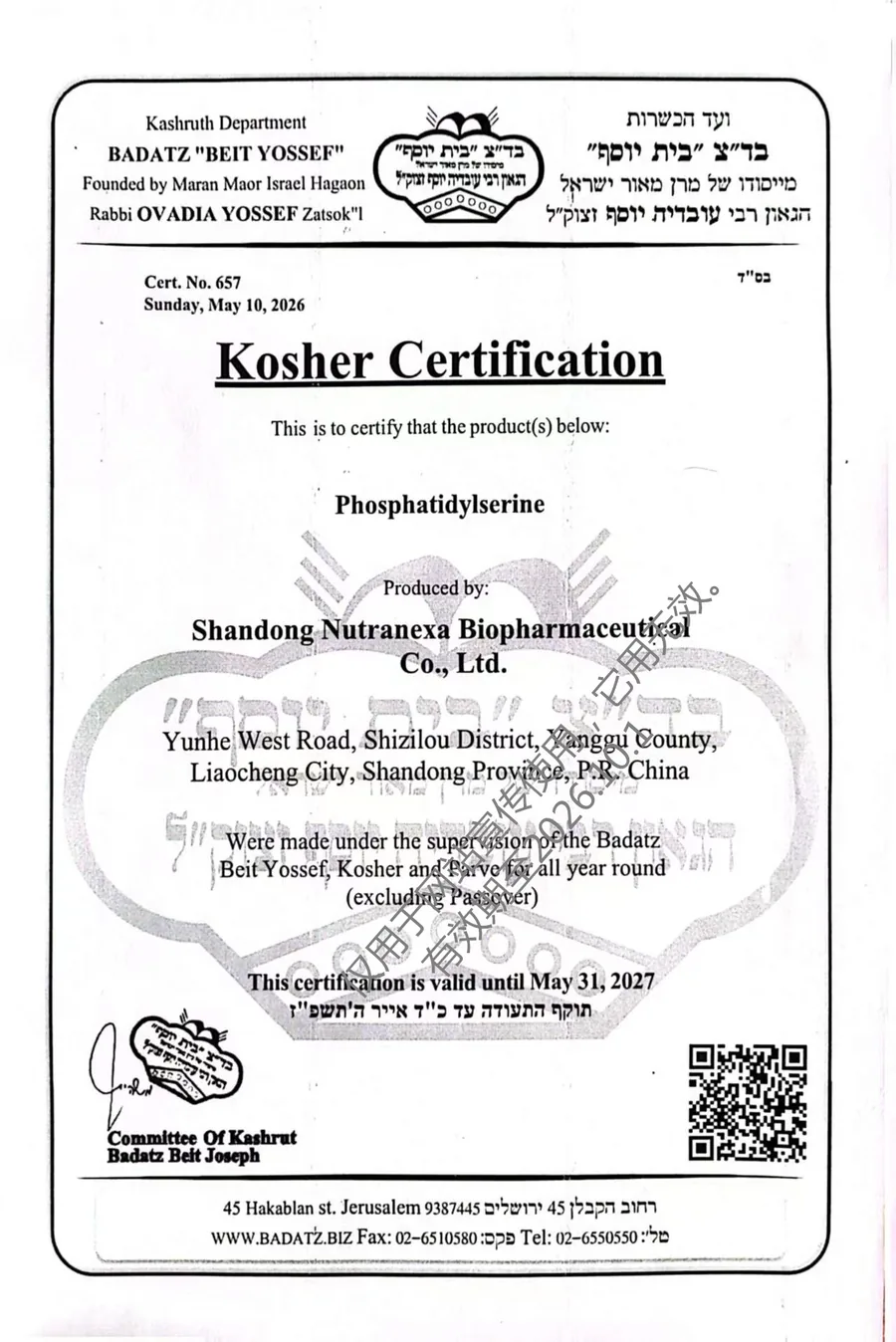
Проекты с фосфатидилсерином в Северной Америке часто сначала решают обычные ранние вопросы: маршрут источника, спецификация, путь COA, MOQ, упаковка, логика аллергенов и структура этикетки. Затем дистрибьютор, ритейлер, контрактный производитель или следующий бренд задаёт более узкий вопрос, который может вновь открыть весь файл одобрения: Есть ли у нас кошерный сертификат именно для этого маршрута с фосфатидилсерином, и поддерживает ли этот файл способ продажи продукта?
Краткий ответ: покупатели должны рассматривать кошерный файл с фосфатидилсерином как Рабочий процесс с объёмом, маршрутом и разрешениями на метки, а не как случайное заявление «да» или «нет». Официальные рекомендации по сертификации ясно указывают на это различие. OU объясняет, что его символ может использоваться только на продуктах, указанных в одобренном списке продукции компании, тогда как продукты с частной маркой требуют собственного согласия и пути одобрения. OK Kosher также сообщает компаниям, что этикетки должны быть одобрены перед печатью, а заявители на частные марки должны указывать точные названия и соответствующие идентификаторы продукции из сертифицированного списка производителя. Практическое следствие основано на выводе из этих официальных источников: кошерный файл поставщика может подтверждать квалификацию ингредиента, но это не означает автоматически, что каждый североамериканский продукт с частной маркой может печатать кошерный символ без отдельного обзора.
Это различие важно, потому что источник фосфатидилсерина часто включает сразу несколько сторон. Закупка может включать квалифицирование общего PS, соевого PS или подсолнечного PS. QA может проверять текущий пакет документов. Контрактный производитель может захотеть подтверждение, что вариант с ингредиентами подходит для кошерно-чувствительной производственной программы. Бренд или дистрибьютор уже может спрашивать, может ли он напечатать символ на готовой упаковке. Если эти вопросы перепутаться, один файл сертификата растянется больше, чем он фактически доказывает.
Эта статья написана для импортеров ингредиентов из США и Канады, дистрибьюторов, производителей добавок, брендов частных марок, менеджеров по закупкам, команд контроля качества и регуляторов, работающих с фосфатидилсерином. Она сосредоточена на квалификации поставщиков, обзоре объема сертификатов и контроле документов на последующих этапах. Она не предоставляет юридических или раввинских консультаций и не выдвигает заявлений о медицинском лечении.
Там, где упоминается Nutranexa, используются только подтверждённые факты с места. На текущем месте операционная компания идентифицируется как Shandong Nutranexa Biopharmaceutical Co., Ltd., основанная в 2013 году, управляющая кампусом площадью 110 000+ м2 и в основном обслуживающая Европу и Северную Америку. Он предоставляет отдельные пути для покупателей Phosphatidylserine, Соя Phosphatidylserine, и Подсолнух Phosphatidylserine, вместе с Качество и НИОКР, Производство, и Свяжитесь с отделом продаж страницы для текущих запросов документов. Окончательное кошерное одобрение всё равно должно зависеть от конкретного маршрута, текущего файла, контролируемого сертификатором, и собственного пути обзора покупателя в Северной Америке.
Краткий ответ, который нужен покупателям в первую очередь
Если ваша команда рассматривает фосфатидилсерин для кошерно-чувствительного североамериканского проекта, самый чистый и рабочий процесс — это:
- Сначала исправьте точный маршрут: общий PS, соевый PS или подсолнечный PS.
- Проверьте, является ли файл кошерным сертификатом поставщика, ссылкой на товар или фактическим разрешением на готовый продукт под частной маркой.
- Сопоставьте файл с указанным производителем, сайтом и маршрутом продукта в разделе котировки.
- Проверьте, создаёт ли статус сертификата или тип символа какие-либо дополнительные ограничения для предполагаемого использования.
- Держите файл с ингредиентами отдельно от готовой формулы, совместного производства и одобрения художественных работ.
Это и есть практическая задача, которая нужна покупателям. Кошерный файл может быть коммерчески значимым, но при этом быть универсальным. Правильный вопрос — не только «ингредиент кошерный?» Более важный вопрос — Какой именно путь фосфатидилсерина покрывается, по какому файлу, управляемому сертификатором, и какое последующее использование этот файл действительно поддерживает?
| Вопрос покупателя | То, что команда на самом деле пытается подтвердить |
|---|---|
| У вас есть кошерный сертификат? | Существует ли актуальный файл, управляемый сертификацией, для этого конкретного маршрута PS и путь поставщика? |
| Можно ли использовать этот файл для частного дополнения? | Файл ингредиентов также разрешает использование готовой этикетки или требуется отдельный путь одобрения? |
| Соевый PS — это так же, как и подсолнечный PS? | Соответствует ли указанный маршрут маршруту, указанному или подразумеваемому в поддерживаемом файле? |
| Могут ли продажи теперь обещать кошерный логотип? | Не до тех пор, пока не будут пересмотрены правила разрешения на этикетку сертификата и структура готового продукта |
| Это то же самое, что общая квалификация поставщика? | Нет, потому что кошерный обхват уже, чем спецификация, COA или анализ структуры меток |
Почему кошерный сертификат — это самостоятельная задача покупателя
Сфера действия сертификата уже, чем многие покупатели предполагают
Первая причина, по которой это заслуживает отдельного рабочего процесса, заключается в том, что официальные материалы сертификации тщательно относятся к объёму сертификатов. OU заявляет, что продукты с его символом должны быть включены в утверждённый каталог продукции компании, обычно называемый Schedule B, и что новые продукты обычно требуют проверки перед использованием символа. Материалы для заявок на частные марки OK Kosher подчёркивают аналогичную точку зрения, прося заявителей указать точные продукты и названия этикеток, соответствующие одобренным сертифицированным производителям.
Для покупателей фосфатидилсерина бизнес-урок прямой. Поставщик может иметь легитимный кошерный файл в коммерческом пакете, но покупатели всё равно должны спросить:
- Какой путь продукта охватывает файл
- Независимо от того, является ли файл на уровне производителя или продукта
- независимо от того, будет ли указанный маршрут общего PS, соевого PS или подсолнечного PS
- независимо от того, требуется ли бренд на основе производителя только квалификации поставщика или фактического использования символа на упаковке
Вот почему кошерный обзор не должен быть захоронен в общем Адаптация поставщиков или широкой Пакет документов для распределителя. Эти файлы важны, но кошерный вопрос более узкий и конкретный.
Статус сертификата ингредиента и использование символа готовой этикетки — это разные утверждения
Вторая причина, по которой этой теме нужен отдельный рабочий процесс, заключается в том, что приемлемость ингредиентов и использование готовых символов — это не одно и то же решение. Здесь чётко указаны рекомендации по сертификации. OU заявляет, что для продукции с частной маркой требуется соглашение с частной маркой, а OK — что этикетки должны быть представлены на одобрение перед печатью. Правило FDA по маркировке продуктов питания в 21 CFR 101.18 отдельно говорит, что этикетки не могут быть ложными или вводящими в заблуждение в каком-либо конкретном случае. Практический вывод очевиден: даже если путь ингредиентов подтверждается кошерным файлом, готовая североамериканская этикетка всё равно не должна означать одобрение сертификатора, которое не было фактически выдано для продаваемого продукта.
Это особенно важно, когда команды одновременно проверяют:
| Тип файла | Что это может помочь ответить | Что он сам по себе не доказывает |
|---|---|---|
| Сертификат или письмо по ингредиентам | Что существует файл, контролируемый сертификацией, для поставщика или маршрута | Что каждая следующая этикетка или готовый продукт могут использовать этот символ |
| Ссылка на продукты или график | Эти конкретные продукты связаны с одобренным статусом в системе сертификации | Что совместно произведённый или переформулированный продукт автоматически покрывается |
| Иллюстрация Supplement Facts | Как фосфатидилсерин отображается на этикетке в США | Что кошерный файл и разрешения на метки выровнены |
| COA или спецификация | Какой именно маршрут и технический элемент поставляются | Что маршрут имеет разрешение на выполненный кошерный продукт |
Вот почему эта статья стоит рядом, а не внутри, Обзор этикетки добавок фосфатидилсерина — обзор американских брендов добавок и Обзор заявления о фосфатидилсерине без глютена для покупателей из США и ЕС. Эти статьи отвечают на разные вопросы одобрения.
Шестичастный рабочий процесс для проверки сертификата PS Kosher
Сначала зафиксируйте точный путь на фосфатидилсерин и использование клиента
Перед тем как запрашивать или одобрять какой-либо кошерный файл, запишите точный маршрут и бизнес-назначение в одной заметке. Команда рассматривает общий фосфатидилсерин на стадии короткого списка, соевый PS для существующего клиента или PS подсолнечника для проекта позиционирования, не связанного с соей? Нужен ли файл для квалификации дистрибьютора, приёма по контракту производителя, обзора продавцом или окончательного оформления под частной маркой?
Это важно, потому что путаница с сертификатами обычно начинается, когда маршрут и дальнейшее использование движутся. Закупки всё ещё могут сравнивать варианты сои и подсолнечника. QA может уже хранить файл поставщика под одной универсальной меткой «PS». Возможно, клиент на самом деле спрашивает о использовании символов на готовой упаковке, а не только о качестве ингредиента.
Вступительная нота обычно должна записываться:
- Точный путь продукта
- Тип покупателя и тип клиента на следующей линии
- Будь то для квалификации ингредиентов или использования с готовой этикеткой
- Коммерческий этап находится на рассмотрении
- Этот вопрос пока открыт
Отдельте кошерный сертификат, описание товара и разрешение на маркировку
Второй шаг — перестать называть каждый кошерный файл «сертификатом». На практике покупатели могут получить несколько разных вещей:
- кошерный сертификат или письмо, предоставленный поставщиком
- Сертификатирующий список товаров или справочник по расписанию
- заявление о том, что продукт подходит для использования под частной маркой
- Запрос на подачу готовых этикеток на утверждение
Они не взаимозаменяемы. Сертификат поставщика может поддерживать раннюю квалификацию. Список или расписание товаров может показать, действительно ли указанный маршрут находится в списке, контролируемом сертификатором. Путь с частной маркой может требовать собственного соглашения или этапа одобрения. Готовая этикетка всё ещё может потребовать отдельной проверки перед печатью.
Именно здесь покупатели могут сэкономить время, задавая один дисциплинированный вопрос: На какой именно файл будет опираться следующая команда и какое решение должен поддерживать этот файл?
Сопоставьте файл с указанным производителем, сайтом и маршрутом продукта
Когда тип файла будет очищен, сопоставьте содержимое с указанным маршрутом фосфатидилсерина. В обзоре следует уточнить:
- юридическое лицо, указанное в деле
- Отношения между объектом или производством, где это важно
- Идентификация маршрута: общая PS, соевая PS или подсолнечная PS
- Совпадает ли описание продукта или внутренний идентификатор коммерческому товару, указанному в котировке
- достаточно ли актуальен файл для рассматриваемой стадии
Этот шаг важен, потому что кошерный файл, который является подлинным, но привязан к неправильному маршруту, всё равно создаёт риск на последующих этапах. Бренд с частной маркой не может полагаться на файл поставщика, если позже закупка переходит с соевого PS на подсолнечный PS или изменяет утверждённый путь производителя без возобновления проверки сертификата.
| Контрольный пункт проверки | Вопрос покупателя |
|---|---|
| Совпадение с юридическим лицом | Принадлежит ли файл поставщику или производственному пути, который действительно цитируется? |
| Матч по маршруту | Файл прикреплен к тому же PS-маршруту, который команда планирует купить? |
| Описание продукта | Может ли покупатель проследить сертификат с описанием товара, использованным в коммерческом файле? |
| Сценическая посадка | Подходит ли файл только для проверки в шорт-листе или достаточно силён для использования с клиентами? |
| Потребность в обновлении | Что-то изменилось с момента первого сбора файла? |
Проверьте статус символа, субстатус и лимиты частной марки заранее
Это шаг, который многие североамериканские команды пропускают. Официальные рекомендации сертификации показывают, что использование символов контролируется, и детали символов могут иметь значение. OU объясняет свои варианты символов, включая простые OU и статусные маркеры, такие как OU-D и OU-P. OK также объясняет, что перед печатью требуется одобрение этикетки. Покупателю не обязательно быть специалистом по сертификации, чтобы правильно использовать эту информацию. Покупателю нужно только избегать завышения требований.
Для проектов с фосфатидилсерином практические вопросы следующие:
- Файл подтверждает кошерную сертификацию только на уровне ингредиента?
- Ожидает ли бренд, который следует, напечатать символ на этикетке готовой добавки?
- Требуется ли сертификат отдельного соглашения, записи графика или утверждения маркировки
- Включает ли маршрут заказчика или контрактного производителя, чей процесс может изменить статус готового продукта
Эти вопросы становятся более важными, а не меньше, когда проект продаётся под частной маркой, совместно производится или продаётся через ритейлеров, требующих чистого следа сертификатов.
Оставляйте проверку сертификата ингредиентов отдельно от одобрения готовой формулы
Пятый шаг — оставить файл ингредиентов в отдельной полосе. Компонент фосфатидилсерина может иметь кошерный файл поддержки и всё равно потребовать дополнительной проверки, поскольку готовый продукт может включать другие ингредиенты, средства для обработки или условия производства, выходящие за рамки файла сырьевых материалов.
Вот почему покупатели должны разделять:
- Квалификация по ингредиентам кошерным
- Обзор готовой формулы или совместного производства
- Обзор структуры меток
- Признание ритейлером или клиентом
Это разделение также сохраняет практичность файла Nutranexa. Покупатели могут запросить текущий путь документа, специфичного для конкретного маршрута Качество и НИОКР и Свяжитесь с отделом продаж при этом окончательное решение о маркировке и совместном производстве сохранялось в рамках собственной системы одобрения в Северной Америке.
Закройте решением «утвердить», «задержать» или «эскалировать»
Последний шаг — записать одно решение, которое может использовать другая команда:
- Вперёд: Маршрут стабилен, кошерный файл совпадает с путь поставщика, и текущий этап может продолжаться.
- Задержка: Продукт всё ещё может быть приемлемым, но файл слишком общий, слишком старый или прикреплён к неправильному маршруту или последующему использованию.
- Эскалация: Проект требует сертификации, маркировки, сопроизводителя или конкретного разъяснения клиента, прежде чем кто-либо будет полагаться на файл для заявления на готовый продукт.
Без этого закрытия тот же кошерный вопрос появляется позже, обычно когда готовая этикетка уже в движении.
Нужен актуальный кошерный файл поддержки для Северной Америки?
Если ваша команда всё ещё опирается на общее утверждение «поставщик кошерный», хотя сам путь, путь к частной марке или использование клиентов по последующей линии всё ещё меняются, остановитесь, пока ответ не превратился в произведение искусства или обещание продажи. Используйте Nutranexa Страница контактов запросить текущий путь спецификации, специфичный для маршрута, путь обзора COA и доступный кошерный файл поддержки для точного маршрута фосфатидилсерина, который рассматривается.
Самые быстрые запросы обычно включают маршрут, целевую аудиторию, тип клиента, вопрос только по ингредиентам или с готовой этикеткой, а также о том, будет ли контрактный производитель или ритейлер рассматривать файл следующим.
Распространённые ошибки в обзоре кошерного фосфатидилсерина
Большинство сбоев здесь связаны с сбоями управления прицелом, а не сбоями с наличием поставщика.
- Любой кошерный файл поставщика рассматривается как автоматическое разрешение печатать символ на готовой этикетке.
- Утверждение общего кошерного файла PS, в то время как закупки всё ещё переключаются между маршрутами сои и подсолнечника.
- Забыл сопоставить файл с настоящим производителем или источником поставки.
- Позволяя продажам обещать кошерно-чувствительный путь частной марки до проверки правил разрешения на этикетку.
- Смешивание квалификации ингредиентов, утверждения готовой формулы и оформления этикетки в одном неотсортированном обзоре.
- Повторное использование старого файла после изменения коммерческого маршрута, пути заказчика или совместного производства.
Практическое решение узкое и повторяемое: оставить один вопрос в центре файла. Какой именно путь покрывается с фосфатидилсерином, какие доказательства подтверждают его сертификацию, и какое последующее применение эти доказательства действительно разрешают?
Как проверенные факты о Nutranexa вписываются в этот рабочий процесс
Для покупателей, оценивающих Nutranexa, несколько проверенных данных на сайте подтверждают более чистый рабочий процесс кошерного обзора в Северной Америке.
Во-первых, сайт уже отделяется Phosphatidylserine, Соя Phosphatidylserine, и Подсолнух Phosphatidylserine в разные пути покупателя. Это помогает командам держать кошерный файл привязанным к одному стабильному маршруту, а не к одной расплывчатой категории PS.
Во-вторых, сайт подтверждает практические факты квалификации, которые безопасны для повторного использования при отборе поставщиков: компания основана в 2013 году, управляет кампусом площадью 110 000+ м2 и в основном обслуживает Европу и Северную Америку. Он также направляет запросы на документы через Качество и НИОКР, Производство, и Свяжитесь с отделом продаж Вместо того чтобы подразумевать, что один публичный файл решает все вопросы по следующим меткам.
В-третьих, сайт предоставляет подтверждённые данные о коммерческом обращении с фосфатидилсерином, включая 25 кг MOQ и 25 кг нетто на барабан упаковка, а также видимые доказательства COA/спецификаций, изображения завода, изображения упаковки и отправки, а также контекст сотрудничества в области исследований и разработок. Эти факты помогают в квалификации поставщиков, но они не заменяют обзор кошерного объёма, описанный в этой статье.
Источники
- OU Kosher: поиск по письму о сертификации (LOC)
- OU Kosher: шаги к сертификации кошерного производства
- OU Kosher: Все символы OU объяснены
- OK Kosher: Заявка под частную марку
- OK Kosher: требования к разрешению печати этикеток
- eCFR: 21 CFR 101.18 - Неправильное брендирование с помощью ложного или вводящего в заблуждение маркировки
Часто задаваемые вопросы
Нужен ли североамериканским покупателям сертификат на фосфатидилсерин?
Часто да, особенно когда дистрибьютору, ритейлеру, контрактному производителю или бренду с частной маркой нужны контролируемые доказательства для использования кошерно-чувствительных ингредиентов. Полезный вопрос заключается не только в том, существует ли файл, но и в том, соответствует ли он точному маршруту фосфатидилсерина и предполагаемому использованию в дальнейшем процессе.
Может ли кошерный сертификат поставщика автоматически использоваться на добавке фосфатидилсерина с частной маркой?
Нет. Официальные рекомендации по сертификации показывают, что использование частной марки и одобрение печатного символа могут требовать отдельных соглашений или проверки этикетки. Покупатели не должны рассматривать сертификат ингредиента как автоматическое разрешение на готовую этикетку.
Стоит ли рассматривать соевый фосфатидилсерин и подсолнечный фосфатидилсерин в одном и том же кошерном файле?
Не автоматически. Покупателям следует подтвердить, что указанный маршрут совпадает с текущим файлом, и заново открыть отзыв, если исходный путь изменится.
Что покупатели должны запросить у Nutranexa перед одобрением кошерно-чувствительного проекта по фосфатидилсерину?
Запросите точный путь спецификации, текущий путь COA-review и доступный кошерный файл поддержки для цитируемого маршрута фосфатидилсерина, затем выровняйте эти файлы на следующем этапе одобрения.
Является ли кошерный сертификат тем же же, что Supplement Facts или одобрение аллергена?
Нет. Кошерный файл отвечает на другой вопрос покупателя. Структура этикетки в США, маршрутизация соевых аллергенов и одобрение готовой смеси всё равно должны быть пересмотрены в их собственных рабочих процессах.
Заключение
Обзор кошерного теста на фосфатидилсерин становится управляемым, когда покупатели перестают рассматривать его как универсальное требование поставщика с ответом «да» или «нет» и начинают рассматривать как задачу по разрешению на маркировку, специфичную для маршрута и маркировку.
Самый мощный рабочий процесс в Северной Америке практичен: сначала зафиксировать маршрут, определить, какой кошерный файл действительно имеется в руках, сопоставить его с указанным поставщиком, проверить, регулируется ли использование символов отдельно, держать квалификацию ингредиентов отдельно от одобрения готового продукта и завершить с одним чётким решением. Этот процесс помогает импортёрам, дистрибьюторам, производителям добавок, брендам частных марок и командам контроля качества избежать распространённой схемы отказа: файл поставщика выглядит полным, но никто не может показать, что именно покрывают кошерные доказательства.
Рекомендуемые дальнейшие действия
- Просмотрите Phosphatidylserine страница продукта.
- Сравнить Soy PS и Sunflower PS.
- Проверять производственное доказательство и Качество и НИОКР.
Свяжитесь с отделом продаж для получения документации по продукту
Поделитесь предпочтениями источника, приложением, страной и годовым количеством.
Свяжитесь с отделом продаж