

Damage to a phosphatidylserine shipment is rarely dramatic. There is no crushed container and no flooded hold. What arrives is a pallet where two drums have lost liner integrity, a drum whose foil barrier was punctured at the clamp ring, or a load with no visible defect that tests high on moisture because it sat in a humid container for five weeks.
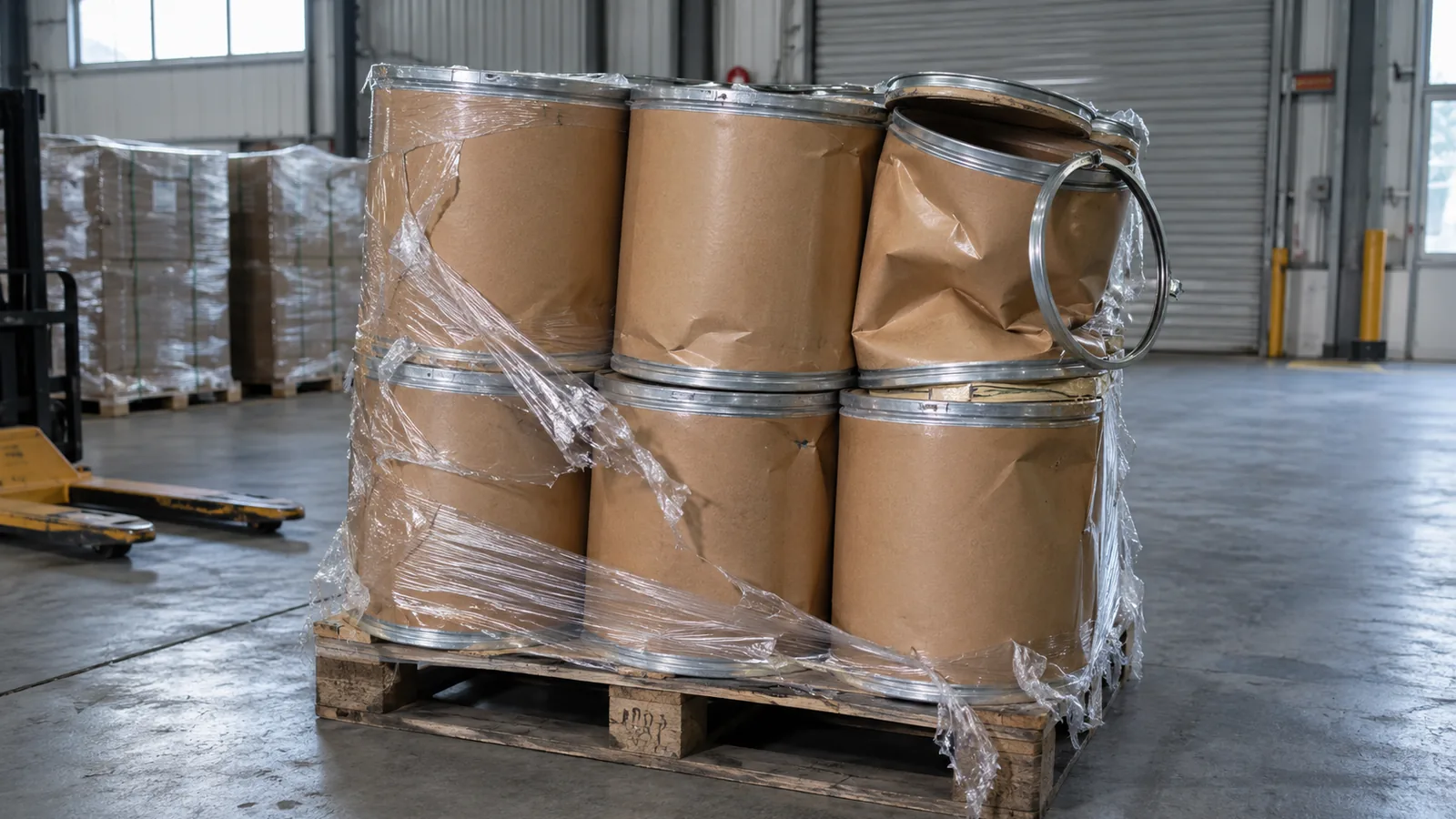
That last case is the expensive one, because PS is hygroscopic and oxidatively sensitive: a powder that absorbed moisture in transit may meet assay and still fail peroxide value, or pass release and lose shelf life. Without arrival data the cause is unprovable, and an unprovable cause is an unrecoverable claim.
This guide covers the whole chain: what damages PS powder in transit, the packaging and loading requirements worth writing into a purchase order, the inspection sequence at receiving, the evidence carriers and insurers need, and the notice windows that decide whether a claim survives.
How Phosphatidylserine Powder Gets Damaged in Transit
Moisture ingress is the most common mechanism and the least visible: compromised liners, punctured foil barriers, or container condensation during a temperature swing. PS takes up water, which drives peroxide value up, changes flow and colour, and shortens shelf life.
Mechanical damage is second — drums dented by poor stowage, pallets crushed by top-loading, liner seals torn by forklift tines, clamp rings deformed in handling. A dented drum with an intact liner may be acceptable; one with a compromised seal is a quality decision.
Thermal exposure is third: standard grades do not require refrigeration, but sustained heat accelerates oxidation and containerised freight through hot regions can run well above ambient.
Contamination and tampering are fourth — foreign material, pest evidence, broken seals, or a seal number that does not match the packing list. These cases turn on chain of custody, since the question is whether damage happened in transit or before loading.
Protective Packaging Requirements to Specify in the Purchase Order
Primary containment: liner, barrier, and headspace
Packaging should be specified, not assumed. For bulk PS powder the standard is a food-grade inner liner — typically polyethylene — inside a fibre or steel drum with a sealed closure, and for sensitive grades a foil-barrier liner with low headspace and, where appropriate, nitrogen flushing.
Write the requirements into the purchase order: liner material and thickness, closure type, seal integrity expectation, headspace practice, desiccant use where the route justifies it, and whether nitrogen flushing is required. A supplier asked only for "standard export packaging" will use whatever it has. Moisture protection most often separates a successful shipment from a claim, so ask for the liner's water vapour transmission basis and any transit data supporting it.
Secondary protection: drum, pallet, and stretch wrap
Secondary protection prevents mechanical failure. Specify drum type and wall strength, pallet type and condition, stretch-wrap or banding pattern, edge and corner protection, maximum stack height, and whether top-loading is permitted. Label content belongs here too: product name, grade, lot number, net and gross weight, production date, and storage condition on every drum.
Container Loading and Stowage Practices That Reduce Claims
Loading is where packaging either survives or fails. Ask for the loading configuration as routine: pallet count and arrangement, dunnage and airbags to fill voids, blocking and bracing, weight distribution, and cargo separation — and for less-than-container loads, ask about co-loading, since sharing with heavy or odorous cargo is a recurring source of claims. Container condition is a control in its own right: a leaking roof, damaged door seal, or residual moisture will defeat good packaging, so request documented inspection before loading and consider a moisture-absorbing measure on humid routes.
Photograph the loading: images of the empty container, of pallet placement mid-loading, and of the sealed container with the seal number visible are the most useful evidence in a claim, establishing condition at the point risk transferred.
Arrival Inspection: Sequence, Sampling, and Hold
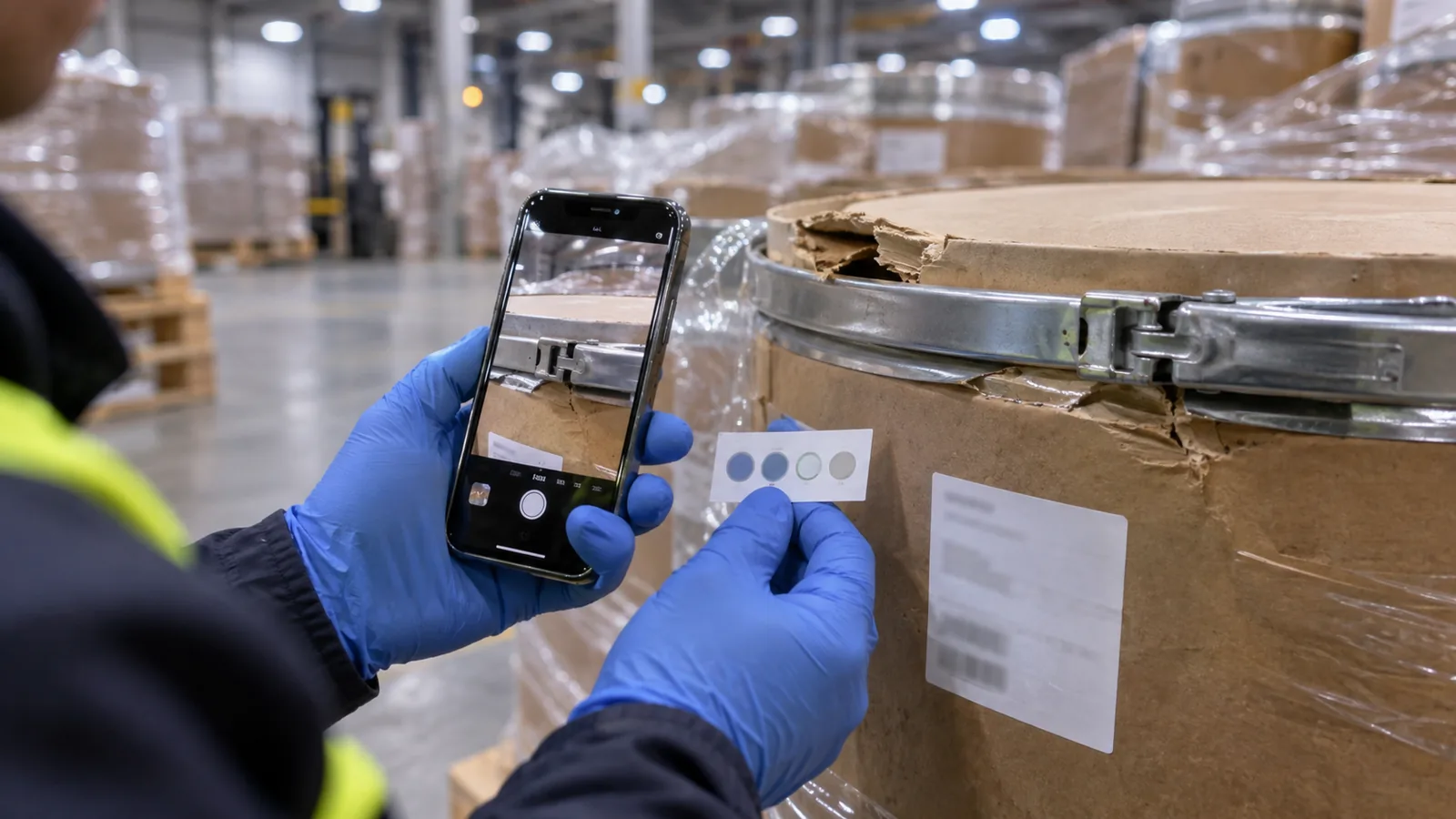
Receiving should follow a fixed sequence, because the sequence makes evidence defensible. Inspect the exterior first — seal number, seal integrity, visible damage — and record before opening, then photograph the interior before any pallet is moved.
Only then inspect drums individually — count, condition, seal integrity, label legibility — setting aside any unit with a compromised closure, and sample and test against specification, prioritising moisture, peroxide value, and appearance, with suspect and non-suspect units sampled separately so results are interpretable. Place affected material on hold in a controlled area, in original packaging, lot identified and access restricted. Do not re-pack, dispose, or return it before the carrier and insurer have inspected — premature disposal is the most common reason a valid claim is reduced or denied.
Building Evidence: Photos, Documents, and the Damage Record
Photographs should follow a hierarchy: wide shots establishing the container or pallet in context, mid shots showing affected units in the load, and close shots of the specific defect — torn liner, punctured barrier, dented clamp ring, wet drum base, broken seal — including lot and seal numbers where visible.
Assemble documents in the same file: commercial invoice, packing list, bill of lading or air waybill, the delivery note with any exception noted at delivery, the lot COA, loading photographs, the seal number record, and the receiving inspection record with test results. Note the exception in writing before signing clean — a clean delivery receipt is the first thing a carrier will use to argue damage occurred after handover.
Carrier Claim Windows, Insurance, and Who Pays
Timing decides most claims. Notice requirements differ by mode and governing instrument: air carriage under the Montreal Convention and road carriage under the CMR Convention both impose short notice periods, while sea carriage follows the bill of lading terms and any applicable Hague-Visby or national rules. The practical rule is the same — give written notice immediately, file the formal claim as soon as the amount is quantifiable, and never wait for a full assessment.
Cargo insurance fills the gap carrier liability limits leave, since liability is commonly limited by weight and can fall far below the loss on a high-value ingredient. Confirm who holds cover under the agreed Incoterms rule: under CIF or CIP the seller arranges it, often at a minimum level; under FOB or similar terms the buyer arranges its own. Confirm insured value and perils, and retain affected drums, packaging, and container evidence until the claim is settled.
Corrective Action With the Supplier
Close the loop with the supplier even when the carrier pays. Open a written non-conformance referencing lot, shipment, observed condition, and test results, and ask for the supplier's investigation into whether packaging, loading practice, or container selection contributed, plus corrective action in concrete terms — a liner or seal change, revised loading configuration, additional desiccant, or routing change. Then fold the outcome into the next purchase order: corrective action that ends in an email changes nothing, while a change to the packaging clause prevents a repeat.
Часто задаваемые вопросы
Q: What should I do first if a phosphatidylserine shipment arrives damaged?
A: Note the exception in writing on the delivery document before signing, photograph the container and pallets before anything is moved, quarantine affected material in original packaging, and notify the carrier and insurer immediately. Do not re-pack or dispose until the claim is settled.
Q: How long do I have to file a freight damage claim?
A: It depends on the mode and governing instrument. Air carriage under the Montreal Convention and road carriage under the CMR Convention both impose short notice periods; sea carriage follows the bill of lading terms and any applicable Hague-Visby or national rules. Give initial written notice immediately.
Q: What evidence does an insurer or carrier need?
A: Photographs at three levels — load context, affected units in position, and close detail of the defect with lot and seal numbers — plus the invoice, packing list, bill of lading or air waybill, delivery note with the noted exception, the lot COA, and receiving test results.
Q: Who is liable for damage under FOB versus CIF terms?
A: Liability follows the point at which risk transfers under the agreed Incoterms rule, so state the rule and named place in the contract. Insurance is separate: under CIF or CIP the seller arranges cover, often at a minimum level; under FOB or similar terms the buyer arranges its own.
Q: Can I still use phosphatidylserine from drums that are dented but sealed?
A: Treat it as a quality decision, not a cosmetic one. If liner and closure integrity are intact and incoming testing — moisture, peroxide value, appearance — meets specification, the material may be releasable. If the seal is compromised or moisture is elevated, quarantine the lot as a claim and supplier non-conformance.
Заключение
Freight damage on a phosphatidylserine shipment is decided twice: once in the packaging specification and loading plan, and again in the first hour after the container is opened. The first decision determines whether damage happens; the second determines whether it can be recovered.
Buyers who specify packaging, require loading photographs, and give notice immediately recover their losses. Buyers who sign a clean delivery receipt and open drums later absorb the cost themselves.
Источники
- International Chamber of Commerce — Incoterms Rules: https://iccwbo.org/business-solutions/incoterms-rules/
- International Air Transport Association (IATA) — Montreal Convention 1999: https://www.iata.org/en/programs/cargo/montreal-convention/
- United Nations Economic Commission for Europe (UNECE) — CMR Convention on the Contract for the International Carriage of Goods by Road: https://unece.org/transport/road/documents/cmr-convention
- International Maritime Organization (IMO) — Carriage of Goods by Sea: https://www.imo.org/
- U.S. Food and Drug Administration (FDA) — Current Good Manufacturing Practice for Dietary Supplements (21 CFR Part 111): https://www.fda.gov/food/current-good-manufacturing-practice-cgmp-dietary-supplements
- ASTM International — Standards on Packaging and Container Testing: https://www.astm.org/
- European Commission — Regulation (EC) No 852/2004 on the Hygiene of Foodstuffs: https://eur-lex.europa.eu/legal-content/EN/TXT/?uri=CELEX%3A32004R0852
Рекомендуемые дальнейшие действия
- Просмотрите Phosphatidylserine страница продукта.
- Сравнить Soy PS и Sunflower PS.
- Проверять производственное доказательство и Качество и НИОКР.
Свяжитесь с отделом продаж для получения документации по продукту
Поделитесь предпочтениями источника, приложением, страной и годовым количеством.
Свяжитесь с отделом продаж