Los compradores europeos de fosfatidilserina a granel suelen aprobar a un proveedor en cuanto a precio, ensayo, MOQ y COA de muestra sin plantearse nunca la pregunta que hay debajo de todos ellos: ¿Cómo se fabrica realmente este polvo? La respuesta corta es que la PS comercial generalmente se produce por una vía de conversión enzimática: una base de lecitina con alto contenido en fosfatidilcolina se trata con el aminoácido L-serina en presencia de una enzima, de modo que un grupo fosfatidililo se transfiere a L-serina para formar fosfatidilserina. Para los compradores europeos, la consecuencia práctica es que la revisión del proceso es una tarea real de cualificación por parte del proveedor: la ruta cotizada debe coincidir con la descripción autorizada del proceso, la especificación debe cubrir los puntos de identidad correctos y el proveedor debe poder mostrar pruebas del proceso sin revelar detalles comerciales confidenciales.
Esa pregunta importa porque PS no es un polvo genérico único. Puede elaborarse a partir de lecitina de soja o girasol, en diferentes niveles de ensayo y mediante variantes de proceso que afectan a la especificación, la identidad de la fuente y los documentos que un comprador puede pasar posteriormente al cliente. Esta guía está escrita para importadores, distribuidores, fabricantes de suplementos, marcas de marca propia, equipos de compras y equipos de control de calidad o formulación en Europa. Explica la ruta de producción enzimática en términos claros, la mapea con la línea base autorizada de la UE y ofrece una lista de verificación de pruebas de proceso que el comprador puede usar antes de la aprobación del presupuesto o el primer pedido. No es un consejo médico, no hace afirmaciones sobre tratamientos médicos y no revela ni inventa los parámetros confidenciales del proceso de ningún proveedor.
Cuando se menciona Nutranexa, solo se utilizan datos verificados del sitio. El sitio describe su PS como producida a partir de lecitina natural y L-serina mediante conversión bioenzimática, con un campus de producción, cooperación en investigación y desarrollo, y evidencias de especificación PS y COA disponibles para revisión por parte del comprador. Esos hechos apoyan una discusión sobre el proceso sin pretender que ningún parámetro específico de fabricación sea público.
La respuesta corta: qué deberían saber primero los compradores europeos
Si tu equipo está revisando PS a granel para un suplemento o proyecto europeo de alimentos, el mínimo de comprensión viable del proceso es:
- La PS a granel se obtiene por conversión enzimática, no por simple extracción de plantas. La vía común comienza con lecitina rica en fosfatidilcolina (PC) y convierte parte de esa PC en PS usando el aminoácido L-serina y una enzima.
- La enzima realiza una reacción de transfosfatidilación. La fosfolipasa D (PLD) es la familia de enzimas más comúnmente mencionada para esta reacción: transfiere el grupo fosfatidil de un fosfolípido donante a L-serina.
- La UE autorizó esta ruta para la soja. La Decisión de Ejecución de la Comisión 2011/513/UE describe el ingrediente autorizado como obtenido mediante transfosfatidilación enzimática de la lecitina de soja con alto contenido en fosfatidilcolina con L-serina.
- Las especificaciones describen el resultado del proceso. La humedad, el contenido de fosfolípidos, el ensayo PS, la L-serina libre, los glicéridos, los tocoferoles y los fitoesteroles son los puntos de especificación pública utilizados para describir el ingrediente autorizado.
- La evidencia de procesos es una tarea de control documental, no una solicitud de secreto comercial. Los compradores deben pedir confirmación de ruta, identidad de fuente, resumen del flujo de procesos, documentación por lotes, vinculación con COA y cualquier archivo específico del mercado, sin pedir al proveedor que revele parámetros confidenciales del proceso.
Ese encuadre mantiene la reseña práctica. Un comprador no necesita conocer la dosis exacta de enzimas ni la temperatura de reacción dentro de la planta de un competidor. El comprador sí necesita saber que la ruta es consistente, que el código fuente está controlado, que la especificación está completa y que los documentos conectan desde la materia prima hasta el tambor.
Cómo se produce la fosfatidilserina a granel: la vía enzimática
La lecitina y la L-serina son los dos bloques básicos
La fosfatidilserina es un fosfolípido: un esqueleto de glicerofosfato con dos ácidos grasos y L-serina unidos a través de un enlace fosfodiestero. Esa estructura molecular es la razón por la que la vía de producción es como es. En lugar de aislar la PS directamente del tejido vegetal, los productores comerciales comienzan con una base de lecitina rica en fosfatidilcolina y utilizan L-serina como segundo bloque de construcción.
La decisión de la UE describe la identidad química del ingrediente exactamente en estos términos: PS consiste en un esqueleto de glicerfosfato conjugado con dos ácidos grasos y L-serina mediante un enlace fosfodiestero. Para un comprador, esa frase explica por qué importa la identidad de la fuente. La lecitina de soja, la lecitina de girasol y otras bases fosfolípidas tienen diferentes perfiles de ácidos grasos y fosfolípidos, por lo que la PS producida por ellas no es idéntica en todos los puntos de especificación.
La transfosfatidilación convierte PC en PS
La reacción clave se llama transfosfatidilación. En esta reacción, una enzima transfiere un grupo fosfatidilo de un fosfolípido donante —típicamente fosfatidilcolina de lecitina— a L-serina, formando fosfatidilserina. La fosfolipasa D es la familia de enzimas más comúnmente asociada con esta síntesis biocatalítica de PS a partir de lecitina y L-serina.
El trabajo revisado por pares respalda esta descripción. Un estudio de 2019 publicado en Bioprocess and Biosystems Engineering describe la síntesis verde de fosfatidilserina mediada por fosfolipasa D, con la enzima expresada y evaluada en hospedadores de producción para mejorar la actividad de transfosfatidilación. Un estudio de 2023 publicado en Processes informa sobre una biosíntesis eficiente de fosfatidilserina en un sistema bifásico mediante la optimización de parámetros, nuevamente utilizando la vía enzimática. Ninguno de los dos artículos trata sobre un proveedor comercial específico; ambos confirman que la vía enzimática es la vía científica establecida para la síntesis de PS.
La implicación comercial es sencilla: cuando un proveedor dice que su PS se produce a partir de lecitina y L-serina mediante conversión bioenzimática, esa descripción coincide con la ruta enzimática bien documentada. Cuando un proveedor no puede confirmar el paso de conversión ni la base de origen, el comprador debe reducir la velocidad y pedir el expediente técnico.
Purificación, secado y control de calidad aguas abajo
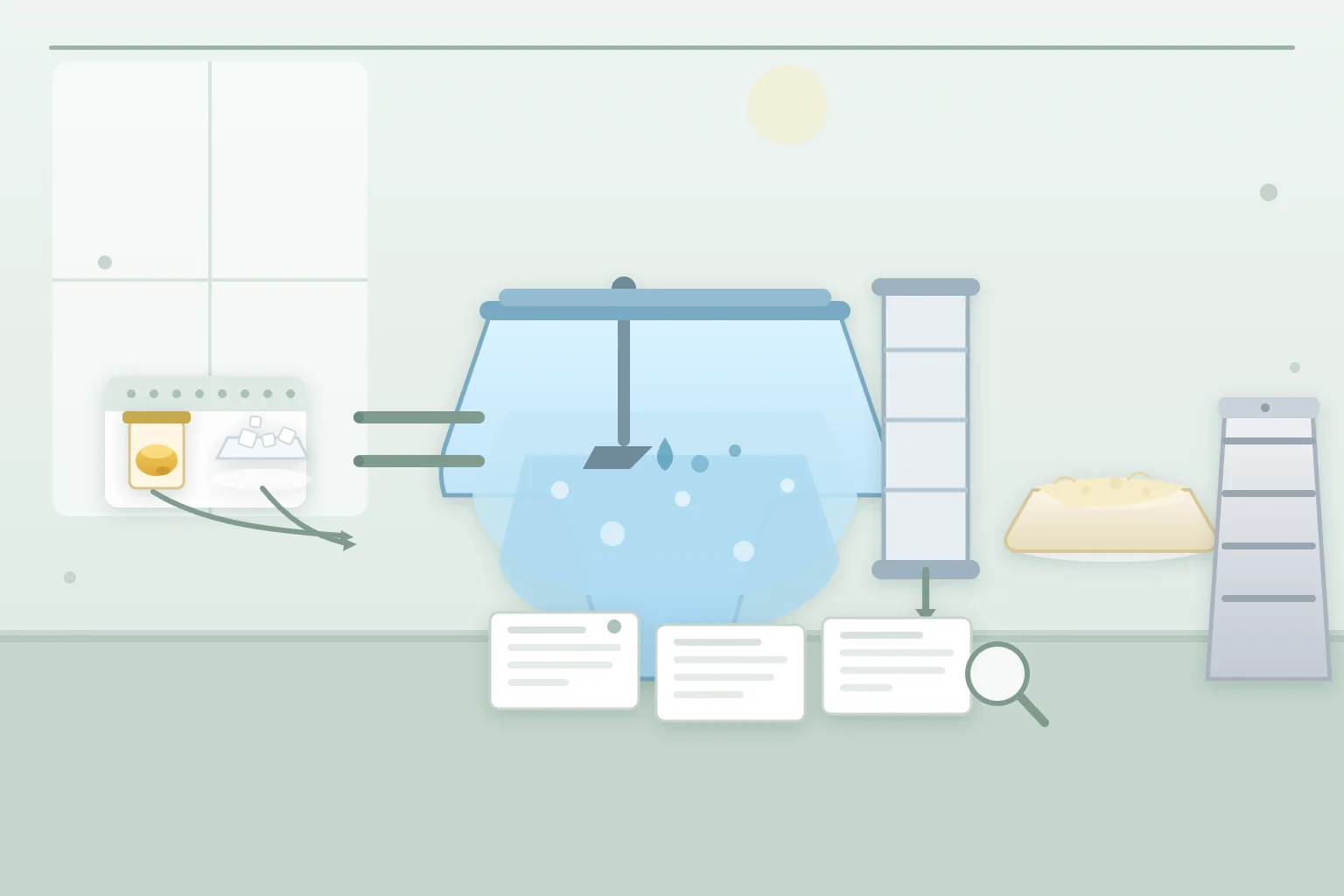
Tras la reacción de conversión, el proceso continúa a través de los pasos típicos posteriores:
| Etapa de proceso | De lo que normalmente implica | Relevancia para el comprador |
|---|---|---|
| Reacción y conversión | La base de lecitina reacciona con la L-serina en presencia de enzima | Confirma la ruta y los dos bloques de construcción |
| Separación y purificación | Eliminación de materiales no reaccionados, residuos enzimáticos y subproductos | Soporta límites de especificación como L-serina libre y glicéridos |
| Concentración y secado | Preparar un polvo con humedad controlada | La humedad es un punto de especificación publicado |
| Tamizado y mezcla | Logrando el perfil de pólvora objetivo y la uniformidad en lotes | Apoya un comportamiento consistente de ensayo y flujo |
| Control de calidad final y lanzamiento | Ensayo, humedad, valor de peróxido, materia insoluble, metales pesados, microbiología según corresponda | Coincide con el COA y la documentación de liberación |
| Revisión de embalaje y envío | Tambor, forro, etiquetas, documentos por lotes y comprobaciones de envío | Conecta el disco por lotes con la batería recibida |
Estas etapas son descripciones genéricas de cómo se procesan estos ingredientes; No son afirmaciones sobre parámetros confidenciales específicos de ningún fabricante. La tabla es útil porque muestra al comprador qué puntos de especificación pueden vincularse a cada etapa del proceso. Por ejemplo, un límite de L-serina libre se refiere a la completitud y purificación de la reacción, mientras que un límite de humedad se refiere al secado y los controles de envasado.
Lo que dice la autorización de la UE sobre el proceso
La definición del proceso autorizado
Para los compradores europeos, el ancla regulatoria más importante es la Decisión de Ejecución 2011/513/UE de la Comisión, adoptada el 19 de agosto de 2011, que autorizó la puesta en el mercado de la "fosfatidilserina a partir de fosfolípidos de soja" como ingrediente alimentario novedoso bajo el Reglamento (CE) nº 258/97. La especificación del Anexo I indica que el ingrediente se obtiene mediante transfosfatidilación enzimática de lecitina de soja de alta fosfatidilcolina con el aminoácido L-serina, y que la designación en el marcaje es "fosfatidilserina de soja".
Esa condena es la base legal para la ruta de la soja. Según el marco actual de los nuevos alimentos, el alimento novedoso autorizado está incluido en la lista de la Unión establecida por el Reglamento de Aplicación de la Comisión (UE) 2017/2470, que continúa la autorización anterior con las condiciones de uso, requisitos de etiquetado y especificaciones. Los compradores que revisen un presupuesto de PS de soja deben confirmar que la ruta cotizada se ajusta a esta descripción autorizada, la misma lógica que usaría un comprador en un Reseña de novela y comida antes de aprobar una ruta hacia Europa.
Puntos de especificación pública
La especificación publicada para el polvo autorizado incluye las siguientes características:
| Punto de especificación | Valor publicado |
|---|---|
| Humedad | Menos del 2% |
| Fosfolípidos | No menos del 85% |
| Phosphatidylserine | No menos del 61% |
| Glicéridos | Menos del 2% |
| L-serina libre | Menos del 1% |
| Tocoferolos | Menos del 0,3% |
| Fitoesteroles | Menos del 0,2% |
La misma decisión también autoriza una forma líquida que contiene triacilglicéridos de cadena media (MCT) como portador, con menor contenido de PS debido al aceite añadido. Estos números son puntos de referencia útiles, no un requisito universal para todos los grados comerciales de PS: los proveedores suelen ofrecer múltiples grados de ensayo, como 20% y 50% PS, y los compradores deben comparar la especificación cotizada con la aplicación prevista en lugar de asumir que un valor sirve para todos. Para el expediente regulatorio de la UE, el punto clave es que la ruta y la identidad coincidan con el ingrediente autorizado y su designación.
Lista de verificación de pruebas de proceso para la cualificación de proveedores
Los compradores europeos no necesitan los secretos comerciales de un proveedor para verificar un proceso de fabricación de PS. Necesitan un archivo de pruebas controladas que responda a seis preguntas:
- ¿Qué ruta se presupuesta? Confirma la PS general, PS de soja o PS de girasol, y confirma que la ruta es consistente desde el presupuesto hasta el COA y la etiqueta.
- ¿Cuál es la base fuente? Confirmar la fuente de lecitina y si algún cambio en la fuente podría desencadenar una revisión, usando la misma lógica que un Revisión de cambios de fuente.
- ¿Qué dice la descripción del proceso? Pide un resumen de flujo de procesos que confirme la conversión enzimática sin requerir parámetros confidenciales.
- ¿La especificación cubre identidad y pureza? Revisa el ensayo PS, fosfolípidos, humedad, L-serina libre, glicéridos, tocoferoles, fitoesteroles y cualquier elemento específico de la aplicación.
- ¿Está el COA vinculado al lote y al tambor? El COA debe conectarse a un lote específico y a los tambores de 25 kg recibidos, coincidiendo con el Revisión del COA y especificaciones proceso.
- ¿Los documentos de respaldo son actuales y específicos de la ruta? Solicita la versión de la especificación, el ejemplo de COA, pruebas de la licencia de producción, declaraciones de fuente y cualquier archivo específico del mercado antes de la aprobación.
Para proyectos europeos, el comprador también debe decidir cómo el archivo de proceso alimenta el expediente del cliente. A un distribuidor o marca que luego suministre a un cliente europeo se le preguntará cómo se elabora el ingrediente, si es la vía autorizada de soja y qué documentos respaldan esa afirmación. El Paquete de documentos distribuidor y Auditoría del fabricante las reseñas cubren el archivo circundante; Esta lista de verificación se centra específicamente en la propia evidencia del proceso.
Cómo verificar reclamaciones de proceso sin pedir secretos comerciales
La verificación de procesos funciona mejor cuando el comprador separa lo que debe documentarse de lo que es legítimamente confidencial:
- Exige una declaración de ruta, no una receta. "Lecitina de soja y L-serina mediante conversión bioenzimática" son verificables; Solicitar la dosis exacta de enzimas y temperatura no es razonable.
- Utiliza la especificación como evidencia indirecta del proceso. Los límites para L-serina libre, glicéridos, humedad y tocoferoles reflejan el diseño y control del proceso, por lo que una especificación completa forma parte del archivo del proceso.
- Comprueba la coherencia entre documentos. El nombre de la ruta, la identidad de origen, la versión de la especificación, el lote COA y las etiquetas de la batería deberían contar la misma historia.
- Pregunta qué cambió. Si un proveedor ha cambiado recientemente el origen, proceso o especificación, el comprador debería ver el registro de control de cambios en lugar de una actualización silenciosa, la misma disciplina que un Revisión de documentos en orden de repetición.
- Confirma el resumen del registro del lote. Los compradores pueden solicitar un resumen de los registros de lotes (confirmación de materia prima, reacción, purificación, secado, control de calidad, liberación) sin recibir datos propietarios del proceso.
Banderas rojas y puntos de retención
Ralentiza la aprobación cuando el archivo de proceso muestre:
- Un estado de ruta que cambia entre la cotización, el COA de muestra y el COA a granel.
- Una especificación que omite puntos de identidad como fosfolípidos, L-serina libre o glicéridos, o que no puede vincularse al grado citado.
- No hay un resumen del flujo de procesos, ni una descripción que evite por completo el paso de conversión.
- Un COA que no puede vincularse a un lote ni a la batería recibida.
- No hay evidencia de control de versiones para la base de lecitina, ni de un cambio de fuente inexplicado.
- Un archivo "general PS" ofrecido para una solicitud de cliente específica de soja o girasol.
- Confundir resultados de laboratorio con evidencia de proceso: un COA muestra un resultado por lotes, pero por sí solo no prueba la ruta, la fuente o los controles del proceso.
Registra el vacío y la decisión —aprobar, aprobar con condiciones, retener o rechazar— en el expediente del proveedor y escalar a la Revisión anual de proveedores Cicla si hace falta.
Cómo encajan los hechos verificados de Nutranexa en esta reseña
Nutranexa es un fabricante de ingredientes funcionales para alimentos centrado en fosfatidilserina, PS de soja, PS de girasol y polisacáridos solubles de soja. La principal empresa manufacturera, Shandong Nutranexa Biopharmaceutical Co., Ltd., fue fundada en 2013 y opera un campus de producción de 110.000+ m2, con un enfoque principal en la exportación en Europa y Norteamérica. El sitio describe su PS como producido a partir de lecitina natural y L-serina mediante conversión bioenzimática, y incluye entre sus datos de fabricación la evidencia de licencias de producción de PS y la cooperación en investigación y desarrollo con la Universidad de Ciencia y Tecnología del Este de China.
Para la revisión del proceso, esos hechos verificados apoyan tres puntos prácticos. En primer lugar, la propia descripción del sitio sobre la conversión bioenzimática de lecitina y L-serina coincide con la ruta enzimática descrita anteriormente, por lo que un comprador puede partir de una declaración de ruta consistente. En segundo lugar, Nutranexa publica una especificación PS y un proceso COA: la página del producto muestra la disponibilidad de COA de ejemplo para grados PS 20% de girasol y PS 50%, y solicita confirmación de especificaciones actuales antes de la cotización, que es exactamente la disciplina documental que recomienda esta guía. En tercer lugar, la página de fabricación presenta un esquema público del proceso: confirmación de materia prima, conversión bioenzimática, separación y purificación, secado, tamizado y mezclado, control de calidad final y liberación, y revisión de envasado y envío, sin exponer parámetros confidenciales.
Para PS, la línea base comercial publicada es un MOQ de 25 kg con 25 kg netos por tambor, y el sitio dirige a los compradores a solicitar especificaciones actuales, muestras de COA, archivos de certificados y detalles de embalaje y envío al equipo de ventas. Los compradores deben seguir realizando su propia revisión de pruebas de proceso para la ruta exacta, origen, pendiente y mercado de destino cotizados. Nada en esta página afirma que ningún documento de Nutranexa demuestre un parámetro de proceso específico, y los compradores deberían solicitar los archivos actuales para la configuración exacta del producto en lugar de asumir que un solo documento cubre todas las categorías.
Si tu equipo está en medio de calificar una ruta PS para Europa y necesita la especificación actual, las muestras de COA y el contexto de fabricación para completar un archivo de evidencia de proceso, contacta con Nutranexa Con tu grado objetivo, preferencia de fuente y mercado de destino, la reseña comienza desde la configuración exacta que se indica.
Preguntas frecuentes
¿Cómo se fabrica la fosfatidilserina a granel?
La fosfatidilserina a granel se produce generalmente por conversión enzimática: una base de lecitina rica en fosfatidilcolina reacciona con el aminoácido L-serina en presencia de una enzima, de modo que los grupos fosfatidil se transfieren a la L-serina para formar PS. El material resultante se purifica, seca, tamiza, mezcla, controla la calidad y se envasa en tambores.
¿Cuál es el proceso enzimático de transfosfatidilación para la PS?
La transfosfatidilación es la reacción en la que una enzima transfiere un grupo fosfatidilo de un fosfolípido donante —típicamente fosfatidilcolina de la lecitina— a la L-serina, formando fosfatidilserina. La fosfolipasa D es la familia de enzimas más comúnmente mencionada para esta síntesis biocatalítica.
¿Qué proceso autoriza la UE para la fosfatidilserina de soja?
La Decisión de Ejecución de la Comisión 2011/513/UE autorizó la "fosfatidilserina a partir de fosfolípidos de soja" como un ingrediente alimentario novedoso y la describe como obtenida mediante transfosfatidilación enzimática de lecitina de soja con alto contenido de fosfatidilcolina con L-serina, con la designación de etiquetado "fosfatidilserina de soja". La autorización se traslada a la lista de la Unión conforme al Reglamento (UE) 2017/2470.
¿Qué pruebas de proceso deberían solicitar los compradores europeos a un proveedor de PS?
Los compradores deben solicitar una declaración de ruta, identidad de fuente, un resumen del flujo de procesos, la especificación actual, un COA vinculado al lote, un resumen de registro de lote, pruebas de licencia de producción y cualquier archivo específico del mercado, sin pedir parámetros confidenciales del proceso como la dosis enzimática o las condiciones de la reacción.
¿Se produce fosfatidilserina a partir de lecitina y L-serina?
Sí, para la ruta comercial común. La UE autorizó la PS de soja obtenida de la lecitina de soja y L-serina de alta fosfatidilina mediante transfosfatidilación enzimática, y estudios revisados por pares describen la misma síntesis enzimática de PS a partir de lecitina y L-serina.
Conclusión
La fabricación de fosfatidilserina no es una caja negra que los compradores deban aceptar con confianza. La vía enzimática —lecitina y L-serina convertidas por transfosfatidilación, luego purificadas, secas, controladas y empaquetadas— está bien documentada en la autorización de la UE y en la ciencia revisada por pares, y puede revisarse a nivel de documento sin tocar secretos comerciales. Los compradores europeos deben confirmar la ruta cotizada, comprobar la especificación con los puntos de identidad publicados, vincular el COA al lote y al tambor, y mantener el archivo de proceso consistente desde el presupuesto hasta la entrega. Eso convierte la pregunta "¿cómo se fabrica PS?" de una pregunta de ciencia en una lista práctica de cualificación de proveedores.
Fuentes
- EUR-Lex: Decisión de Ejecución de la Comisión 2011/513/UE (CELEX 32011D0513)
- EUR-Lex: Reglamento de Ejecución de la Comisión (UE) 2017/2470 que establece la lista de la Unión de productos novedosos (CELEX 32017R2470)
- Comisión Europea: Lista de alimentos novedosos de la Unión
- Hou et al., "Ingeniería de fosfolipasa D para mejorar la síntesis biocatalítica de fosfatidilserina", Bioprocess and Biosystems Engineering (2019)
- Guo et al., "Biosíntesis eficiente de fosfatidilserina en un sistema bifásico mediante optimización de parámetros", Processes (2023)
Contactar con Ventas
Contacta con Nutranexa para solicitar las especificaciones actuales de PS, muestras de COA, pruebas de licencia de producción, imágenes de fábrica y de despacho, y la configuración exacta de 25 kg del tambor para la ruta de soja o girasol que estás evaluando para Europa. Comparte tu calificación objetivo, preferencia de fuente, mercado de destino y volumen anual para que el equipo de ventas pueda confirmar el expediente técnico actual para la revisión de la evidencia del proceso.
Próximos pasos recomendados
- Revisa el Phosphatidylserine página del producto.
- Comparar Soy PS y Sunflower PS.
- Verificar prueba de fabricación y Calidad e I+D.
Comuníquese con ventas para obtener documentos de productos
Comparta preferencia de fuente, aplicación, país y cantidad anual.
Contactar con Ventas