
Before a contract manufacturer can quote your phosphatidylserine product, they need one decision from you: the dosage form. That single choice drives the excipient system, the equipment line, the minimum order quantity, the testing plan, and even the regulatory documents you must collect for the US and EU markets. Many brands default to capsules without checking whether a tablet or powder stick pack would serve their positioning better — or cost less per serving. This article walks through the three most common formats for PS, the technical constraints that decide feasibility, and the practical questions an OEM will ask before quoting.
Why Dosage Form Choice Shapes OEM Cost and Timeline
Phosphatidylserine is a phospholipid, typically supplied as a powder carried on a food-grade base, with finished products most commonly delivering around 100 mg of PS per day. Because the raw material is a specialty ingredient with a meaningful cost per kilogram, the dosage form directly determines how much material goes into every unit — and therefore how visible the ingredient cost is in your bill of materials.
The form also determines which production line your project occupies. Capsule filling, tablet compression, and powder stick-packing are different departments with different setup costs and different minimum run sizes. Choosing the form before requesting quotes avoids the classic OEM failure mode: paying for tooling and stability work on a format you abandon after the first pilot.
Capsules: The Default Format for PS Powders
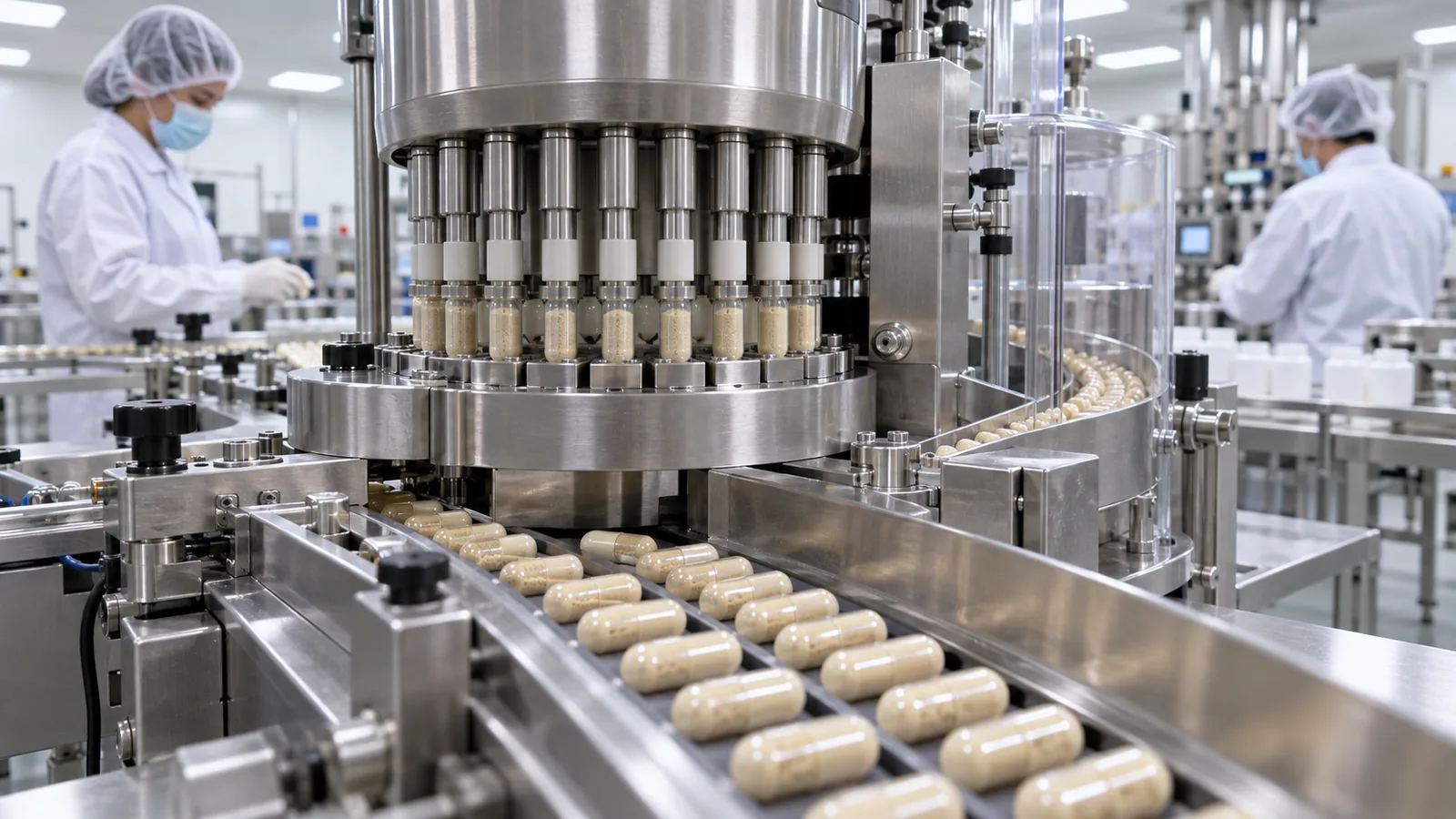
Two-piece hard capsules — gelatin or plant-based HPMC — are the workhorse format for PS, and for good reasons. Filling is a mature, widely available process; blend uniformity is easier to achieve in a capsule blend than in a compressed tablet; and a 100 mg PS serving fits comfortably in one or two standard capsule sizes alongside supporting ingredients.
For US production, capsules keep the label work straightforward: a Supplement Facts panel listing PS per serving. For the EU, remember that soy-derived PS carries soy allergen labeling obligations under Regulation 1169/2011, so if you position a sunflower-derived PS capsule as soy-free, the allergen statement in your OEM document pack must support that claim. Capsules also compress your timeline: almost every reputable supplement OEM fills capsules, so capacity is easy to source.
Tablets and Stick Packs: Where Flow and Compression Decide
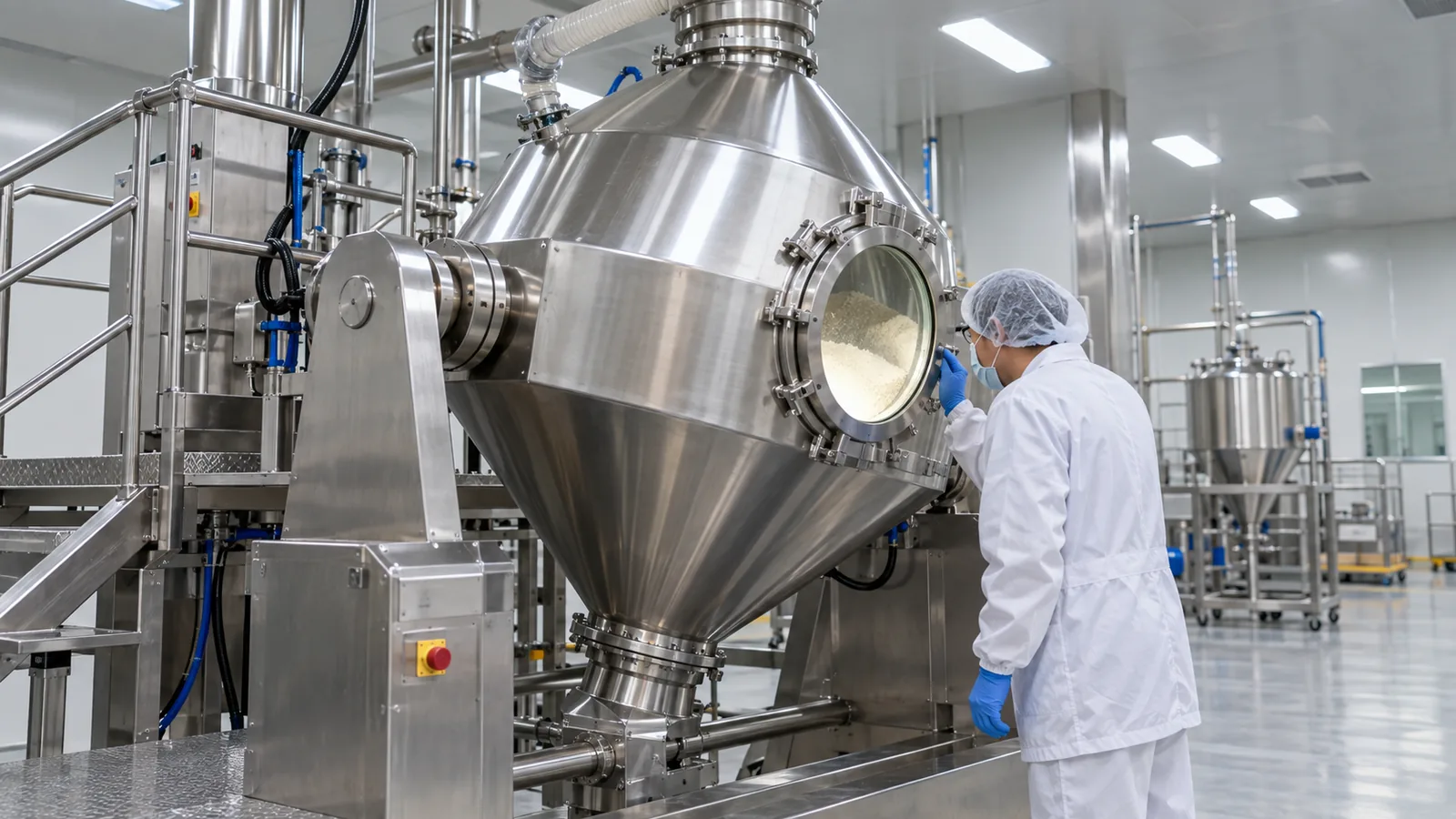
Tablets can work for PS, but the raw material's phospholipid nature means flow and compression behavior must be proven, not assumed. PS powders can be sticky or hygroscopic, so the formulator typically builds a blend with flow aids and compatible excipients, then verifies weight uniformity and content uniformity on the compression line. Budget for a blending and compression pilot before committing to a full commercial run — a topic our flowability and blend uniformity pilot resource covers in depth.
Powder stick packs are the emerging middle path, especially for cognitive-health shots and drink mixes paired with other nootropic ingredients. Stick packing avoids compression entirely, but demands excellent powder flow and a packaging line with accurate low-dose filling. Whichever format you choose, the governing document is the same: your raw material specification, including particle size and moisture, must match what the formulator validated.
What Your OEM Will Ask For Before Quoting
Expect a document list before any price appears. A serious US or EU contract manufacturer will request your PS raw material specification and the current lot COA, allergen and GMO statements, a stability or shelf-life basis for the ingredient, and the regulatory status you intend to claim — for the US, whether your formula stays within structure-function territory, and for the EU, whether your PS source and use level fit your market's notification requirements.
They will also ask for your target serving, the fill or weight per unit, the bottle or stick-pack count, and your market list. Providing a complete, consistent pack up front shortens quoting from weeks to days. If your PS supplier can deliver these documents routinely, that is a strong signal — if assembling them takes a month, treat that as a supplier-quality signal, not just an administrative delay.
Comparing MOQs, Lead Times, and Cost Drivers
As a planning rule rather than a promise: capsules usually carry the lowest entry MOQ because filling lines run smaller batches; tablets often require higher minimums once tooling is factored in; stick packs sit in between, with packaging material lead times as the hidden variable. Per-unit cost drivers also differ — capsules price around fill weight and encapsulation speed, tablets around tooling and compression yield, stick packs around film and filling rate.
The honest comparison comes from sending the same complete document pack and the same formula brief to two or three OEMs per format. Keep the PS dose identical across quotes so you are comparing like with like. And before signing, confirm the incoming inspection plan for the PS raw material: a capable OEM will want to verify identity and assay on receipt, and your supplier should be ready to support that with responsive documentation.
Preguntas frecuentes
Q: Which format is cheapest for a 100 mg daily PS serving?
A: Capsules are usually the lowest-risk and lowest-entry-cost option, because one or two standard capsules deliver the serving without custom tooling. Tablet economics can catch up at higher volumes, but only after tooling and pilot costs are amortized.
Q: Can we combine PS with other nootropic ingredients in one capsule?
A: Often yes, within capsule size limits. The blend design must keep PS uniformly distributed at low inclusion levels, which is why OEMs check blend uniformity data before commercializing low-percentage blends.
Q: Do soy-derived and sunflower-derived PS behave differently in production?
A: Both are supplied as powders on carriers, but carrier type, particle size, and moisture can differ, so flow and blending behavior must be confirmed per grade. Never swap PS source mid-project without a documented change-control review.
Q: What documents should we hand the OEM with our first quote request?
A: At minimum: raw material spec, current COA, allergen statement, GMO statement, and your target formula and serving. Adding a stability basis and your market list prevents rework later.
Conclusión
The dosage form is not a packaging detail — it is the single biggest lever on your PS product's cost, timeline, and compliance workload. Capsules remain the pragmatic default for 100 mg servings, tablets reward brands with volume and patience, and stick packs open drink-mix positioning. Whichever you choose, arrive at the OEM with a complete document pack and a raw material partner who can keep it current. That preparation, more than any negotiating tactic, is what turns a first quote into a smooth first production run.
Fuentes
- U.S. FDA — Dietary Supplements: https://www.fda.gov/food/dietary-supplements
- 21 CFR Part 111 — Current Good Manufacturing Practice for Dietary Supplements: https://www.ecfr.gov/current/title-21/part-111
- EU Regulation 1169/2011 on Food Information to Consumers (Annex II allergens): https://eur-lex.europa.eu/eli/reg/2011/1169/oj
- NIH Office of Dietary Supplements: https://ods.od.nih.gov/
- EFSA — Novel Food Catalogue: https://ec.europa.eu/food/safety/novel_food/catalogue/search/public/
Próximos pasos recomendados
- Revisa el Phosphatidylserine página del producto.
- Comparar Soy PS y Sunflower PS.
- Verificar prueba de fabricación y Calidad e I+D.
Comuníquese con ventas para obtener documentos de productos
Comparta preferencia de fuente, aplicación, país y cantidad anual.
Contactar con Ventas