Ingredient news
Fluidized Bed Drying Preserves More Native WPPC Structure
By Nutranexa News |
A Journal of Dairy Science study found fluidized bed drying kept whey protein phospholipid concentrate closer to native protein structure and preserved more xanthine oxidase activity than spray drying.
What Was Compared
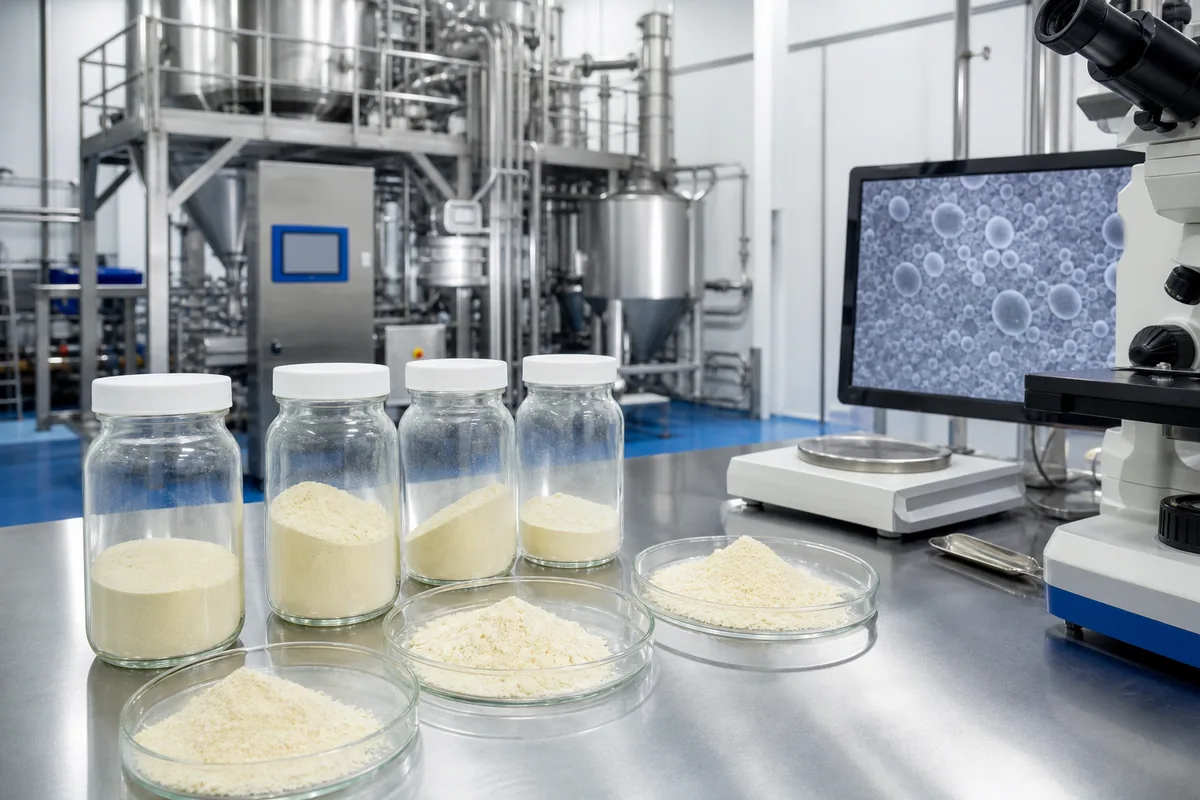
Researchers compared whey protein phospholipid concentrate dried by lab-scale spray drying and fluidized bed drying, then benchmarked both against an industry-scale spray-dried control.
The study focused on how drying changed particle structure, protein conformation, oxidation markers, enzyme stability, and rehydrated powder behavior.
What Shifted
The paper reports that fluidized bed drying retained the most native-like protein secondary structure and preserved higher xanthine oxidase activity than the spray-dried powders.
Confocal microscopy also showed more uniform protein distribution in the fluidized bed product, while larger protein-fat aggregates appeared in the spray-dried materials.
Buyer Takeaway
For buyers of phospholipid-rich dairy powders, the study reinforces that drying is not only a cost and throughput decision but also a functional-specification decision.
When a powder is meant to retain membrane-associated bioactivity or differentiated microstructure, process route may matter as much as starting composition.