Ingredient news
Egg Lecithin Study Maps Concentration Limits in Emulsion Design
By Nutranexa News |
A Food Chemistry study reports that egg lecithin improved ultrasound-assisted egg-yolk-granule emulsions up to a threshold, after which excess lecithin displaced proteins and weakened interfacial stability.
What the Study Tested
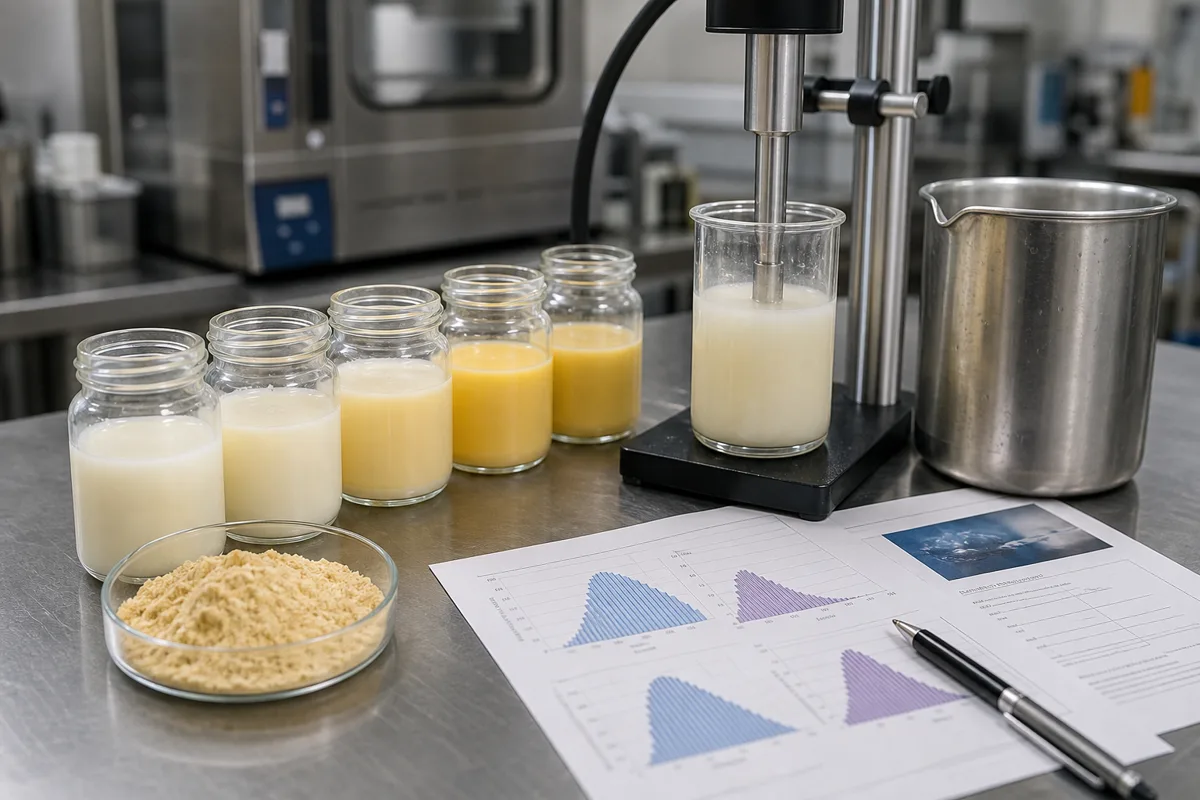
Researchers examined how different egg lecithin concentrations changed egg-yolk-granule functionality under ultrasound-assisted pH shifting, a processing setup relevant to emulsion design.
The work focused on solubility, particle size, interfacial behavior, and emulsion stability rather than on a consumer-facing nutrition endpoint.
What the Paper Found
According to the abstract, moderate lecithin levels improved interfacial structure and emulsion stability, while concentrations above 0.5 percent led to competitive adsorption that weakened stability.
That kind of threshold effect is useful for formulators because it shows that more phospholipid is not automatically better in a processed emulsion system.
Buyer Takeaway
Ingredient buyers in functional foods and delivery-system development should pay attention to concentration windows, process conditions, and protein-lipid interactions rather than assessing lecithin only as a label-friendly emulsifier.
The study is a formulation signal that can help R&D teams narrow pilot-work assumptions before scale-up.