Ingredient news
High-PC Sunflower Fractions Improve Ice Cream Emulsion Stability
By Nutranexa News |
A food science study reported that the highest-phosphatidylcholine sunflower fraction produced the smallest oil droplets and strongest interfacial stability in model ice cream.
What Was Tested
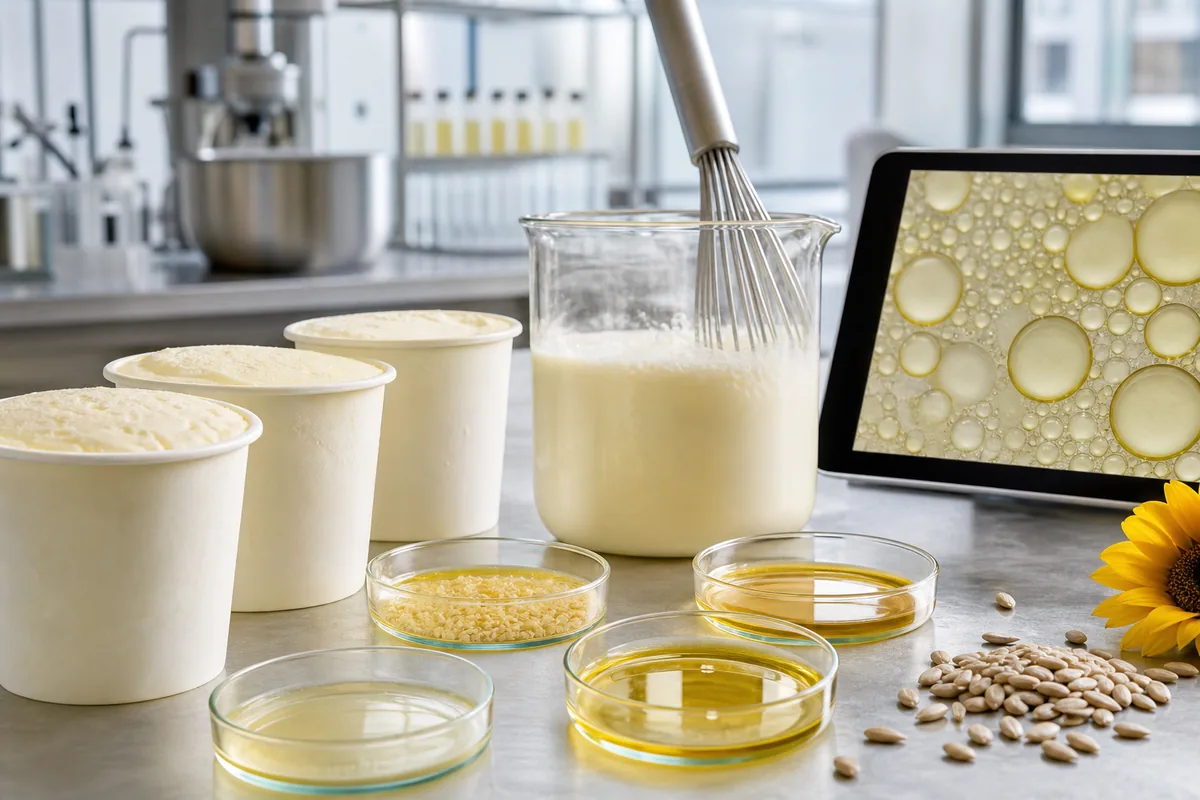
The study evaluated four purified sunflower phospholipid fractions, crude lecithins, and a commercial product in an optimized ice cream base containing salep and phospholipids.
The fractions differed mainly in phosphatidylcholine content, allowing the author to compare how composition affected microstructure, zeta potential, rheology, and overrun.
What Performed Best
Fraction 4, which had the highest phosphatidylcholine content, produced the smallest and most uniform oil particles and showed the strongest correlation with improved interfacial stability indicators.
The paper also found that phospholipid composition affected zeta potential, particle size, and overrun, while salep concentration remained the main driver of rheology.
Buyer Takeaway
For lecithin buyers serving frozen desserts, the result suggests that refined fraction profile can matter more than treating sunflower phospholipids as a single generic emulsifier category.
That opens a sourcing conversation around phosphatidylcholine enrichment, byproduct valorization from oil refining, and clean-label functionality in premium frozen products.